Types of Strong

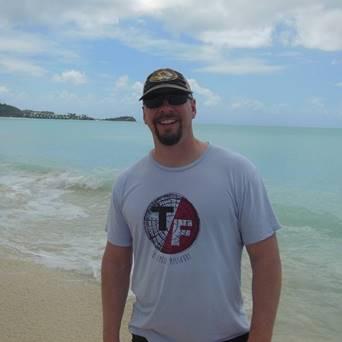
By Jarrod Fobes

Over a period of about 10 years, I competed frequently in a variety of combat sports.  I mostly competed in judo and no-gi grappling, but I also fought in mixed-martial arts, kickboxing, SAMBO, and Brazilian jiu-jitsu.  Most of my experience was at the regional level, but I had some experience at national and international competitions as well.

During this time, I had the opportunity to compete against and train with a wide variety of athletes, many of whom came from a background in strength sports.  I thought some members might be interested in my impression of different approaches to strength training, and how they apply to combat sports.

For perspective, I could probably be categorized as a recreational lifter during this period.  Most of my strength training consisted of bodyweight exercises and so-called functional strength training; lifting with sandbags, railroad ties, slosh bars (long sections of PVC pipe, capped and partially filled with water or sand); anything heavy and/or awkward.  I also did a lot of plyometrics, as I was somewhat obsessed with speed.  However, no one would have been impressed by my gym lifts.  My bench press at that time was never much more than my bodyweight, and my back did not tolerate any kind of deadlifting or most types of squatting while I was training martial arts intensely.  I worked quite a few manual labor jobs, and was usually regarded as a strong guy at the job site.  But you sure couldn’t tell it from my performance in the weight room.  So the following assessment comes from a guy who was in shape, but very much outside of the serious strength training world.

Olympic lifters

I started to run into these guys more as Crossfit grew more popular.  They were always generally fit, very coordinated, and usually had great fighting technique.  But I never really felt overpowered by any of them.  Most combat sports, but especially judo, require powerful flexion in the core and especially the hips, and the Olympic lifts focus much more on extension movements.  Famous powerlifting coach Louie Simmons once wrote that he was not a big fan of Olympic lifting as a means of strength training for other sports, and I tend to agree.  What’s more, it seemed like the Olympic guys were always injured.  Olympic lifting in and of itself is a beautiful sport, but the highly technical nature of the lifts coupled with the near total focus on extension movements makes it one of the least practical disciplines I encountered, at least in terms of developing fighting strength.

Bodybuilders

It is highly debatable whether or not bodybuilding can be considered a strength sport since it focuses 100% on the aesthetics of the lifter, rather than on lifting performance.  A trainer I once worked with said, “bodybuilding is for people who aren’t good at real sports,” and to an extent, I used to agree.  But these guys were actually a surprise to me.  I learned pretty fast that if someone looked strong, they probably were.  The bodybuilders I encountered were not especially fast, but they weren’t slow either.  The most notable thing about them was their muscle endurance.  As long as they had paid attention to their conditioning, these guys were just as strong at the end of a period or round as they were at the beginning.  Also, they made tremendous strength gains very quickly once they shifted their lifting style.

Powerlifters

      One of my old training partners held a powerlifting record at Kansas State University, where he had put up a 1000lbs squat.  He weighed around 300lbs, and sparring him was like fighting a polar bear…for about 60 seconds.  After that, he was gassed out and could be handled fairly easily by anyone with good technique.  I found this to be consistent with all of the heavyweight and super heavyweight powerlifters that I encountered.  The key was always to weather the initial storm, let them tire out, then begin cautiously going on the offensive.  Caution was essential because they could sometimes muster another burst of strength before the end of period.

The sub-heavyweights were another matter.  Any of these guys that were about 205lbs or under were really, really difficult to deal with.  They tended to be strong on all the major athletic attributes: they were strong, fast, coordinated, and well-conditioned.  If they happened to be short, they were my least favorite people to deal with in a grappling situation, since their low center of gravity made them difficult to take down, and their short, powerful limbs didn’t offer much leverage when working for arm or leg locks.  Striking is another matter, since whoever has a longer reach has a significant advantage.

Crossfitter

Personally, I am not a huge fan of Crossfit for a number of reasons, but the handlful of combat athletes I met who also trained in Crossfit were in all around good shape.  Some felt stronger than me, most did not.  All were well-conditioned, but I can’t remember one who was as fast or faster than me.  Like the Olympic lifters, they tended to be injured a lot.  I really didn’t run into too many of these guys; I think the intensity of Crossfit makes it difficult to combine with competitive combat sports training, plus I have seen a lot of Crossfit programming that is unsafe by itself.  I was a trainer at an unofficial Crossfit gym for a while, where we would receive a workout of the day (WOD) from our Crossfit affiliate, then run our clients through it.  I do not remember a single WOD that I did not modify for safety reasons.  If another trainer ran the class and did not make modifications, injuries were very common.  One WOD called for a ridiculous 250 box jumps, which led to a client tearing her meniscus.  So most Crossfitters that try combat sports end up ditching one in favor of the other.  The two injury rates combined are just too much.

Laborers

      Hard work is obviously not a strength sport, but these guys deserve mention.  I have trained with farmers, masons, and concrete workers who did not do much strength training outside of their job, and they were always very strong.  A mechanic who’s been turning wrenches for a couple of decades will have some impressive grip strength, which can really slow you down, especially in a jacket wrestling style like judo or SAMBO.  These guys were also the most surprising.  They may look a little soft, or thin, but then once you tie up with them you can immediately feel that you are in for a fight.  While someone who looks strong probably is, someone who doesn’t look strong might surprise you.

Athlete of the Year-runner Up Award

By Eric Todd

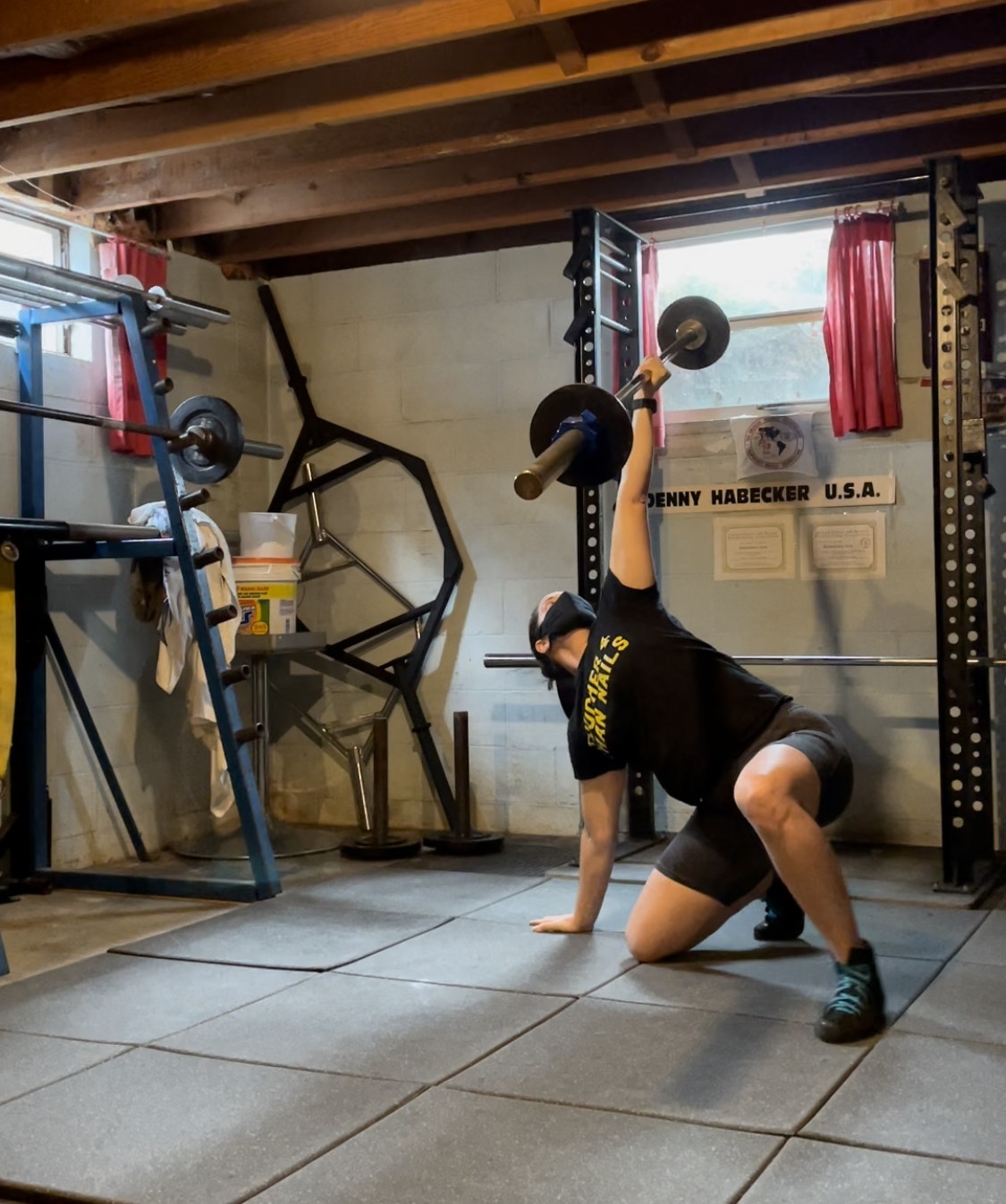
Beth Skwarecki being awarded Runner-Up Athlete of the Year by Secretary Eric Todd

Beth Skwarecki being awarded Runner-Up Athlete of the Year by Secretary Eric Todd

Since 2009, the USAWA has given out special awards under Awards Director, Al Myers, and by the vote of the USAWA membership.  One of the awards that is voted on is “Athlete of the Year.”  Here is how the award is described:

Athlete of the Year – This award is for the individual who has accomplished the most athletically within the last year in the USAWA. Top placings at the Nationals and World Championships should figure in high. Also, participation in other Championship Competitions such as the Heavy Lift Championships, the Grip Championships, the Club Championships, the OTSM Championships, the Team Championships, or the National Postal Championships could factor in.  Participation in elite IAWA events such as the Gold Cup should make an influence on earning this award as well.

The top two places are awarded after voting from the membership is completed.

This Year’s Runner-up in the Athlete of the Year vote goes to Beth Swarecki.  She was champion in the 2021 National meet, champion in the 2021 World Meet, Presidential Cup Champion, and 3rd overall in the postal series.  She was lifter of the month for August, and has placed highly in all the legs of our postal series.  Quite a dominating year for our Athlete of the Year-Runner-up, and well deserved!  Congrats, Beth Skwarecki!

Mark Raymond-Newest Level 1 test certified official

By Eric Todd

I got the official word from Official’s Director Joe Garcia that Mark Raymond not only has passed his test, he has completed his 3 practical training sessions, thus making him a level 1 test certified official!  Congrats, Mark!  Mark is a member of Frank’s Barbell Club.  Mark has co-promoted meets with Frank, competed for a number of years, and has even been lifter of the month.  Him becoming a certified official is one more step in cementing his legacy in the USAWA.  Congrats Mark, and way to step up to help serve your organization!

Prayer and/or thoughts

By Eric Todd

Our brother in iron, Frank Ciavattone, and his bride Colleeen Lane Richards could use your thoughts and/or prayers, depending on where you reside on the belief side of things.  Colleen is suffering with some liver/pancreas issues in relation to her cancer.  They are treating her, and as of this morning, she was not responding. According to Frank, she is hanging in there bravely.  You all know Frank and the burly, strong, heavy lifting machine that he is, and you know that when a strong man is sitting by his struggling wife’s side, it is hard to maintain that strength.  Please rally behind these good folks and offer what you can in the way to thoughts and prayers.  They could really use them right now.

ET

2022 Second Quarter Postal

We had very good participation again in this year’s Second Quarter Postal, with 24 men and 7 women competing. Abe Smith topped the men this time with  Beth Skwarecki leading the women.

2nd Quarter Postal – April 1 thru June 30.

Records are marked with an *

Lifters marked with a # sign are Canadian, thus not eligible for USAWA records a

The Lifts – Crucifix, Curl, Strict, Deadlift, No Thumbs

MEN’S DIVISION :

Abe Smith             – 40   – 185 Lbs. – 90 Lbs* – 115 Lbs*  – 470 Lbs*   – 675 Lbs. – 637.09

#Lucas Hardie         – 38    – 198 Lbs. -90 Lbs    -100 Lbs    – 475 Lbs    -665 Lbs   -596.90

Nicholas Frieders   – 21   – 153 Lbs. – 60 Lbs.  – 95  Lbs.  – 405 Lbs*   – 560 Lbs.   – 588.56

John Carter           – 63   – 216 Lbs. – 60 Lbs.  – 90 Lbs*   – 400 Lbs*   – 550 Lbs   – 584.40

Randy Smith         – 67   – 199 Lbs. – 57 Lbs.  – 95 Lbs.  – 355.5 Lbs.  -507.5 Lbs. – 582.30

Dave DeForest      – 62   – 187 Lbs. – 50 Lbs*  – 90 Lbs*   – 350 Lbs*  – 490 Lbs.   – 559.72

Talon McPhee       – 29    – 207 Lbs  – 80 Lbs   -111 Lbs    – 440 Lbs    -631 Lbs     – 552.82

Dave Hahn           – 85   – 142 Lbs. – 20 Lbs.  – 60 Lbs.   – 210 Lbs.    – 290 Lbs.   – 532.09

Eric Todd             – 47   – 267 Lbs. – 130 Lbs* – 135 Lbs* – 375 Lbs*  – 640 Lbs.   – 530.77

Barry Pensyl        – 74   – 141 Lbs. – 38 Lbs.*  – 57 Lbs.*  – 231 Lbs.* – 326 Lbs.  – 521.68

Al Myers             – 55   – 228 Lbs.  – 50 Lbs.* – 110 Lbs.* – 375 Lbs.* – 535 Lbs.  – 516.46

#John Gordon       – 28   – 187 Lbs   – 70 Lbs    – 96 Lbs      – 385 Lbs    -551 Lbs  – 511.00

LaVerne Myers    – 78   – 220 Lbs.  – 30 Lbs.   – 90 Lbs.*   – 265 Lbs.* – 385 Lbs.  – 496.30

Denny Habecker – 79   – 187 Lbs.  – 40 Lbs*   – 66 Lbs.*   – 231 Lbs.  – 337 Lbs.   – 481.97

Tony Lupo          – 56   – 237 Lbs.  – 40 Lbs.   – 90 Lbs*   – 350 Lbs*   – 480 Lbs.   – 457.98

Wade Marchand – 52   – 161 Lbs.  – 66 Lbs*  –  88 Lbs*   –  242 Lbs*   – 396 Lbs.  – 455.17

Chad Ullom       – 50   – 235 Lbs.  – 20 Lbs.   – 85 Lbs.    – 385 Lbs.    – 490 Lbs.   – 445.51

Jarod Fobes      – 45   – 209 Lbs.  – 72 Lbs.   – 95 Lbs.    – 300 Lbs.    – 467 Lbs.    – 431.65

Sanjiv Gupta    – 51   – 194 Lbs.  –  40 Lbs.  – 87 Lbs.    – 283 Lbs     – 410 Lbs.    – 417.45

Chris Todd       – 42   – 274 Lbs.   – 80 Lbs.  – 105 Lbs*  – 335 Lbs.    – 520 Lbs.  –   406.25

Everett Todd    – 9     – 76 Lbs.    – 16 Lbs*  – 22.5 Lbs* – 100 Lbs*   – 138.5 Lbs. – 362.60

Leroy Todd     – 11    – 87 Lbs.    – 16 Lbs*   – 25 Lbs*   – 110 Lbs*   – 151 Lbs.    – 338.32

Lance Foster  – 56    – 295 Lbs.  – 40 Lbs*   – 80 Lbs*   – 250 Lbs.    – 370 Lbs.    – 316.75

Bill Clark       – 89    – 205 Lbs.  – 10 Lbs*    – 22 Lbs*   – 150 Lbs*   – 182 Lbs.     – 276.03

Guest Lifter from Canada

Doug Sullivan- 64      176 Lbs   – 70 Lbs     -106 Lbs     – 440 Lbs      – 616 Lbs      740.12

WOMEN’S DIVISION:

Beth Skwarecki   – 41 – 142 Lbs.  – 32 Lbs. – 75 Lbs.    – 298Lbs.      – 405 Lbs      – 456.10

R.J. Jackson       – 60  – 105 Lbs. – 34 Lbs. – 57 Lbs.    – 190 Lbs.     – 281 Lbs.     – 393.48

Kim Van Wagner  – 55 – 134 Lbs. – 40 Lbs. – 55 Lbs.    – 185 Lbs.     – 280 Lbs.     – 374.36

Phoebe Todd       – 11  – 121 Lbs. – 25 Lbs* – 35 Lbs.   – 130 Lbs*    – 190 Lbs.     – 314.56

Stacy Todd         – 39  – 180 Lbs.  – 50 Lbs* – 70 Lbs*  – 200 Lbs*    – 320 Lbs.     – 303.97

Janet Thompson – 64  – 160 Lbs.  – 20 Lbs*  – 45 Lbs*   – 150 Lbs*   – 215 Lbs.    – 274.55

Daphne Lansdown -6  – 46 Lbs.   – 4 Lbs.    – 9.4 Lbs.  – 36 Lbs       – 49.4 Lbs     – 150.09

OFFICIALS:

Everett Todd     – Lance Foster, Chris Todd, Eric Todd

Leroy Todd       – Lance Foster, Chris Todd, Eric Todd

Phoebe Todd    – Lance Foster, Chris Todd, Eric Todd

Stacy Todd      – Lance Foster, Chris Todd, Eric Todd

Eric Todd         – Lance Foster, Chris Todd

Chris Todd      – Lance Foster, Eric Todd

John Carter     – Bill Clark,  Abe Smith

Tony Lupo      – Bill Clark,  Abe Smith

Abe Smith      –  Bill Clark

Nick Frieders  – Bill Clark

Dave DeForest – Bill Clark

Al Myers        – LaVerne Myers

LaVerne Myers – Al Myers

Barry Pensyl   – Denny Habecker

Denny Habecker – Barry Pensyl

Wade Marchand – Frank Ciavattone

Lance Foster – Chris Todd

Bill Clark – Dave DeForest

Janet Thompson – Bill Clark

Lifters without Certified Officials:

Randy Smith, Dave Hahn, Chad Ullom, Jarod Fobes, Sanjiv Gupta, R.J. Jackson

Kim Van Wagner, Beth Skwarecki, Daphne Lansdown, Lucs Hardie, Talon MacPhee, John Gordon


1 118 119 120 121 122 545