Category Archives: USAWA Daily News

Summary of USAWA Team Records

by Al Myers

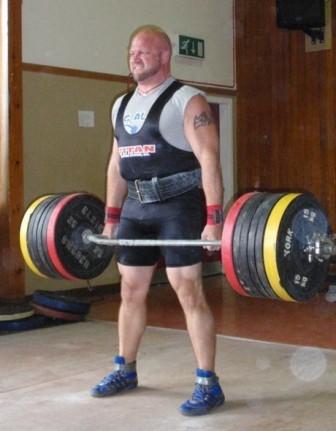
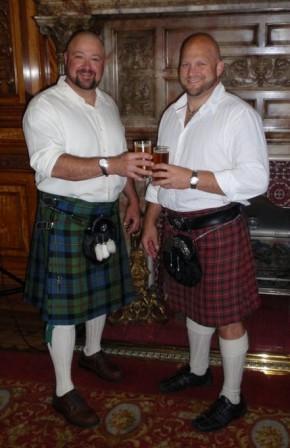
Two Man Deadlift of 661 pounds by Roy Mason (on left, 76 years old and 151 pounds) and Bill Decker (on right, 76 years old and 161 pounds). This Team Deadlift record was set on January 29th, 1994 at the Texas Deadlift Classic. (photo courtesy of the Meet Director Joe McCoy)

I knew alot of USAWA Team Records were set last weekend at Team Nationals, but I didn’t realize it was the MOST EVER team records set in one day in the history of the USAWA!  A total of 16 USAWA Team Records were set.  The previous best was 12 Team Records set at the 2005 Deadliest Duo Competition, which was slightly ahead of the the 2009 Team Nationals which had 10 records set.   The Team Record List is not near the length of the Individual Record list – only 98 records are recorded for Team Lifts versus over 9000 records for Individual Lifts.  That’s a tad over 1% represented by Team Records in the Total Record List!

This review of Team Records lead to many questions I had – of which I’m going to share the answers with you.

1.  Who has the oldest record in the Team Record List?

Joe McCoy and Bill Drybread teamed up to set several Team Records at the 1989 Nationals Record Day, on June 26th, 1989.  They currently hold together 9 Team Records in these lifts: Team Deadlift, Team Snatch & Clean, Team Snatch and Clean, 1 hand, Team Snatch – One Arm, and Team Clean and Press.

2.  How many 2-Person (man and woman) records are there in the Team Record List?

Only three  2-Person Teams have any records.  In 1996, John McKean teamed with Diane Burger to set a record in the Team Clean and Press at Art’s Birthday Bash.  In 1995, Kerry Clark teamed with Dale Spry to set a 2-Person Team Record in the Deadlift, with a pull of 500 pounds, set at the ’95 Nationals in Columbia, Missouri. In 2001 at Art’s Birthday Bash, John McKean teamed with Lynne Burnell to lift 405 pounds in the 2-Person Team Jefferson Lift.

3.  Has there ever been any 2-Women Teams set records?

At the 2000 Buckeye Record Breaker, Noi Phumchaona and Anna Holter set the first 2-Women Team Record with 309 pound Team Deadlift.  At the 2003 Buckeye Record Breaker, Carolyn Anderson and Montia Wade teamed up to pull a Team Deadlift of 220 pounds.

4.  Which Team is the Oldest in the Record List?

That honor goes to Roy Mason and Bill Decker, who teamed up for a Team Deadlift in the 75 year old age division at the 1994 Texas Deadlift Classic.

5. Which Team is the Youngest in Record List?

In 1991, the brothers Robbie and Sean McKean teamed up in the 10 year old age division and performed a 265 pound Team Deadlift.

6.  Which Team has the MOST records?

Chad and I have the most at 13 records.  Second place goes to the team of Joe McCoy and Bill Drybread with 9 records.  Third place is a tie with 8 records, with the team of Thom Van Vleck and John O’Brien and the team of Mike Murdock and Rudy Bletscher.

7.  How many different lifts have been contested as Team Lifts?

There has been 21 different lifts contested as Team Lifts.

8.  Which lift has been contested the MOST as a Team Lift?

The Team Deadlift is the most contested Team Lift.

9.  Which Team has lifted the MOST weight in any Team Lift?

That was set this year at the 2010 Team Nationals  when Chad and I lifted 1100 pounds in the 2-Man Trap Bar Deadlift, but that might not last long as I have heard the rumor that the Team Hip Lift may be contested at next year’s Team Nationals.

Dinnie Stones: Who Was Really First?

Jack Shanks, second (or third) to lift the stones without straps

by Thom Van Vleck

I have to admit, I don’t have the patience to do pure research.  The long hours required make my eyes glaze over.  When I read, it goes like this:  I pull a book off a shelf, thumb through it, find something interesting, read it until I get bored, then move on.  As a result, I gather information in bits and pieces and it kind of becomes like a puzzle to me.  Waiting for the next piece to make the overall picture more clear.  I have a lot of “puzzles” going on at once and I kind of like it that way.

As of late, one of these puzzles has been focused on Dave Webster and the Dinnie Stones.  I had wrote most recently about “Darth Vader” lifting the stones and that the article in Ironman was not really clear if Dave Prowse (Darth) lifted the stones with straps or without.  That article was written in the 70’s.  Last night I was reading Webster’s book ” Scottish Highland Games” that was printed in 1973.  In it, he makes the statement on page 131 of Prowse’s feat, “A good feat, but Dave wore hand straps which make a great difference”.

Dave then goes on and details what was certainly the second lifting (if not the third….I’ll explain that later) of the stones without straps.  Now, I realize that Gordon Dinnie, a descendent of Donald, has a website (www.gordondinnie.com) that details lifts, but if you read Webster’s book you find some details that don’t match up….making for an interesting “puzzle”.  These are the details I’m going to focus on.  My intention is not to point out mistakes, because these aren’t mistakes.  My intention is to provide information where I have found it and let you decide.

In Webster’s book he credits Jack Shanks, from Ireland, with lifting the Dinnie Stones “correctly”.  Which Webster explains as lifting both stones with no straps.  What I find funny is that in my mind “correctly” would be to lift the stones and carry them the width (not the length) of the bridge.  However, “correctly” seems to have come to mean simply lifting the stones….or carrying them the prescribed distance!  Gordon Dinnie’s website seems to confirm Shanks feat, but gives him credit with carrying the stones the equivalent distance, which Webster makes no mention of.  Gordon Dinnie also credits Imlach Shearer with lifting the stone assisted two years earlier and unassisted the same year as Shanks (1973).  What Gordon Dinnie does not make explicitly clear is if Shearer did the unassisted lift before or after Shanks.  I say this because Gordon may not have considered Shearer’s feat the same if he simply lifted them while Shanks carried them!

Now,  earlier I mention Jack Shanks being possibly the third man to lift the stones “correctly”.  Webster states in his book that in 1955 in Aberdeen at the “Highland Fling” a 78 year old man named James Law came forward and stated he lifted both stones in 1911, but did not carry them.  So, perhaps he was the second, after Dinnie, to life the stones “correctly”….or perhaps some other man, after a hard days work and a few brews in the Potarch Inn, lifted those stones on a bet or whim and their feat and name is lost to history.  Not to much of a stretch to believe that could have happened!

Then there is the story of when Louis Cyr came to visit Dinnie and they visited the stones.  Dinnie picked up the smaller stone and then carried it a distance.  Cyr did the same and beat Dinnie’s distance.  Webster points out that Dinnie was 63 years old at the time and Cyr was much younger and in his prime, but Webster seems to be clear that Cyr did not lift both.  Webster also tells of a man named William McCombie Smith would regularly lift the bigger stone unassisted and was the only man to do this.  Webster then states that after that, Henry Gray and John Gallagher also lifted the big stone unassisted before Prowse came along.

Another story involved Bill Bangert.  A man from Missouri often credited with bringing Scottish athletics to America and beginning the modern “wave ” of success it has had the past 40 years.  Bangert made a ring and harness to carry the stones that undoubtedly made the feat much easier…..and he received a little grief then and since then for this “cheat lift”.  But he did carry the stones across the road and back and I don’t think he tried to claim he did any more than that!

On another “final” note (at least until I read some more!).  I also read that at one time one of the rings broke and a different ring was attached.  It was not clear which one (the smaller or the larger one) but if it were the smaller ring….that changed the dynamics dramatically.  I lifted each stone individually with straps and that small ring was considerably more difficult.  Then there is the concern that the stones are being slowly chipped away and who knows how much weight they have lost, being dropped over and over.   Maybe they will soon be place in protected custody like the original Apollon’s Railroad Car Wheels, where nobody will ever lift them again!  In which case, we may not ever know  who was first, but we may know who was LAST!

Home Made Equipment

by Thom Van Vleck

Wayne Jackson using a home made Bench Press

In the early days of the Jackson Weightlifting Club there was a lot of  Home Made equipment.  My grandfather said that back in the 20’s, when he and his friends decided to lift weights they had “NO HOPE” of being able to afford real weights so they got scrap iron for the bars and poured cement in buckets to make weights.  They also lifted whatever was handy!  When my Uncles started lifting in the late 50’s, there was more equipment available, but they had the same old problem of being broke!  So they made a lot of their own stuff and got by just fine.  In the photo I’ve included with this story you will see my Uncle Wayne doing “press grip tricep presses” (basically, using the same grip he used for the Olympic Press and keeping his elbows in) on a bench that one of the JWC members made.   If you look closely, the leg on the far left is actually split and it looks like it’s ready to blow!!!!

I recall when I first started training, about 1977, they were tearing a house down nearby.  We went down and Wayne pulled out some old boards that weighed a ton (probably native oak).  We pulled what seemed like hundreds of nails out and then my grandfather Dalton took to making an Incline for Presses.  I’m pretty sure Evel Knievel could have used that thing to jump the Grand Canyon, it was that solid!!!  I also recall getting a splinter or two using that thing and learning that if you do inclines with the uprights in front of you and you can’t lock out the bar….you will be trapped!  Another thing that my Uncle’s made that I still have is a set of squat stands.  The base is a truck wheel and the upright is a truck drive shaft.  The “U joint” makes a nice, natural rest for the bar.   When I first started in the Highland Games, I made a lot of homemade equipment.

I’m sure we all have stories like that.  I have many more, too.  But that’s not my point today.  It’s about desire.  I recall my grandfather telling a story about how when he was a kid there was a man that had a really fast horse and he treated the horse like gold, pampering it, giving it all the best grain, stalls, equipment and most importantly hired someone to train the horse.  He then raced it against another horse that had none of these things but did have an owner that worked hands on with the horse.  The day of the race, the horse that knew his owner and the owner’s desire to win, won over the horse who’s owner was a stranger to him.  The message I got was that desire was the most important ingredient to winning.

I recall one day back in the 70’s a guy begged me to come and train at the old JWC.  He showed up and it was winter and there was no heat in our gym.  It was also dirty and full of home made equipment.  I could tell he was put off by it all.  He never came back and that was no great surprise to me.  If he had the desire, he would have put up with what he had to in order to achieve his goal.

Today, I have a pretty nice gym.  I have some pretty expensive equipment.  But I still lift off those old squat stands from time to time to remember that story.  To remember that if I have don’t have desire, all the fancy equipment in the world won’t save me when (as my Granddad used to say) “the shoe leather meets the road”.   A little adversity is a good thing!

Team Nationals

2010 USAWA TEAM NATIONALS

by Al Myers

Group picture from the 2010 USAWA Team Nationals. Front row left to right: Rudy Bletscher, and Mike Murdock. Back row left to right: Mark Mitchell, Scott Tully, Al Myers, and Chad Ullom.

Chad and I were able to successfully defend our title of  USAWA Team National Champions, but not without serious competition this year.  This, without a doubt, has to be the most successful Team Nationals to date in terms of competitors and quality of competition.  I haven’t counted the records set yet, but I am willing to bet that more USAWA Team Records were set in this meet compared to any other meet in USAWA history.  Fellow Dino Gym members Mark Mitchell and Scott Tully formed a team, along with a pair of very strong 70 plus year olds, Mike Murdock and Rudy Bletscher.  It is interesting to note that all the teams had team members that were very comparable in size and strength to each other.  Having  team partners that are compatible in strength, lifting style, and body size is essential in order for a team to perform optimally.

Mark Mitchell and Scott Tully with their 450 pound Team Maxey Press.

The first lift of the day was the Maxey Press, done in honor and remembrance of Bob Maxey, who was a founding member of the Dino Gym and who this lift is named after.  The Maxey Press is a strict press from the rack using the Fulton Bar. Mark and Scott stole the show here as they got an easy 450#, and then called for 500#.  Truly a huge team press!  They missed it by inches at lockout.  Both of these guys are 250-300# strict pressers, but just had their timing off a little lifting together.  The next lift was the Hands Together Bench Press.  This lift is tricky when performing it alone, but as a Team Lift  really provides a challenge.  Mark and Scott ended with 570#, but had more in them.  They just ran out of attempts.  The next lift was the Team Rectangular Fix.  Mike and Rudy showed true grit in this one, as they did a lift of 160 pounds.  When tabulating the points, I realized that these two scored the most points in this lift of all the teams.  They had adjusted points in the Rectangular Fix of 173 points, compared to 157 points for Chad and me, and 152 points for Mark and Scott.  That is something they should be proud of!

Rudy Bletscher and Mike Murdock - A pair of very strong lifters over the age of 70 years.

The last lift of the day was the Team Trap Bar Deadlift.  I had made a custom-designed Trap Bar for this occasion to accommodate this lift.  I told the guys whoever lifted the most would probably have a World Record since I doubt this lift has ever been contested before, anywhere.  The comp was very close at this point, with Mark and Scott leading Chad and me by only 10 points.  So this Team Nationals came down to the LAST EVENT to be decided!  Chad and I opened with 915 pounds while Mark and Scott decided to break the 1000 pound barrier on their opener with 1005 pounds.  This put them in the drivers seat over us.  Chad and I then matched them with a 1005 pound pull.  They decided to call for 1100 pounds to really put the pressure on us, so Chad and I were forced to do the same.  They missed it ever so close, and then  Chad and I pulled it for the win. A dramatic finish!

This was a great day for the USAWA.  I want to thank Darren Barnhart for officiating, and for my Dad LaVerne and old-time Olympic Weightlifting champ Dave Hahn for showing up to watch this ordeal.  Team Nationals is a very unique competition that I am surprised not more lifters want to take part in.   It challenges you in different ways than typical solo lifting competitions.  Even though next year’s Team Nationals is a year away, I invite everyone now  to take part in this event next year.

Al Myers and Chad Ullom with a 1100 pound Team Trap Bar Deadlift.

RESULTS:

Teams:

1. Al Myers (253# & 44 years old) and Chad Ullom (245# & 38 years old)  – 115 kg Class & Open Division

2. Mark Mitchell (357# & 49 years old) and Scott Tully (344# & 34 years old) – 125+ kg Class & Open Division

3. Mike Murdock (230# & 70 years old) and Rudy Bletscher (216# & 74 years old) – 105 kg Class & 70-74 Age Division

Official (one official system used):  Darren Barnhart

Team Lifts:  Maxey Press, Bench Press – Hands Together, Rectangular Fix, and Trap Bar Deadlift

Lifters Maxey Bench Rec Fix Trap DL Total Points
Al Myers

Chad Ullom

400 500 200 1100 2200 1734.92
Mark Mitchell

Scott Tully

450 570 215 1005 2240 1592.42
Mike Murdock

Rudy Bletscher

200 210 160 585 1155 1252.96

Notes: All lifts recorded in pounds.  Total is total weight in pounds lifted.   Points are adjusted points for bodyweight and age correction.

Concepts on General Weight Training

(Over the years, my Uncle Phil Jackson has been my coach, but also much more than that.  He has been my guru, my father figure, and a best friend.  Phil has coached numerous state champs, bodybuilding champs, and he ran a couple of gyms.  He met all the greats of yesteryear including Bill Pearl, Paul Anderson, John Grimek, and many more.  He also has a degree in Physical Education and has maintained his teaching certificate.   He shared thoughts and ideas with these men and has a wealth of knowledge that  today’s lifter might view as old fashioned, but I think USAWA members realize that the old timers knew what they were doing. He sent me this routine some time ago typed upon his manual typewriter back in 1969. – Thom Van Vleck)

Concepts on General Weight Training

by Phil Jackson

Weight training is possibly the greatest supplement an athlete can add to his training schedule.  Yet it can also be the worst mistake he could ever make.

Weight training applied properly can add strength, endurance, speed, and a certain degree of flexibility.  If it is not applied properly you may find yourself somewhat stronger than you were before but your athletic performance has not increased and in some cases even decreased primarily due to a lack of flexibility.  For example, you could give a baseball pitcher a weight training schedule that was too heavy, lacking full range movement that would ruin his pitching arm.  Yet you carefully design a schedule using weights to strengthen his throwing muscles, and it will improve his pitching.

Perhaps it would be a good idea to make a distinction between the terms weight lifting and weight training.  Weightlifting is the process of lifting weight primarily for the purpose of increasing muscle size and strength, with no regard to athletic performance, where as weight training is the process of training with weights for the purpose of increasing strength for the purpose of athletic performance.

Most of us as coaches will be using weight training for the purpose of increasing strength for athletic performance, yet at the same time one should strive for as much flexibility as possible in the weight schedule.  This is usually provided by emphasizing the stretch with the movement. I would like to demonstrate just a few of these exercises and the whole purpose here is the stretch technique use whenever possible: Bench Press to Neck, Deadlift off bench, Lunges to floor, One arm tricep extension, Wrist Curls, Straight Arm Pullovers, Seated Twist (always first), and Calf Raises.

Two biggest mistakes you can make, Compare yourself to others and directly applying others technique to you…you find what works for you.

As a coach, when you’re making up weight training schedules for your athletes there are 7 concepts which will help.

1. Cardiovascular: Increasing and maintaining heart rate

2.  Respiratory: How you control your breathing in an athletic event, holding breath, releasing it, and breathing control.

3. Stamina: Ability to go day after day

4. Endurance: Ability to go as near 100% in a one day event, continuous ability to perform at a high level

5. Muscle Twitch: stretching just beyond the normal range.  Very determined by the specific sport.  Increasing the ability to Explode (Phil calls it muscle snap).

6.  Flexibility: All kinds of stretching for active recovery, teaching the muscle to relax for performance improvements, getting in touch with the muscle.  Increased the range of motion and muscle twitch.

7.  Complete training: building the minor muscles and foundation muscles for the specific sport event.

1 421 422 423 424 425 493