Heavy Lift Championship
The Heavy Lift Championships have the longest history aside from the National Championships. The first event was promoted October 30, 1994, by Bill Clark and won by John Carter and Kerry Clark. Eight records still stand from that event including Bill Clark’s 1200-pound Back Lift and Kerry Clark’s 1460-pound Back Lift. The meet included at least the Harness Lift, Hip Lift and Neck Lift as well.
An article by Dale Friesz in 2010 lists all the Heavy Lift Competitions which have included Heavy Lift Championships, Schmidt’s Backbreaker Pentathlon (since 1987), and the Strongman Pentathlon (1986 & 1988). In recent years, The New England Heavy Lift Classic (2024 & 2025) could be added to that list.
Historically, five lifts were contested as part of the Heavy Lift Championship. The website has a great write up on the 2011 event which was cut down to three lifts due to venue time constraints at York Barbell. I assume, the Back Lift was removed due to needing a dedicated apparatus for a Back Lift which is not always easy to fabricate or move around. Similarly, the Harness Lift requires hand supports to achieve a true max effort.
HIP LIFT – Men’s records in the range of 2000-2500 pounds; women’s records in the range of 800-1200 pounds
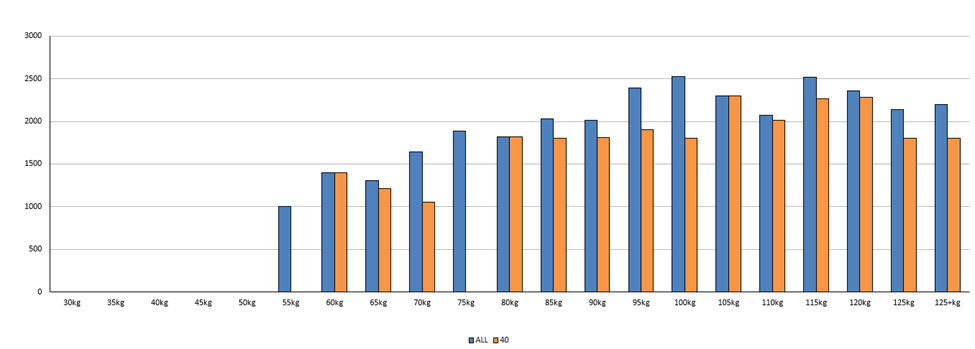
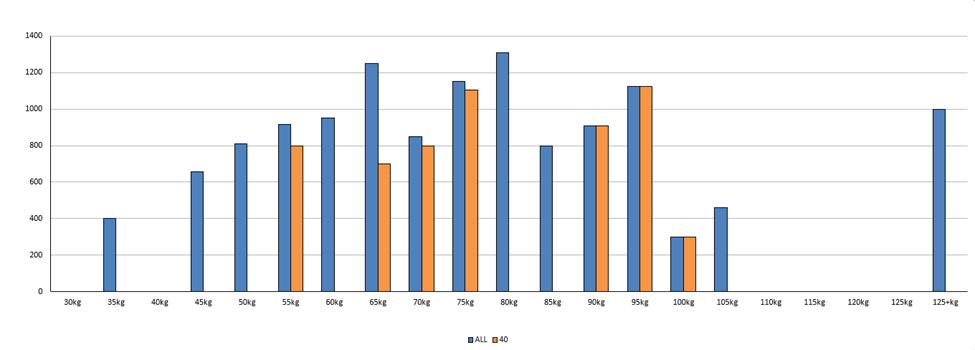
NECK LIFT – Men’s records in the range of 500 to 800 pounds with some extreme outliers. Women’s records are lighter, but I do need to highlight Kerry Clark’s 555-pound Neck Lift in 1995. The next highest women’s record is 400-pounds by Jacqueline Caron in 1992. In the last decade, the heaviest women’s neck lift was 325 pounds by Cassie Morrison in 2016.
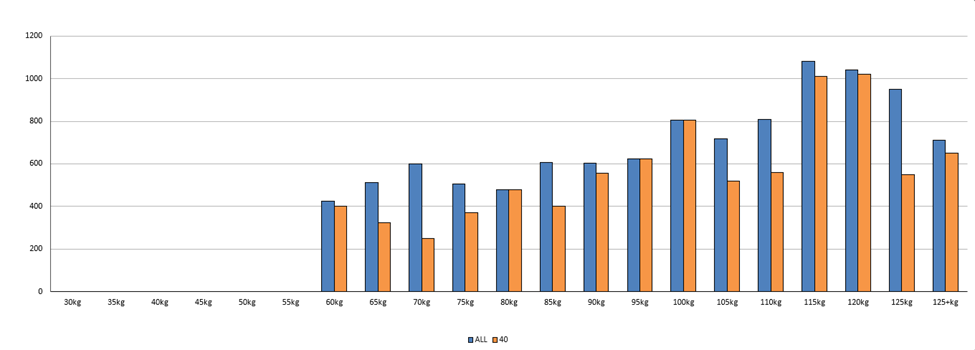
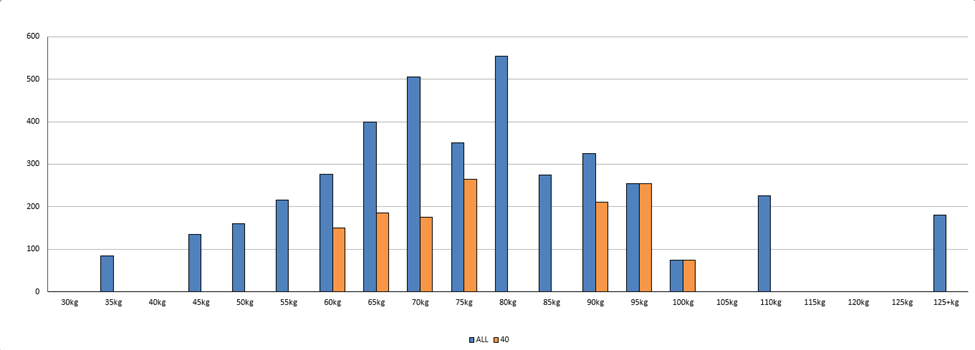
HAND & THIGH – Men’s records are around 1500 pounds. Women’s records are around 800 pounds.
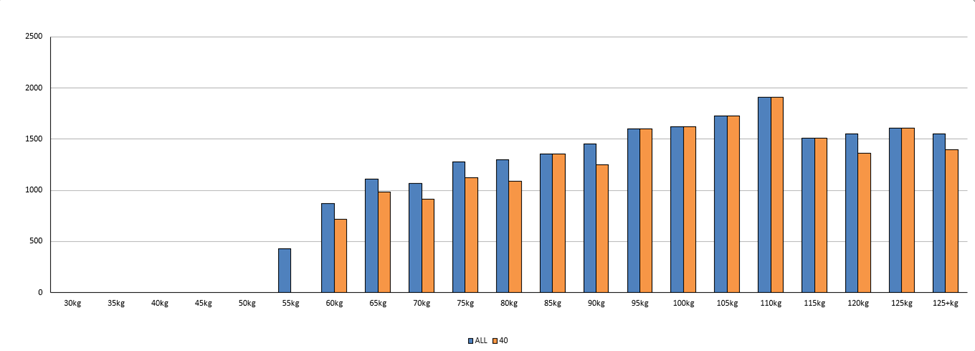
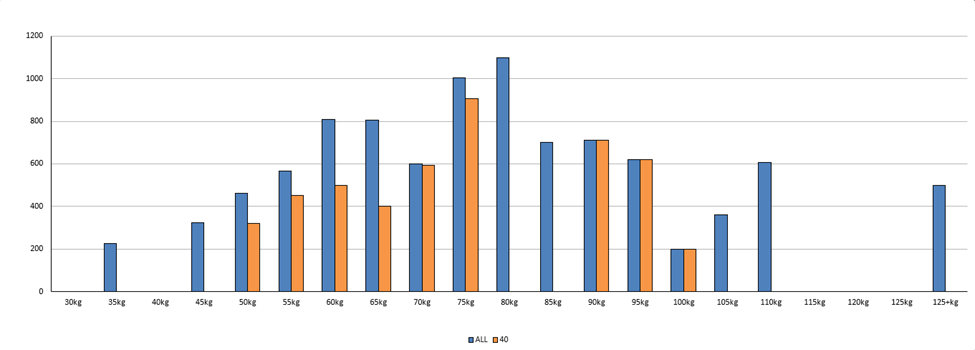
In recent years, the top lifts at the heavy lift contests have been lower. The athletes are lifting amazing numbers, but they are a fraction of the weights lifted by athletes in the first decades of the organization.