2012 IAWA Worlds to be held in Kansas City

by Al Myers

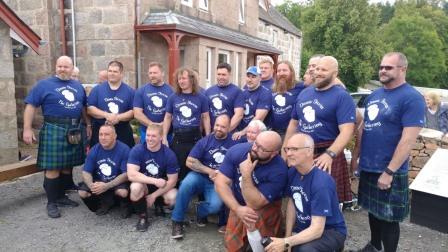
Chad Ullom and Al Myers will be the Meet Promoters for the 2012 IAWA All-Round Weightlifting World Championships.

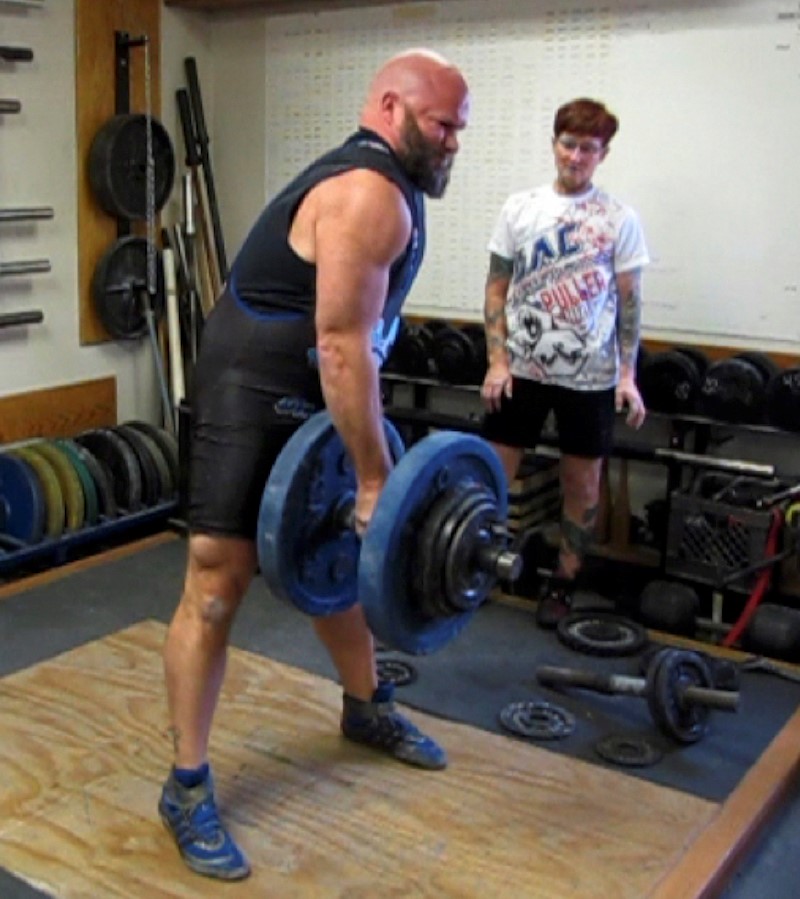
Another thing that arose from the 2010 IAWA World Council Meeting was that Chad Ullom and myself submitted a bid to host the 2012 IAWA World Championships – and it was ACCEPTED!!   Chad and I will be co-promoters (meaning that we will SHARE in the expenses!).  We plan to have the Championships the first weekend of October,  which is the traditional date for it.  It will be held in Kansas City, which has a major airport to allow for lifters to fly into the meet without much additional travel.   We have not selected a venue yet.  We are excited about this opportunity and plan to host it in a “FIRST RATE STYLE”.   This location (Kansas City)  is the “center point” of All-Round weightlifting in the United States, and hopefully, will stimulate a big interest in attendance. This is the first time the IAWA World Championships will be held in Kansas.   The entry forms will not be available until after next year’s Championships, but I wanted to announce the date now so everyone will have plenty of time to get this date on their schedule.

USAWA in Print: Book Review

by Thom Van Vleck

Steve Scott and John Saylor's latest book promotes USAWA members and USAWA lifts.

I recently got an issue of Steve Scott’s latest book.  He wrote it with John Saylor, a well respected martial arts instructor and Champion.  Steve sent me an autographed copy because of what was inside.  I’ll get to that in a moment.  First, let me tell you about Steve.

Steve is one of my best friends and someone I admire greatly.  When I first met Steve he was a top master’s thrower in Scottish Highland Games and was running Highland Games in KC.  Because of Steve, I became friends with Al Myers and Chad Ullom and was introduced to the sport that I’ve enjoyed my greatest athletic success.  For that, I’m very grateful.  Steve’s wife, Becky, also was a top thrower and always at his side in any project he took on.  I then found out that Highland Games were just the tip of the iceberg as far as Steve & Becky were concerned.

Steve was, and still is, a top Judo coach.  He has a widely respected club in Kansas City called the Welcome Mat that has been in operation since 1969.  It has produced National, Pan American,  and World Champs as well as some of the elite men and women in our fighting forces and a Secret Service Agent that was on George W. Bush’s personal detail.  Becky was a National, Pan Am, and World Champ and Steve once told me that Becky could have been an Olympic Champion but back then women did not compete in Judo in the Olympics!

Over the years, Steve has written over a dozen books on martial arts, training, coaching and this one is his best to date in my opinion.  It has a very broad appeal.  My Uncle, Phil Jackson, who is, in my opinion, the most knowledgeable person I ever met in regards to weight training, once told me that the hardest sport all the way around was boxing.  It was mentally, physically, and emotionally draining.  I would say the same applies to all combat sports.  You have to be tough and that comes from how you train.  Steve, with John Saylor, has (in my opinion) created the ultimate resource on Combat training.

This book is HUGE and full of all types of training.   There are over 300 pages of illustrated exercises.  There are detailed explanations of not only how to do the lift, but how to properly train and utilized the lift to fix a weakness. There are workout routines and tons of advice.   I would say that if you wanted to do some off season conditioning for USAWA lifting or Highland Games, this book would be a valuable resource.

Now, I’ll tell you why mine was autographed.  Inside were pictures of me, Al Myers, and Chad Ullom demonstrating some lifts.  Appropriately, it was in the “OLD SCHOOL” training section.  Steve  talks about training wisdom that came from Bill Clark,  and his book even contains an exercise that is a variation of the “Inman Mile”!  I knew Steve had requested the photos, but I had no idea what a first class product he was producing.

Taking Care of Your Back – Part 2

Part 2 – Be Sure To Limber Up

by Al Myers

I initially was going to title this part Stretching.  But that didn’t define it the way I wanted it to.  Stretching to me means doing movements  like touching your toes or light calisthenics.  I next thought I would title this part Flexibility, as that could result from many things, including stretching.  This still didn’t fit the message I wanted to convey. I finally (with much deep thought!) decided  to use the expression  “Be Sure to Limber Up”, because that fits exactly what the first part of my Thursday workouts are all about.

Al Myers suspended by bands to stretch out and limber up the back and hips.

As for my opinion on stretching, I believe a little is necessary but to much is harmful in developing maximum strength.  I know this is a BOLD statement, and there are probably many lifters who would disagree with me on this. Bill Clark once told a training partner of mine Mark Mitchell, when Mark trained at Clark’s Gym several years ago, that stretching the muscles in excess is like repeatedly stretching a rubber band – eventually it will SNAP.  I couldn’t agree more.  I have always been prone to hamstring pulls, and through the early years of my training  I did about everything to safeguard against this injury, including aggressive hamstring stretching.  Sure I got more flexible – but it didn’t solve my  problem of enduring hamstring injuries.  Being able to place your hands flat on the floor with the legs straight is beyond what is needed to be a competitive lifter (unless you are in training for the Mansfield Lift!).  Excessive flexibility, beyond what is required in doing a specific lift,  doesn’t help in being strong in that lift. In fact,  having just enough flexibility to “remain tight” in the bottom portion of a lift will enhance your strength in a lift. Think about the squat – do you WANT to be tight and ready to recoil when you break the legal depth?  I sure do.  This reminds me of a story my brother-in-law Bob Burtzloff once told me that re-enforces my opinion on this.  Many years ago Bob experimented with training the Bench Press using a cambered bench press bar (also known as a McDonald Bar). It allows the lifter to increase the range of motion on the bench press, with the hands going lower than the chest when the cambered portion of the bar touches the chest. Bob first thought training through this INCREASED range of motion would increase his Bench Press.  It did the opposite and made his Bench Press go down.  When he went back to a regular bar he didn’t feel the tightness in his chest and shoulder muscles when at the bottom position.

However, stretching is still part of my Thursday workout. I think you need a balance in flexibility to optimize your lifting abilities.  On the other hand, I have seen lifters who were so in-flexible that they couldn’t even properly perform some of the All-Round Lifts that require flexibility.  In these cases, spending a little time stretching would help their performance.

Chad Ullom performing a stretch with the Jump Stretch Bands that Dick Hartzell called "the rack". Chad is completely suspended off the floor and his back is being "stretched" by band tension.

For me, two days after a heavy back workout is when my legs and back are the most sore.  I start off this workout with some cardio, which usually includes  time on my recumbent exercise bike.  This “loosens up”  those bound-up leg muscles and hips, along with giving me some needed cardiovascular fitness.  After getting a good sweat going, I’ll proceed to wind down with some stretching.  Nothing fancy here – just 20 minutes of whatever stretches I feel like doing at the time. Next I’ll proceed to the “bread and butter” exercise that limbers up my back – Suspended Band Stretching.  I learned this “secret exercise” several years ago at the 2003 USAWA National Championships in Youngstown, Ohio. This meet was hosted at the Jump Stretch training facility, the birthplace of the Jump Stretch Bands.  Known as “the rubberband man”, Dick Hartzell showed several of us after the meet a very unique use of the Jump Stretch bands that I had never seen before.  It involved using the bands to decompress the vertebrae of the back by using band tension. Once I got home I immediately purchased a pair of the Big Black Monster Bands from Jump Stretch so I could replicate this movement  in my gym.  I wouldn’t really call it stretching.  But I’ll tell you, 15 minutes of hanging by the hips with these bands attached your back will be fully “limbered up”.  Any pain from tight muscles in your back will be gone.

More of this workout and the story “Taking Care of Your Back” tomorrow with – Part 3, Have Strong Abs

New Lift – the Turkish Get-Up

The starting position for the Turkish Get-Up.

by Al Myers

This is the only new USAWA lift approved at Nationals that I haven’t highlighted yet with a story.   It is a very unique lift in many ways.   The Turkish Get-Up  is NOT really a new lift as it was a favorite with old-time strongmen, and has been around forever.  It at times was called the “One Arm Get-Up”, and often trained by lifters that also specialized in wrestling, gymnastics or hand-balancing. Guys like Sig Klein loved it.  I first heard of the Turkish Get-Up several years ago when I read Brooks Kubik’s book Dinosaur Training.  In it he described the benefits of this exercise – how it strengthens the stabilizer muscles, improves flexibility, and  increases core strength.  The book mentions the old-time strongman Otto Arco and how he could do a Turkish Get-Up with MORE than his own bodyweight.  That is impressive!

During the rise from the platform, the lifting arm must remain straight.

We have two similar USAWA lifts to the Turkish Get Up – the Half Gardner and Full Gardner.  However, the Turkish Get-Up is a different lift in a couple of ways.  The TGU starts on the floor – the Gardner lifts start standing.  The TGU requires the use of a dumbbell or kettlebell – the Gardner lifts require use of a bar.  It is the “missing link” to the Gardner Lifts. I have mentioned this before but I am going to repeat it again.  This formula “sums” up these three lifts:

Full Gardner = Half Gardner + Turkish Get-Up

Last weekend at the Ledaig Record Day, several of us got to be the first ones to put a Turkish Get-Up record in the USAWA Record List.  This included  Dave Glasgow, Amber Glasgow, Chad Ullom and myself.  The TGU is a very popular exercise for trainees outside of the All-Round crowd.  Just “goggle” Turkish Get-Up and you will see what I am talking about.  The Cross-Fit trainees love this exercise!  But now since the TGU is an official lift of the USAWA, we are the ONLY weightlifting organization that maintains records for it.

Chad Ullom demonstrating the steps of a Turkish Get-Up with a 70 pound kettlebell at the Ledaig Record Day.

The Rules for the Turkish Get-Up

A dumbbell or kettlebell is used for this lift. The lift begins with the lifter lying on his/her back on the platform holding the implement in one hand above the body with a straight arm perpendicular to the platform. Once in this position, an official will give the command to start the lift. The lifter must rise to a standing position, holding the implement overhead with a straight arm throughout. The lifting arm must stay perpendicular to the lifting platform. The lifter may use the free hand to brace against the body or the platform during the execution of the lift, but must not touch the implement or the lifting arm. The implement may rotate in any direction. Once standing with the implement overhead, the implement motionless and the lifter’s feet in line with the body, an official will give a command to end the lift.

The Turkish Get-Up will be included in the updated USAWA Rulebook coming the first of August!

USAWA Award Winners for 2009

by Al Myers

Courage Award Winners Frank Ciavattone (left) and Dale Friesz (right).

One of the exciting things that has been developed in the USAWA this past year is the development of the USAWA Awards Program.  Included in the new USAWA bylaws is the creation of an Award Director for the USAWA, which is important to insure that the Awards Program will continue in the future. I was nominated for this position and upon receiving the membership’s blessing by an unanimous vote, I was appointed the Awards Director.  I feel giving “special awards” on behalf of the USAWA is VERY IMPORTANT and I will do my best to make sure this continues as long as I am in this position.  When someone shows that they are “going beyond what is expected” in the organization – it is only right that the USAWA gives them the credit they deserve.  I also want to make sure that these “special awards”  will continue to be selected by the membership, instead of by me or the Executive Board.  This makes them mean even more to the deserving award recipients – knowing that they were selected for these honorable awards by their peers.  These awards will be given out at the Annual National Meeting, which is always in conjunction with the National Championships. The 2009 Award winners are as follows:

Athlete of the Year Award Winners Chad Ullom (left) and Al Myers (right).

Athlete of the Year – Al Myers

Athlete of the Year Runner Up – Chad Ullom

Leadership Award – Bill Clark

Leadership Award Runner Up – Al Myers

Sportsmanship Award – Denny Habecker

Sportsmanship Award Runner Up – Art Montini

Courage Award – Dale Friesz

Courage Award Runner Up – Frank Ciavattone

Newcomer Award – David Glasgow

Newcomer Award Runner Up – Kohl Hess

Club of the Year – Dino Gym

Club of the Year Runner Up – Ambridge VFW BBC

CONGRATULATIONS TO THE 2009 SPECIAL AWARD WINNERS!! The USAWA is very proud of you and your accomplishments.

Team Nationals

Meet Announcement -

the 2010 USAWA Team Nationals

by Al Myers

Defending 2009 USAWA Team Champs Al Myers and Chad Ullom.

I  will be hosting the 2010 USAWA Team Nationals again this year on Sunday, September 19th.   This will be the fourth year the USAWA has had Team Nationals.  I am hoping for more participation this year – and I have picked a selection of lifts that should be accommodating to everyone.

This year’s lifts are:

Maxey Press

Bench Press – Hands Together

Rectangular Fix

Trap Bar Deadlift

Different divisions will be contested – the 2-Man, 2-Woman, and the 2-Person.  The 2-Person division consists of a man and woman team.  USAWA scoring will be used as required by our rules for all National Competitions. A record day for Team Lifts ONLY will held after the meet.

This coming  fall of 2010  marks the 5 year date that the Dino Gym lost a great friend and training partner in Bob Maxey.  There is not a training session that Bob is not remembered by all of us. His weightlifting belt still resides untouched on the mantle, and its presence still gives us motivation to train, much like Bob did when he was  in the gym pushing us to lift harder with his boisterous words of encouragement.   So, in remembrance of Bob, I have included the USAWA lift named after him – the Maxey Press. The Maxey Press is a strict press out of the rack with a Fulton Bar.  This was one of Bob’s favorite lifts.  This will be the first time it will be held in a competition as a Team lift.

Another unique lift that will be contested will be the Team Trap Bar Deadlift.  I just recently built a specialty bar for this purpose.  As far as I know, the Team Trap Bar Deadlift has NEVER been contested before so any records set will be the first ever.  I know everyone will enjoy this lift.

The Team Nationals will be held in conjunction with our gym’s annual Dino Days Weekend.  On Saturday, we will be hosting a Highlander Games, sanctioned by NAHA.  After the games on Saturday, we will be having a big backyard BBQ that evening. So, this is just another reason to put this date on your calendar!

Entry Form for Team Nationals – TeamNationals2010

How I do the Arthur Lift

Chad Ullom and his 258# Arthur Lift at the 2010 Arthur Saxon Pentathlon

By Chad Ullom

The Arthur lift starts off with a hack lift. I usually try and pop the weight up over my hips and drop under it and catch it ideally right on my belt. At this point, I bend over and work it into a good position where I know it won’t fall off. At this point, I reposition my hands to an underneath position and move them out to the collars. I try and pop the weight up my back, so I push up with my hips and pull the bar up toward my shoulders. It usually takes about 4 times to get it up high enough that I can get it onto my shoulders and ready for the jerk. Take your time and make sure the bar is centered and get your hands placed where you want them. I make sure that I’m ready for the jerk, drive hard up with my legs and hips and push through to lock out it out.

…And a Good Time Was Had By All

by Thom Van Vleck

Chad Ullom, Tedd & Thom Van Vleck, & Al Myers have a good time after a meet

I grew up in Schuyler County, Population about 3500. We had a weekly newspaper (long since gone) that often was filled with social items. There was this one lady that wrote about the gatherings and she would talk about who came, what they ate, and what they talked about…..big news where I came from. To be honest, I kinda miss that kind of news over the stuff we deal with now! At any rate, she would end her column with “…..and a good time was had by all”. That kind of became a “catch phrase” in my family for social gatherings.

Recently, Chad and Al came up for a contest I put on. Al’s Dad came along, too. As is usual, we all ended up at a “get together” at my place after meet. And, as usual, we ended up telling stories until the wee hours of the morning…and maybe a liquid refreshment or two. My wife went to bed at a reasonable hour (we did not!) and commented the next day, “Al sure laughs loud!!!”. The point is, we all laughed and we laughed a lot!

The next day, when we went to the Deanna meet, Al and I talked about this part of almost every meet and contest we have been to over the years. Al commented later that his dad told him, “I finally understand why you like to do these meets”. While I enjoy the challenge of competing and I have many memorable moments of contests, I have just as many stories about the trips to, and from, and the get together’s that happen afterwards. It’s all part of the fun.

I hopefully have many more contests to come in my life time, and win or lose, I will do my best to make sure they all end with “….and a Good Time was had by All!

USAWA Members Win Big at Highlander

by Thom Van Vleck

USAWA Member Thom Van Vleck on the front page of the Kirksville Daily Express

Proving that being an All-Rounder really means being an “all around” athlete, Chad Ullom won the Middle Weight class, Scott Tully was the Heavyweight winner, and Thom Van Vleck was the top Master at the recent Missouri State Highlander competition held in Kirksville, Missouri on March 27, 2010. Highlander combines Scottish Highland Games events and Strongman events, an equal number of each, to determine the best overall athlete.

For me, while I consider Highland Games my first love, training for recent USAWA events in the off season has been a huge plus.  It has revitalized my training and some of the lifts made me realize I had weaknesses that needed to be addressed.  The pay off was a big personal record in my 56lb Weight Over Bar event.  This is a Scottish Highland Games event that requires the athlete to toss a weight over a cross bar for best height.  I cleared 15′6″ using the spin technique (much to chagrin of USAWA Secretary Al Myers who prefers the traditional technique!).  This was a full 1′6″ over my previous contest best, and considering the number of years I have been throwing, that’s a huge jump for me!  I credit the USAWA training I did for that big gain!

All-round training proves it’s worth!

National Postal Meet

Results of the National Postal Championships

by Al Myers

Defending 2008 National Postal Champion Chad Ullom wins Best Overall Lifter in the Men's Open Division this year.

Yesterday I received the results of the USAWA National Postal Championships which was held in December, 2009. I was pleased with the participation, which matched the same number of entries as this past year’s National Championships. John Wilmot was the Meet Director for this Postal Championships for the second straight year, which culminates his postal series of four postal meets throughout the year. The Best Lifters for this years Championships are as follows:

Women Juniors – Molly Myers

Men Juniors – Joe Ciavattone Jr.

Master 40-44 Age Group – Al Myers

Master 45-49 Age Group – Orie Barnett

Master 55-59 Age Group – Dennis Vandermark

Master 60-64 Age Group – John Wilmot

Master 65-69 Age Group – Denny Habecker

Master 80-84 Age Group – Art Montini

Men Overall Open – Chad Ullom

Men Overall Master – Al Myers

Men Overall – Al Myers

Congratulations to this year’s winners!

FULL MEET RESULTS:

2009 National Postal Championships
December 1st – 30th

Meet Director:  John Wilmot

Some used the three official system while others used the one official system:
Art Montini – Officials: Denny Habecker, Scott Schmidt, and John McKean
Denny Habecker – Officials: Art Montini, Scott Schmidt, and John McKean
Kohl Hess – Officials: Art Montini, Scott Schmidt, and John McKean
Molly Myers – Official: Al Myers
Al Myers – Official: Chad Ullom
Dennis Vandermark – Official: John Monk Jr.
John Monk Jr. – Official: No certified official used
Joe Ciavattone Jr. – Official: Mike O’Brien
Jonathan Ciavattone – Official: Joe Ciavattone Sr.
Joe Ciavattone Sr. – Official: Mike O’Brien
Orie Barnett – Official: No certified official used
John Wilmot – Official: No certified official used

Lifts:  Clean and Push Press, Zercher Lift, Deadlift – Ciavattone Grip

Results:

Women

Lifter Age BWT Wt Cls
Push Press
Zercher Deadlift Total Points
Molly Myers
11 128 60 60 85 175 320 506.59


Men

Lifter Age BWT Wt Cls
Push Press
Zercher Deadlift Total Points
Al Myers
43 257 120 264.5 407.7 462.7 1134.9 923.58
Chad Ullom
38 237 110 253.5 407.7 440.7 1101.9 898.60
Joe Ciavattone Jr.
16 207 95 200 325 365 890 858.19
Orie Barnett
48 228.6 105 188 330 415 933 845.10
John Monk Jr.
44 175 80 205 325 275 805 816.17
Joe Ciavattone Sr.
41 245 115 220 325 425 970 793.00
Denny Habecker
67 200 95 148 215 290 653 746.99
John Wilmot
62 212 100 135 205 335 675 718.25
Jonathan Ciavattone
15 207 95 145 230 300 675 680.46
Dennis Vandermark
56 206 95 95 225 285 605 621.99
Art Montini
82 181 85 80 158 200 438 592.83
Kohl Hess
15 264 120 130 215 290 635 563.75


“BWT” is bodyweight in pounds. “Wt Cls” is kilogram weight class.  “Total” is total pounds lifted.  “Points” is bodyweight and age adjusted points.

My trip to the York Barbell Museum

by Al Myers

A Bronze Bust of the founder of York Barbell - Bob Hoffman

Following the IAWA World Championships last month, I got to do something I have always wanted to do – go see the famous York Barbell Museum in York, Pennsylvania.  It only took Chad and I a hour or two to make the trip from Lebanon – and it was worth it!  The museum contains the entire history of York Barbell, photos and equipment of Old Time Strongmen, and the USA Weightlifting Hall of Fame.  We met up with Mike Locondro, who is the retail manager of York Barbell, and got insight into York Barbell beyond that normally seen by a normal museum tour.  As some of you know, Mike has competed in USAWA competitions in the past and was very good, placing 10th Overall in the 1993 & 1995 World Championships.  He was very gracious to us and gave us a tour of the York Gym, which is off-limits to the general public.  He spent over two hours visiting with us.  Chad and I thought we must have been receiving special treatment because we were All-Rounders, but the truth is Mike is just an outstanding salesman and treats all customers that way.

Chad posing with the full-size sculpture of Eugen Sandow

Now back to the York Museum – I can’t even start to describe everything that we seen.  A highlight for me was seeing the Travis Dumbbell, which Warren Lincoln Travis used in many of his strength shows.  It weighs 1500 pounds empty!! It seemed much bigger to me than the prior impression I had of it from pictures.  The York Museum contains the Challenge Barbells of Eugen Sandow and G.W. Rolandow.  Just getting to put your hands on a barbell with so much history is an amazing feeling.  The museum has the Challenge Dumbbell of Louis Cyr.  It weighs empty 202 pounds and fully loaded with lead shot weighs 270 pounds.  Cyr could easily take it one handed and Side Press it.  These are just a few of the museum items – there is much more!! The museum details  the complete history of York Barbell, and tells the story of how Bob Hoffman built York Barbell into a weightlifting empire. If you ever get the chance to go to the York Barbell Museum – make sure to give yourself at least a half day to see it all!

But give Mike a call first – and tell him you’re an All-Rounder.

World Championships

by Al Myers

Overall IAWA World Champion Mark Haydock 230 Kilogram Zercher Lift

“What we lacked in quantity we made up for in quality”, said IAWA President Steve Gardner at the World Council Meeting Saturday night. This quote really summed up this year’s World Championships. There may not have been alot of lifters present – but the competition was intense. Mark “Haystack” Haydock captured the 2009 Championship’s Overall Best Lifter on his last successful lift of the competition, by doing a monstrous 230 kilogram Zercher Lift!! This puts him in a small group of lifters who have exceeded over 500 pounds in the Zercher Lift throughout the history of the IAWA. The top four places were really close and decided by under 30 adjusted points. This competition had lifters of all age groups – from 15 year old Kohl Hess to 81 year old Art Montini. Denny and Judy Habecker did an outstanding job of making this event a special occasion for everyone. They even invited the lifters to their house Saturday and Sunday nights after the competition for food and refreshments. We were entertained by George “the Magician” Dick with his many card tricks. I am still scratching my head on the one where the card passed through Chad and ended up stuck on the glass on the shelf behind him. Denny and Judy know how to run a smooth meet. Everything went according to plan and both days finished in good time. The banquet was fantastic with a wide selection of food. Everyone left on a full stomach!! Steve Gardner worked the microphone and score table, and like always, kept the meet running efficiently. John Horn spent 2 full days loading and spotting and definitely deserves a big pat on the back. It takes people like John, who do the work behind the scenes, to make a meet successful.

Frank Ciavattone pulling a Ciavattone Grip Deadlift

It was a real pleasure getting to see Frank Ciavattone again. Frank has just recently had a hip replacement and wasn’t fully ready to compete in a meet yet. But Frank is a great Champion and made it to this meet to show support to the IAWA!! When he pulled his last Ciavattone Grip Deadlift, a lift named after Frank because of his amazing gripping power, he dedicated it to Karen Gardner in her battle in overcoming cancer – it was an emotional moving moment. Karen is the “First Lady” of All-Round Weightlifting and everyone has the utmost respect for her. It has now been 30 years since Frank has been cancer free himself.

Howard Prechtel and Bob Geib

Another great surprise this weekend was the return of Howard Prechtel. The meet about stopped when in walks Howard and Bob Geib!!! Howard spent many years as the IAWA President and has done as much through the years for the USAWA as anyone. Howard seemed to really enjoy himself at the meet, and even picked up a loaded barbell a couple of times. A person may forget a lot of things in life – but you never forget how to lift weights!!! Welcome back Howard!! Also – thanks to Bob for bringing Howard to this meet.

Group Photo of the IAWA World Championships

I had a great time – got to see alot of old friends, and even made a couple of lifts that I had to push myself on. Thanks again to Denny and Judy for hosting this Championship and I’m already looking forward to Scotland in 2010!!

Top Three Individuals at the 2009 IAWA World Championships Left to Right: Chad Ullom, Mark Haydock, Al Myers

FULL MEET RESULTS:

2009 IAWA World Championships
Lebanon, Pennsylvania
October 3rd & 4th, 2009

Meet Directors:   Denny and Judy Habecker

Lifts on Day 1: Hack Lift – One Arm, Clean and Press Behind Neck, Straight Arm Pullover, Deadlift                         -Ciavattone Grip
Lifts on Day 2: Snatch – One Arm, Pullover and Press, Zercher Lift

Officials (3 official system used):  Karen Gardner, Frank Ciavattone, Al Myers, Dennis Mitchell, George Dick, Art Montini

Loader: John Horn plus others

Scorekeeper:  Steve Gardner and Judy Habecker

Emcee:  Steve Gardner

Results:

Name BWT Class Age Division Hack C&P Pullover Deadlift Snatch
P&P Zercher Points
Mark Haydock ENG
122.9 125 34 Open 145 R
105 57.5 227.5 80 R
157.5 230 764.3
Al Myers USA
114.7 115 43 M40+ 150 R
90 60 210 70 R
160 190 763.1
Chad Ullom USA
104.3 105 37 Open 140 R
90 55 205 70 R
145 200 749.7
Roger Davis ENG
81.6 85 39 Open 117.5 R
80 45 185 60 R
120 170 738.4
Denny Habecker USA
86.1 90 67 M65+ 90 R
65 32.5 140 35 R
95 95 661.1
John Monk USA
79.8 80 43 M40+ 100 R
75 47.5 122.5 50 R
125 137.5 658.2
Bill Spayd USA
107.9 110 35 Open 110 R
90 55 200 60 R
120 170 655.2
Scott Schmidt USA
119.7 120 56 M55+ 100 R
92.5 40 182.5 40 L
92.5 115 598.5
Art Montini USA
78.2 80 81 M80+ 60 R
32.5 27.5 105 20 R
60 77.5 588.9
Josh Haydock ENG
66.9 70 19 J18/19 72.5 R
55 25 132.5 37.5 R
70 137.5 582.1
John Kavanagh ENG
94.3 95 21 Open 80 R
82.5 30 170 52.5 R
105 140 577.1
George Dick SCT
127.4 125+ 60 M60+ 102.5 R
60 30 175 40 R
90 120 559.7
Dennis Mitchell USA
72.1 75 77 M75+ 50 L
20 20 90 15 L
35 85 484.4
Dennis Vandermark USA
92.5 95 56 M55+ 75 L
30 130 22.5 R
60 110 442.0
Kohl Hess USA
118.8 120 15 J14/15 82.5 R
42.5 27.5 120 30 R
60 80 394.4
Frank Ciavattone USA
127.0 125+ 54 M50+ 90 R
20 15 182.5 20 R
25 20 321.3


BWT are bodyweights on day 1. All lifts are in kilograms. Points are age and bodyweight adjusted.
All lifters except Bill Spayd weighed in the second day for records. All lifters were in the same bodyweight class as Day 1.

Extra Attempts for Records:
Dennis Mitchell -  Hack – One Arm 50 R, Straight Arm Pullover 22.5, Deadlift Ciavattone Grip 98
John Monk – Snatch – One Arm 55 R, Straight Arm Pullover 50
Kohl Hess – Clean & Press Behind Neck 45, Straight Arm Pullover 28.5, Zercher Lift 92.5
Denny Habecker – Pullover and Press 98
Mark Haydock – Straight Arm Pullover 61

Best Lifter Awards:

Josh Haydock – Junior 18/19 70 kg Champion and Best Junior 18/19
Kohl Hess – Junior 14/15 120 kg Champion and Best Junior 14/15
Dennis Mitchell – Masters 75+ 75 kg Champion and Best Master 75+
Art Montini – Masters 80+  80 kg Champion and Best Master 80+
John Monk – Masters 40+ 80 kg Champion
Roger Davis – Open 85 kg Champion
Denny Habecker – Masters 65+ 90 kg Champion and Best Master 65+
Dennis Vandermark – Masters 55+ 95 kg Champion
John Kavanagh – Open 95 kg Champion
Chad Ullom – Open 105 kg Champion
Bill Spayd – Open 110 kg Champion
Al Myers – Masters 40+ 115 kg Champion and Best Master 40+
Scott Schmidt – Masters 55+ and Open 120 kg Champion and Best Master 55+
Mark Haydock – Open 125 kg Champion
Frank Ciavattone – Masters 50+ and Open 125+ kg Champion and Best Master 50+
George Dick – Masters 60+ 125 kg Champion and Best Master 60+

TEAM LIFTING

by Al Myers

The date for the USAWA Team Nationals is approaching fast (Next Weekend -Sunday, September 20th, 2009). Team lifting is when two individuals (the Team) perform a lift together. The USAWA provides divisions for 2-Man, 2-Person, and 2-Woman Teams. A 2-person team is a team made up of a male and a female. All of these divisions are contested at the National Team Championships.

My training partner Chad Ullom (to left) and myself training the 2-Man Zercher Lift in preparation for the 2007 Team Nationals. We ended up lifting 705 pounds at Nationals.

Rules for Team Lifts (taken from the USAWA Rulebook)

“Any approved lift may be done as a Team Lift, provided it is done according to the rules of the individual lift. Team Lifts consist of two lifters performing a lift together. This may consist of male-male, female-female, or female-male teams. The combination of lifters may be of any age or weight. The weight class the Team will be in will be that of the heaviest lifter and the age class that of the youngest lifter. An exception is if a Junior lifter is teamed with an Open or Master lifter, in which the age class will be the class of the older lifter. “

Team lifting is very challenging because factors come into play that when lifting on a bar by yourself you don’t experience. The timing of the lift with your partner has to be the same or imbalances occur. It helps if both lifters are of the same height and body type so the bar is at the same height during and at the finish of the lift. Flexibility becomes more of a factor because of the limited space a bar provides when two lifters have a hold of it!! Lifting styles also come into play. For example – when doing a clean, one lifter can’t squat clean the bar while the other power cleans it!! Another factor you don’t think of until you actually do Team Lifting is trust. A missed lift can be catastrophic in team lifting because one person may be successfully completing the lift when this happens and unaware that one side of the bar is dropping fast!!! You have to know each others capabilities and be able to TRUST that your lifting partner won’t let you down.

But at the same time, Team Lifting provides a great challenge. In some lifts you can actually lift more together than the sum of each of your individual lifts. Chad and I found this out a couple of years ago when the Team One Arm Deadlift was contested at Team Nationals. We had an idea of what we thought we could do together based on each of our individual One Arm Deadlifts – but forgot a big difference that was going to occur when we were both gripping the bar. That difference was we were able to create an “alternate grip” on the bar by facing away from each other, thus helping in blocking the “bar roll” that occurs in any one arm deadlift. We ended up lifting more together than the sum of our “Bests” at the time.

There is still time to enter the USAWA Team Nationals.

History of the One Arm Dumbbell Swing

by Al Myers

Chad Ullom has the Top One Arm Dumbbell Swing ever done in the USAWA with a lift of 143 pounds. This was accomplished at the 2007 IAWA World Championships in New Zealand.

The One Arm (or one-hand as it was originally known as) Dumbbell Swing has been contested in weightlifting competitions as far back as the late 1800’s.  In the early days, One Arm Swings were often done with Kettlebells. The USAWA rules only allow the use of dumbbells today.

There were originally two basic styles of One Arm Swings – the Classic French Style and the British Style.  The French Style was the technique used first in the late 1800’s to early 1930’s, whereas the British Style became more popular after 1920.  The differences between the two styles are significant. The French Style used equally loaded, balanced dumbbells and when swung overhead used a straight arm throughout. The British Style allowed the use of “Backhang” and the bending of the lifting arm.

Backhang is allowed by the USAWA Rules when doing Swings. What is Backhang? Backhang is the unequal loading of a dumbbell where more weight is put on the back end of the dumbbell prior to the lift. The USAWA rules allow backhang up to 10 kilograms or 22 pounds.  Several of the old time strongmen would use backhang up to 40 pounds!! Once you master the technique using  Backhang, it is possible to lift more in the One Arm Swing than with an equally loaded dumbbell.


The One Arm Dumbbell Swing

by Al Myers

My training partner Chad Ullom and I just spent a training session training the One Arm Dumbbell Swing. This is a lift not well understood today, but at one time was a very popular lift among old time strongmen. One arm lifts were once trained as much as two arm lifts – but not anymore. The USAWA rules for the One Arm Dumbell Swing are quite simple – but certain things must be done for a Dumbbell Swing to be “legal”. These include:

- once the dumbbell leaves the platform it must be in continual motion until lockout

- the rod of the dumbbell must maintain a 90 degree angle to the body

- the non-lifting hand must not touch the lifting arm or dumbbell

- the arm must be straight in receiving the dumbbell overhead – in other words – NO PRESS OUT

- the lift ends on command once the feet are in line and the dumbbell is in control overhead

Al Myers with a 145 pound Dumbbell Swing.

There are two styles that are used the most when doing an One Arm Dumbbell Swing. I use the more traditional style of “swinging” the dumbbell between my legs once to gain momentum to propel it overhead. Chad uses a “snatch style” where he takes it from the floor overhead in one motion and drops under the dumbbell when he catches it overhead. This is difficult in the sense that the hand is turned different than a Dumbbell Snatch. The USAWA Rules allow the lifting arm to bend during the lift and the feet to move.

Top Ten All-Time USAWA One Arm Dumbbell Swings


1. 143 Pounds Chad Ullom
2.
140 Pounds Mike McBride
140 Pounds Frank Ciavattone
4. 121 Pounds Al Myers
5. 120 Pounds Ed Schock
120 Pounds Jim Goviannini
120 Pounds Abe Smith
120 Pounds Robert English
9. 115 Pounds Scott Schmidt
115 Pounds Jason Weigle

Coming SoonThe Top Ten One Arm Dumbbell Swings of All-Time.

Will any of these USAWA lifters make the list?

Quiz of the Week

by Al Myers

Name this USAWA Lift and who it is named after. Also, name the USAWA lifter that has lifted the most weight in this lift in an USAWA event.

Step 1 - Lift the bar behind the back

Step 2 - Roll the bar up the back onto the shoulders

Step 3 - Perform a behind the neck jerk

Winner receives an USAWA patch

Rules: First correct answer to webmaster wins, and only one answer may be given per day.

Congratulations to Chad Ullom of Topeka, Kansas for correctly identifying this lift as the Arthur Lift, named after the great old-time German strongman Arthur Saxon (and demonstrated by him in these photos). This lift requires great shoulder flexibility. The bar starts on the platform behind the lifter, and is raised behind the back until the bar is positioned above the hips (or above the belt). At this point, the lifter bends forward, and in a series of steps rolls the bar up the back until it is fixed across the shoulders. The hands are allowed to come free of the bar during this. The lifter then stands and performs a behind the neck jerk, at which time the lift is completed. Saxon is reported to have done 386 pounds in this lift, as it was witnessed by Warren Lincoln Travis. This lift was introduced to the USAWA by Art Montini – so in a way it is named after two Arthurs. The top weight ever lifted in the Arthur Lift in the USAWA was done by Chad Ullom, who lifted 297 pounds at the 2007 National Championships.

Chad Ullom performing the Arthur Lift at the 2007 National Championships