Posts belonging to Category USAWA Daily News


The MOST INTERESTING MAN IN THE WORLD – Dr. Robert Goldman

by Al Myers

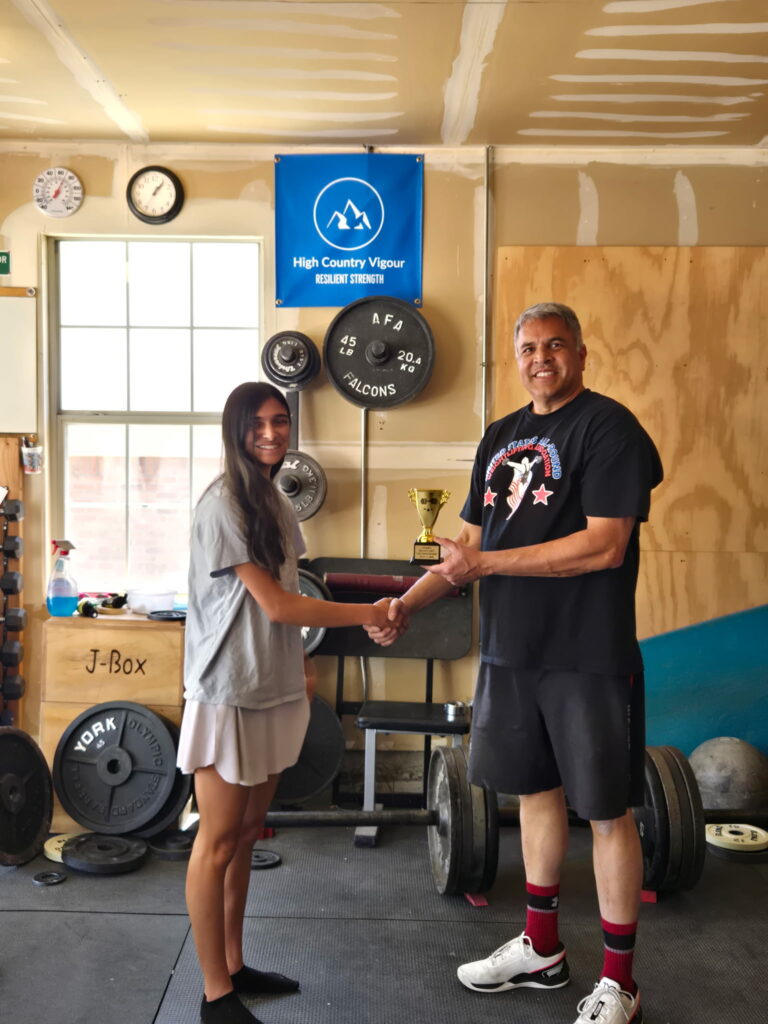
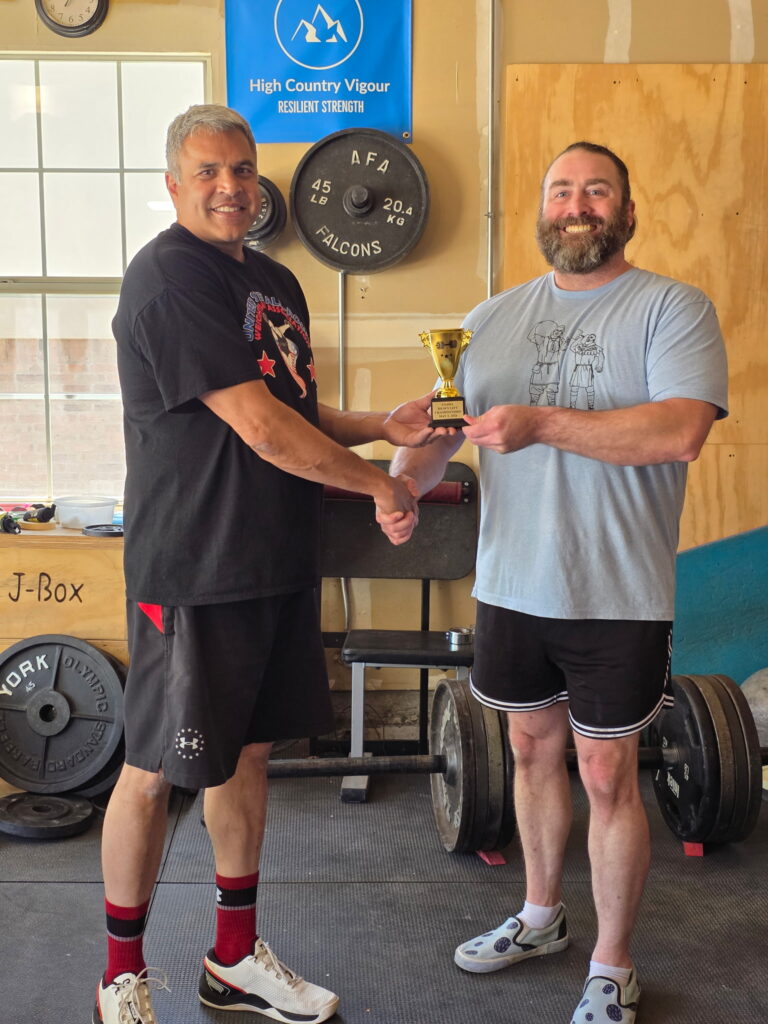
Thom (right picture) and myself (left picture) with Dr. Goldman at the 2013 Arnold Higland Games in Columbus, Ohio.

A few weeks ago I made the trip to the Arnold Classic in Columbus, Ohio.  The plans were made for this trip to be in conjunction with the USAWA  Club Championships in Pittsburgh, but when the Club Champs were called off because of bad weather that didn’t really end up happening , we decided to just make the trip to the Arnold anyways.  The four of us (me, Chad Ullom, Thom Van Vleck, and Mike McIntyre) had already made the plans to be gone, so instead of only getting one day at the Arnold, now we got two days. 

You always meet interesting people at these kind of events.  Some you heard of beforehand, and others for the first time.  On Sunday we attended the Arnold Classic Highland Games to support several throwers that we know.  It was a grand event, and sponsored by Dr. Robert Goldman.  Dr. Goldman put up the prize money for the invited pros as well as funding the game expenses. This was the first time I had met him, and I was very impressed.  When I got back home I did some research on him, and I might have to say, he is the MOST INTERESTING MAN IN THE WORLD.  In fact, I have not met anyone who has accomplished what he has in his life in so many different arenas.  Add in the fact that he has a little “all round weightlifter” in him and I was thoroughly impressed.  But before I get to that, you need to read his resume first:

http://drbobgoldman.com/

Dr. Bob Goldman performing a WR 321 consecutive handstand pushups (photo courtesy of Dr. Goldman's website).

It would take a book to write about all of the accomplishments that Dr. Goldman has achieved (or a very extensive website like the one he has!). One of his first books was titled “Death in the Locker Room” which was one of the first unveiling’s of the drug and steroid scene in competitive sports. Dr. Goldman is very anti-drug, and even required steroid testing  at the Arnold Highland Games (which is not the common practice in Highland Games) .   Thom and I compared him to the mysterious Dos Equis man that you often see in beer commercials (who is portrayed as the Most Interesting Man in the World in the beer advertisements).  Dr. Goldman  just radiates confidence and vitality, and after meeting him, you know there is more to the story than what you experienced in that interaction.  On top of all the books he has written and the medical advances he is responsible for, he has achieved some great All Round lifting accomplishments.  He has set several Guinness World Records in such strength events as the handstand pushup, situps for repetitions, one arm pushups, and many others.  The following YouTube Video is very interesting, and is worth the 15 minutes it takes to watch.

YouTube Video –  A lifetime of firsts: The story of Dr. Bob Goldman

http://www.youtube.com/watch?v=lyDgV5WOxH8

It’s great the World has men like Dr. Robert Goldman.  He is proof that if you have a positive attitude and strong work ethic, anything is possible to achieve.  He’s a great role model for all of  mankind.

Frank’s Barbell RB

by Frank Ciavattone Jr.

Due to our area receiving 100 plus inches of snow in the past couple of months, most of our competitors were unable to attend due to plowing snow. This was the first Saturday that we had any number of attendees making it possible to hold this competition.

Our furthest entrant came from upstate Maine and the other two entrants were from Walpole, MA. I was the only qualified referee so my lifts did not count toward official records but the other two competitor’s lifts are valid. We had one loader, helper and spectator which was famous author on strength, Peter Vuono from Brockton, MA. Everyone gave 100% and made this competition a worthwhile event. After the competition we enjoyed a meal and award ceremony and then right back to snow plowing.

MEET RESULTS:

Frank’s Barbell Club Meet Record Breaker
Saturday, March 16, 2013

Location: Frank’s Barbell Club in East Walpole, MA

Meet Promoter:  Frank Ciavattone Jr.

Officials (1 official system used):  Frank Ciavattone Jr.

Jeff Ciavattone - 33 years old, 235 lbs.

One hand Fulton dumbbell (Ciavattone grip) – right 190 lbs. & left 190 lbs.
Index finger dead-lift – 231 lbs.
Ring finger dead-lift – 159 lbs.

Jim Fuller - 41 years old, 228 lbs.

Kelley snatch -  108 lbs.
Kneeling snatch – 108 lbs.
Middle finger dead-lift  -  266 lbs.

Frank Ciavattone Jr. -58 years old, 289 lbs.

Reeves deadlift  - 345 lbs.
One hand Fulton dumbbell (Ciavattone grip) – right 190 lbs.
Little finger deadlift w/ring – left 110 lbs. & right 125 lbs.

WEBMASTER NOTE:   James Fuller recorded the meet, and placed the video on YouTube which he shared in the USAWA Discussion Forum.  I am placing a link to it here, as it’s very inspirational!  

https://www.youtube.com/watch?v=dBpIg5btGVk&feature=player_detailpage

Take Control of Your Forearms

by Roger LaPointe

Roger LaPointe training his forearms from an elevated positions, using a wrist roller and a heavy rope attached to weight. (photo courtesy of Atomic Athletic)

You can take control of your forearm growth. This is what is great about progressive resistance training. You are in control.The key is consistency. I don’t know how many times I have heard people talk about muscle confusion, chaos, or randomness being the key to training. Now, if you are simply an out of shape slob, anything will work when you first start off, because something is better than nothing. However, purely random exercises are not going to help you reach your potential.

The first step in any kind of training is learning how to use your tools. They all seem very simple. For example, how hard can it be to learn how to use a wrist roller? Technically, it is a stick with a cord that holds a weight. The learning process is more than just reading or watching a video, it includes doing something. You must actually pick up the item and start emulating what you have seen.

For example, in the Frightening Forearms DVD I show several methods of using your whole body with a wrist roller.

http://www.atomicathletic.com/store/ProductInfo.aspx?productid=VID111

In the book “72 Consummate Arts Secrets of the Shaolin Temple”, the chapter on the Pot Lifting Arts you will find out a great method on how to increase the weight you are lifting.

http://www.atomicathletic.com/store/ProductInfo.aspx?productid=BK072

You have read about it and watched me actually do things with a wrist roller. That is the easy part. Get out of your arm chair and be an athlete. Pick up your Wrist Roller and try the techniques you have seen.

http://www.atomicathletic.com/store/ProductInfo.aspx?productid=KT11WR

For a few weeks, you will try something new with your Wrist Roller every single day, regardless of what the rest of your workout is like. Even if you have to use nothing more than a 1 1/4 Pound Plate, you will try the various techniques until you feel you really understand what is going on. IN THE PROCESS, you will actually be getting more exercise than you can believe!

Here is the entire Pot Lifting Arts Kit I have put together:

http://www.atomicathletic.com/store/ProductInfo.aspx?productid=BK72P2

That is STEP 1 toward grabbing control of your forearm strength.

All the best, Roger LaPointe
“Today is a good day to lift.”

The Stiff-Legged Deadlift Must Die

By Dan Wagman, PhD, CSCS

I’m glad that Al’s article on the Romainian Deadlift (RDL) and Stiff-Legged Deadlift (SLDL) mentioned the dangers of the SLDL. Everything about the SLDL is contrary to proper lifting technique, biomechanics, and physiology-and as such increases injury risk immensely. And since we’re talking about the back, an injury there can be life changing and lifting career ending. Please let me explain…and I’ll do this as briefly as possible and in a step-by-step sequence.

A properly executed RDL reduces the risk of injury over the SLDL many fold. For one, a properly executed RDL allows the lifter to simply deadlift the barbell off the ground; this means that proper lifting technique can be employed before you even start doing a RDL. Then, as you commence the RDL, the barbell is slid down the thighs, over the knees, and about half way down the legs, while at all times remaining in contact with the body. This is achieved by keeping the back in a neutral position (flat) and by shifting the center of mass back toward your heels as much as possible. If you find yourself losing balance backwards and your toes popping up a bit, then you’re doing a proper RDL. By keeping the back flat and keeping the center of mass as close to the coronal plane* as possible, the shearing forces upon the lower back are minimized. Research on the squat has demonstrated clearly and unequivocally, how the more the center of mass moves away from the coronal plane (forward), by as an example doing a low-bar sq compared to a high-bar sq, shearing forces on the lower back increase many fold. (Certain dl comparison studies have demonstrated this, too.)

So what about shearing forces? Whenever you lift something, joints move, and shearing forces exist. But by observing proper lifting technique, grounded in sound biomechanics, these shearing forces are something your body can handle and adapt to so that they become a non-issue. And so in the low-bar squat, even though the shearing forces upon the lower back are greater than in the high-bar squat, since proper lifting technique can nevertheless be maintained, these forces don’t add up to an increased injury risk. Not so in the SLDL!

Some of the technique strategies necessary to reduce shearing forces upon the lower back when you lift is to bend the knees, keep the back in neutral, and keep the center of mass as close to the coronal plane as possible. This can all be achieved with every pull off the ground-except the SLDL. And what makes the SLDL particularly insidious is that execution of this lift requires you to violate all principles of proper lifting. And that’s why this lift must die…

  • Whenever the center of mass moves forward…you’re increasing shearing forces upon the lower back; you can’t do a SLDL with the bar close to the body.
  • Whenever you lift something with locked knees…you’re increasing shearing forces upon the lower back; this is one of the chief aspects resulting in a barbell away from your body.
  • Whenever you round your back, you’re taking the curvatures out of your spine, thus reducing the structural strength of the spine, thereby increasing forces upon all vertebrae of the spine…and you’re also increasing shearing forces upon the lower back; you couldn’t lift with neutral spine (flat back) even if you tried when your knees are supposed to remain locked.
  • Whenever you lift more weight…you’re increasing shearing forces upon the lower back; but in the SLDL this occurs due to poor technique that places anatomical structures (tendons, ligaments, discs, muscles, etc.) at additional risk by ostensibly weakening them.

Up until now I’ve withheld personal opinion and just shared scientific fact. But based on these scientific facts, my personal opinion is that if the IAWA Worlds had the SLDL as a contested lift, I’d only do a token lift with the minimum amount possible, even if that meant losing the worlds by 10 pounds. And not trying to pick on Al here, I would like you to consider that him having done SLDL’s for 20 years without injury is simply a function of luck. If I were him, I’d consider the facts of biomechanics and I’d stop doing SLDL’s now and thank Lady Luck every day that I made it through the mine field intact.

So now some of you might be thinking that, “Yeah, well, but the SLDL does help my deadlift by giving me more strength off the ground.” Guys, let’s be honest here, that’s just conjecture based on what came out of the “Golden Age of Lifting.” It can be argued that these guys gave rise to the field of exercise science. And now that it has advanced, we should not hold on to old and unproven myths, but embrace the advances in knowledge these guys laid the foundation for. So, sure, you might think that SLDL’s will help you get the barbell of the ground, because that’s what you feel. But what you’re feeling there is just an acute sense of what’s going on due to a new exercise-it’ll fade…and the feelings are not a reflection of reality. Research has shown that in an effort to get the barbell moving off the ground, you need more speed-not a violation of good lifting form and enough luck to survive that. So you’d be much better off training high pulls than SLDL’s to increase your pull off the ground. There’s a reason weightlifters tend to be great deadlifters…and it’s not because they do SLDL’s.

Overall, there is absolutely no reason to do the one lift that violates all principles of proper lifting. And as to being a contested lift in IAWA and USAWA…who cares. Is it worth the risk? At the end of the day, that’s your decision. I can only hope that you’ll be able to take the above as useful evidence to derive at a more informed decision. As for me, SLDL RIP.

*Imagine looking at a person from the side and dividing that person into equal halves front and back. The center line that divides front and back is the coronal plane.

Remembering Dale

by Al Myers

Today I would like to share several of the tributes to him from friends and lifters.  These comments have been taken from several sources – emails, facebook comments, forum comments, etc.  It is obvious that Dale had many friends in the All Round community, and that he was very well respected.  First, I would like to say a few things about Dale.  I’ve always considered him the Historian of the USAWA, even though it was an unofficial title. Whenever I had a question on something that had happened in the past in the USAWA  and I didn’t know the answer – I would ask him and he would know.  Often his answer included more information than I requested.  He had a “complete set” of old Bill Clark Strength Journals and kept everything well-organized as an historical archive. I will greatly miss Dale’s help!  I also could count on Dale to give me his “honest opinion” on USAWA matters.   In his weekly emails, he would always have some comment on USAWA matters on how he would like to see things done.  I greatly respected him for that, and took his issues “to heart” as he presented them in a reasonable, logical manner.  I have NEVER meant someone who had such a passion and love for the All Rounds as Dale.  Most would have given up lifting facing the physical barriers that Dale faced – but he kept positive and maintained his involvement in the sport to the best of his ability.  I will forever remember this about him. 

After meeting Dale years ago during an All Around Weightlifting competition, it was obvious to me this man had his focus on success.  Not only was I impressed by his determination, but his positive attitude was remarkable as well. As our USAWA events continued, Dale displayed his commitment to competition not only for his own results, but also attended them to remain a great motivator in the background for other fellow athletes. Dale’s strong spirit enabled him to overcome countless critical health circumstances. I’m certain his strength training background allowed him to activate positive improvements to his condition. In spite of all the suffering Dale had to put up with, ultimately his faith in positivity kept him going. Dale’s record setting attitude has to be a USAWA textbook example of how determination leads to success. Rest in Peace, Dale. May our Dear Lord comfort and bless your family.  – Scott Schmidt

My sympathies go out to Dale’s friends and family. – Lance Foster

Condolances. Rest in Peace, DaleEric Todd

I would just like to say that Dale was Crazy…but he is my kind of crazy! What I mean by that is I’ve been lifting since 1977 and competing since 1979 and I have no plans on quitting….ever! I will lift up until the day God calls me home and I hope there’s a lifting platform there or in my book that won’t be heaven! Dale was a guy that never quit. Even when he was on his last leg…literally…the guy DID not quit. I know some folks would think that was crazy, but I think it took courage. I recall Michael J. Fox, after he was diagnosed with Parkinson’s doing an interview. After he listed all his projects the reporter said, “shouldn’t someone like you be resting more” and he got mad and looked at her and said, “RESTING FOR WHAT…” He then went on to talk about how he knew he had limited time and he had things to do…well, Dale had things to do. Most guys would have rotted away in some retirement village…Dale had things to do and I respect that. The next time I am too tired, too sore, too something to workout I will think of the great length Dale went to lift and I’ll shut up and train a little harder. I remember reading a saying that went like this, “Life’s journey is not to arrive at the grave safely in a well preserved body, but rather to slide in sideways, totally worn out, shouting “Holy &hit, what a ride!” That was Dale and some day (hopefully in about another 30 or so years) it will be me! I am a Christian, I believe in heaven, and I see Dale young, strong, and working on his Clean and Jerk. One of my favorite lines for “Gladiator” is, “I will see you again…but not yet, not yet”.Thom Van Vleck

My condolences go out to friends and family of Dale. - Troy Goetsch

Dale will be missed. I remember the first few years I lifted in the USAWA, Dale and I were in the same age group and weight class and we had some great battles. He was always there to give you advice and encourgement. He was a great competitor and a realy great and couragous man. - Denny Habecker

Dale was a great competitor. I was fortunate to lift with Dale at Art’s Birthday Bash 2011 and recent Presidential Cup 2012. Dale was a fine example of never quit or give up.Barry Bryan

I was very sad to learn of the passing of Dale Friesz. Dale was known to several UK lifters who had met him at competitions in the US. Dale was a very nice man, and he performed some very good lifts over the years. He was one of the stalwart members of the USAWA and he will be sadly missed. Dale had suffered terrible ill health over recent years, but it did not stop his enthusiasm to lift. Even after losing a leg, he still battled his way on to the platform to strut his stuff.Steve Gardner

Never really got to know Dale that well on my travels to America, but a sad loss none the less. We have sadly lost a few of the old school lifters now. RIP Dale.Steve Angell

Oh how sad! Dale he was a nice guy! RIP Dale. – Cara Collins

Sorry to hear, another great lifter passes on. Big John Vernachio will have a bit of competition up there now. - Billy Bourne

Dale was one of the most dedicated lifters I’ve ever known.  I mean, I have seen the guy compete when he would have to hook up an IV between events to his pic line!  Dale dealt with many health issues the past few years, but he never let it get in the way of his lifting and competing.  I’m sure he gave his Dr’s fits! Dale was great to have at meets, especially during the meetings as he was not afraid to speak his mind and made sure to keep us on track and remind us the purpose of the USAWA!  Dale will be missedChad Ullom

Sad news of Dale. No doubt he touched and inspired many. From all here at All-Round Weightlifting Western Australia please accept our condolences on the passing of Dale. Although most of us have never met Dale, we have read and heard of his lifting career and battles.
“Passed friends and memories are but a thought away, Remember them often”.
- Robin Lukosius and Members of All-Round Weightlifting Western Australia

I’ll always remember the many meets that Dale and I competed in together. He was always there to do his best and to help and encourage the other lifters. He was the most determined lifter I can think of. He never complained about his problems. He will be greatly missed. - Dennis Mitchell

Dale’s Funeral Arrangements

by Al Myers

This information was sent to me today  by Dale’s daughter Pam.  It includes the details of Dale’s visitation and Funeral.

Dear family and friends,
Thank you for your many kind words and thoughts for all of us. Here are the details for Dad’s visitation and funeral. The obituary will appear in the Washington Post and also in the memory book on
www.moneyandking.com.  Thank you,
Penny, Pam, Mark, and Karen

 
Thursday, March 21
Money and King Funeral Home
171 W. Maple Avenue
Vienna, VA 22180
Visitation: 2:00 – 4:00 PM and 7:00 – 9:00 PM
 
Friday, March 22
St. Mary’s Historic Catholic Church
Ox Road and Fairfax Station Road
Fairfax Station, VA 22039
Funeral Mass: 11:00 AM
Burial immediately following – St. Mary’s Church cemetary
In lieu of flowers, donations may be made to the Wounded Warriors or
St. Katharine Drexel Mission Building Fund
14535 John Marshall Hwy, #210
Gainesville, VA 20155

Dale Friesz Passes

by Al Myers

Dale Friesz, July 30th, 1940 - March 18th, 2013. This picture was taken at the 2010 USAWA National Championships in Lebanon, PA.

Today I have some sad news to report.  Yesterday I received word that long time USAWA member Dale Friesz has died.  This is tragic news for the USAWA, as Dale has been a “foundation member” of the USAWA and has been such a tremendous supporter of the USAWA thru the years.  I am saddened by this news, as hardly a week goes by that Dale and I don’t correspond at least once via email.  Everyone knows about the health issues that Dale has been dealing with for years, yet he always rebounded and made it back to the lifting platform.  He has been an inspiration to everyone who has met him.

I will let everyone know when I get more details of the funeral arrangements.  In the meantime I would like to  ask everyone to share tributes about Dale that I can share in the USAWA Daily News.  These tributes can be emailed to me (amyers@usawa.com) or placed on the USAWA or IAWA Facebook pages.

Take a moment today and read Dale’s USAWA Hall of Fame Biography – http://www.usawa.com/hall-of-fame-biography-dale-friesz-class-of-2002/ .

Stiff Legged DL’s vs. Romanian DL’s

by Al Myers

Ed Schock performing a 210 KG Stiff Legged Deadlift at the 2007 USAWA National Championships in Lebanon, PA. Ed is one "of the few" lifters that have done a stiff legged deadlift of over 500 pounds in USAWA competition.

This is the question that often gets asked in the gym – which is better – stifflegged deadlifts or Romanian deadlifts?  That’s a question that is quite debateable as some don’t like either,  while some prefer one over the other, and gives passionate reasons.  Much like asking a guy if he prefers blonds or brunettes.  You’ll end up with someone saying they prefer redheads. 

However, I do believe that MOST lifters really don’t know the difference between Stifflegged Deadlifts and Romanian Deadlifts. I often hear lifters saying they are doing one of these lifts, when in fact, they are doing the other.  So I’m going to take a “step back” here and explain both of these common accessory deadlift exercises.  If all this is stuff you already know, just look at the picture of Ed Schock, skip the rest of the story, and hope I  write something more interesting tomorrow.  But I CONSTANTLY hear stuff from lifters that tell me that there’s more confusion between these two lifts than admitted.   Some even think they are the same lift!  But they aren’t! 

STIFF LEGGED DEADLIFT

This lift is actually an official USAWA lift.  The USAWA rules are pretty simple for it: ” The rules of the Deadlift apply except that the legs must be straight and locked before the beginning of the lift and must remain so throughout the lift.  Any width of stance is allowed.  The arms are allowed to be inside the legs.”  Now this official rule is a pretty good explanation of a proper stifflegged deadlift, with one exception.  That is allowing sumo stance!  That completely neutralizes the strength-gaining purpose of a stiff-legged deadlift in training.  The SL deadlift should be done with a narrow stance.  I feel these principles define a stiff legged deadlift:

  • Narrow stance.
  • Legs straight throughout the lift, or maybe “just slightly” bent and remain in same degree of flexion throughout.
  • Toes should be pointed out slightly, just like your regular deadlift stance.
  • Hands should be positioned on the bar in an overgrip fashion. If you have a weak grip – hook grip the bar or use straps.
  • Shoulders “rolled over”, and the back rounded at the beginning of the pull.
  • Bar starts over toes.
  • Hips positioned over the feet throughout the lift.
  • Back goes from a point of flexion to extension during the lift.
  • Bar comes into contact with thighs during lift and remains close to the body from that point on.
  • Each rep done slow and under control.

The SL Deadlift  puts extreme pressure on the lower back, especially at the beginning of the lift.  The starting position, with the shoulders rolled over, is what Doctors for years have said is “the WRONG WAY to pick something up”!  But that is what makes it such a great exercise for developing that strong lower lumbar strength.  It takes the back from flexion to extension throughout the execution.  The SL deadlift develops sudden strength from the floor, and if you have problems getting your deadlifts started, this lift will enhance your starting strength in the deadlift. 

ROMANIAN DEADLIFT

The Romanian Deadlift, or RDL’s as they are often called, is a favorite accessory exercise for Olympic lifters. The story goes that a World Class Romanian Olympic lifter popularized this lift, thus it became named that way. It is a much more difficult exercise to learn than the stifflegged deadlift.   The following principles define a Romanian Deadlift:

  • A normal shoulder width stance is taken, with toes facing straight ahead.
  • The bar is gripped with an overhand grip.
  • Knees are in a state of flexion of around 20 degrees during the duration except at the finish, and in the beginning are even slightly more flexed.
  • Shoulders stay up and the back remains in a neutral flat state.  This is the biggest difference between a SLDL and a RDL.  The back must never flex forward or straighten.  IT MUST STAY IN THE SAME STAIGHT FLAT POSITION THOUGHOUT.
  • Hips are “pushed back” behind the heels during the lift.
  • The bar stays close to the body throughout.
  • Plates may not touch the platform, depending on the lifters flexibility.

Now for my editorial.  Both of these exercises work the hamstrings and lower back extensively. Both are intended to be done for repetitions (with the exception of the Stifflegged DL if it is done in an official USAWA competition).  I will say this – do the RDL’s if you are an Olympic lifter and the SL DL if you are a powerlifter.  The reason for this is that I do believe that “form carryover” exists, and that RDL’s will cause breakdown in your deadlift form (pushing hips too far back) and SL DL’s will cause breakdown in your clean technique (by not keeping the shoulders up).  This is my opinion of course.  Another argument you will hear on SL DL’s is that they are a very dangerous exercise to do.  The reasons given are the rounding and unrounding of the back puts excessive pressure on the spinal erectors and and vertebral discs.  But this excessive pressure is  ”the secret” as to why SL DL’s will build extreme lower back strength.  If you perform them slow and steady for repetitions, they can be done safely.  RDL’s have received complaints that they put extreme pressure on the hamstrings, and can lead to hamstring pulls/tears.  But that is the reason they are being done – to strengthen the hamstrings!  Again, if a lifter has poor hamstring flexibility start the RDL’s from the hang.  With time, you will notice your flexibility improves and the hamstrings get stronger. Starting from the hang also helps maintaining the straight back alignment with the shoulders erect.  Some lifters will do stifflegged deadlifts standing on blocks as to increase the range of motion.  I have done them that way before as well, but prefer to do them from the floor now.  I do NOT feel this added range of motion is adding anything to the benefits, as you will have to use less weight and thus not stimulate the muscles to the same degree as from the floor.   The purpose of even doing this exercise is to enhance your pulling strength, and have carry over to your max deadlift.  Having flexibility beyond what is needed to do a normal deadlift serves no purpose in increasing your maximum deadlift.

I have always been a bigger fan of the Stiff legged deadlift.  I have done them weekly for over 20 years and I have never sustained an injury doing them. I have at times worked up to 450-500 lbs. for reps of 3-8, with each rep paused on the floor. I’ll push them hard – but not to failure.   My max deadlift has ALWAYS directly corresponded to the weight I was training my SL’s with.  The higher the SL’s – the higher the DL.  But I have never been a trained Oly lifter, thus that is the reason I prefer SL’s.  My training partner Scott Tully has always liked RDL’s, mainly because his start in lifting was with Olympic  weightlifting.  We argue constantly over this, as I’m trying to convert him to SL’s, but for some reason he can’t keep his legs straight (LOL) from too many years of doing RDL’s.  Bottom line is this – both of these exercises are OUTSTANDING exercises and at least you should consider implementing one of them into your training program.

Al Spings and his Tractor Lift

by Al Myers and Lance Foster

Al Springs performing his Tractor Lift, which weighs over 3000 pounds!

Most everyone in the USAWA knows or has heard of Al Springs from Dearborn, Missouri.  Al is an eccentric ole’ all rounder, who has been involved with the USAWA for many, many years and has a great passion for weightlifting and anything “all round” in nature.  He is reminiscent of the OLD TIME STRONGMEN of the turn of the previous century in his mindset, and takes on strength challenges that others might pass on.  He is still a very active USAWA member at over 70 years of age.  He competes a few times every year in our organization and even competed on the WORLD STAGE of IAWA this past October at the IAWA World Championships in Salina, Kansas. He won his age and weight class, earning him the right to call himself a World Champion. 

I always enjoy my conversations with Al.  We talk on the phone every couple of months, and when he calls I answer “this is Al”, and he responds, “this is Al” as well.  I know immediately who I am talking to. Recently Lance Foster shared this very interesting picture of Al Springs performing, what he calls, his Tractor Lift. Lance was able to get Al to share his story on his Tractor Lift and this is what Al said:

“Normal H Farmall tractors weigh about 6000 lbs which was too much for lifting, but long enough for what I wanted to transfer into a strongman project, actually a vision of my art to lift. After the transfer the tractor weighs about 3000 lbs.  I made the harness belt also.  The chains hooked to the tractor’s frame was 200 lbs.  While the tractor was in the barn, I would do reps with it. I moved it outside for my daughter to take pictures. My wife Deanna judged the lift.  As far as I know, this is the first time anyone has lifted a tractor that big.  I’ve heard that Paul Anderson lifted a car.”

All I can say is this – THAT’S AN IMPRESSIVE HARNESS LIFT!  Harness lifting was a common strength feat done by Old Time Strongmen as large amounts of weight can be lifted this way.  It was also common for Old Time Strongmen to perform their Harness Lifting on an elevated platform, with the weights below.  This gives a specacular view of the effort and the success of the lift.  Guys like Al Springs represent the roots of All Round Weightlifting and the Old Time Strongman connection, and he is the perfect example of someone who supports the mission statement of the USAWA.

MISSION STATEMENT OF THE USAWA

The USAWA was formed to continue the long standing tradition of old-time weightlifters like Eugen Sandow, Louis Cyr, Arthur Saxon, Hermann Goerner, Warren Lincoln Travis, and many others. We strive to preserve the history of the original forms of weightlifting, which in the past has been referred to as “odd lifting”. Many of the lifts we perform are based on stage acts or challenge lifts of old-time strongmen.

Designing a Dumbbell for One Lift

by Roger LaPointe

Roger LaPointe "in video action" performing a dumbbell swing.

I’ve got this really cool customer who used to be a Marine Sniper Instructor Trainer. Talk about a specialist. He had me make him a custom barbell a couple of years ago. He was very specific about what he wanted. Now, he had been buying from me for a while and I have a pretty good idea about how he trains and what he trains for today. It is not his previous job, after all, he is retired from the military. On the other hand, I know he appreciates using the right tool for the job.

I have been specializing my training around a single lift over the last year. You may have seen some of the articles and videos I’ve done on the One Hand Dumbbell Swing. As I have been doing this training, I have also been studying the literature on the lift. Some of this information is over a hundred years old. I like that old information. When I can find a tip that allows me to tweak what I am doing that little bit, it makes me feel like Indiana Jones. The archeologist in me feels like those long dead coaches are talking to me. It’s cool.

YouTube Video for the One Hand Dumbbell Swing:

http://www.youtube.com/atomicathletic

So, I am going to give you guys a list of parts/tools that will help you experiment. Think of it as an engineer’s proto – typing tool. Once you have these parts, if you want to talk to me about some of the other pieces that I play with, most of which are NOT on the web site. Then you can pick up a phone and call, but here is the starting line.

  • Long Dumbbell Bar
  • Allen Collars (I have bunches of these.)
  • Heavy Duty (3/4 Pound) Wrenchless Screw Collars(Great for quick changes.)
  • Shot Loading Dumbbell

You also need a selection of Plates. Get some larger ones, like 35 Pounders. Also get a variety of thicknesses: pancake vs. contoured with the lip. You may also want some other bar lengths. All of these variables are fun to play with. You don’t want to get hung up on what the other guys are doing, for example: experiment with back loading your dumbbell and tipping your dumbbells.

Enjoy, Roger LaPointe
“Today is a good day to lift.”

USAWA Officials Program

by Al Myers

Chad Ullom has just been promoted to a LEVEL 2 USAWA official. Chad has been one of the "top three" most active USAWA officials in IAWA competions over the past 5 years. In this picture, Chad (on left) is officiating at the 2012 Gold Cup in Glasgow, Scotland.

One thing that has happened over the past three years has been the development of an USAWA Officials Program.  The program started in mid-2009 with the initial guidelines. Since then the program has been improved with rule amendments requiring additional criteria.   I finally feel that we now have a TOP NOTCH officials program, and that is something to be proud of.  Before 2009 several programs had TRIED to be initiated, but failed.  Anyone at that time could be an official in an USAWA meet, without any qualifications.  The previous rulebooks had NO guidelines established for becoming an official, other than a couple vague lines such as these, “all officials must be approved by the USAWA”, and “the general secretary shall maintain a list of the national officials”.  That’s it.  There’s no point in having rules/laws if they’re ambiguous, and are not enforced.  Now if you want your lifts to count you MUST be officiated by a certified USAWA official that is listed on the Officials List.  If this does not happen – the lift/meet was not official, and all invalid results will not be reported in the meet results on the website as well as no records being established.  That’s “the bite” for not following the USAWA rules.

I’m VERY EXCITED to report a couple of “firsts” that have just occurred within the Officials Programs.  Ruth Jackson has just successfully passed the USAWA Rules Test and will become the first USAWA member to undergo the Practical Training Session in becoming an USAWA official.  This change was just passed at the past USAWA meeting as further development of the Officials Program.  She will have one year to accomplish this training.  The development of the Officials Program has been a gradual plan to allow for it’s success, with additional requirements being added yearly.  I have felt that the reason the previous official programs have failed were because of a couple factors, 1. requiring “too much” to begin with that NO ONE wanted to abide by, and 2. No penalties/ramifications for not participating in the program (afterall, before you could STILL be an official in all meets with the SAME privileges as someone certified ).  The IAWA(UK) has ALWAYS been WAY AHEAD of us with their officials program, and have required practical training for years before an IAWA(UK) official could be certified.  Now I feel our officials program is as good (if not better!) than theirs. 

The second “first” is that Chad Ullom has become the first member to apply and be granted  Level 2 certification.  Congrats Chad!  This requires an official to be qualified in TWO CATAGORIES , thus the name Level 2.  Level 2 officials are required to have passed the testing requirements, AND  the experience requirements.  Level 2 USAWA officials are considered the TOP TIER of USAWA Officials, and have Lifetime Certification. 

All the details of the USAWA Officials Program are outlined in the USAWA Rulebook and on this website under “Officials List and Rules Test”

 http://www.usawa.com/officials-2/

Bathroom Key Lift

by Roger LaPointe

The Bathroom Key at Atomic Athletic.

EVERYTHING becomes a game at Atomic Athletic… A lifting game.

PHOTO 1: Michael Codding is contemplating how badly he really needs to go to the john. One too many bathroom keys have disappeared here at Atomic Athletic, so we went one step further than the gas station attendant route. Yes, that is one of the base pipes that a fire hydrant would fit onto. It is just as heavy as it looks…

PHOTO 2: The bathroom key farmers walk is one of the dreaded events at the Atomic Athletic warehouse gym. What the heck! It’s only 110 pounds. However, Michael Codding starts his walk with an eager look on his face.

PHOTO 3: Fortunately, we did NOT have to mark a spot of failure in this farmers walk. We keep two pens for that purpose, one yellow and one brown. The bathroom key is heavy and control is really the issue here. Everything is a workout at Atomic Athletic.

Painful but true advice on successfully getting strong in a Garage Gym:

http://www.atomicathletic.com/store/ProductInfo.aspx?productid=BK1000

For more tips:

http://www.atomicathletic.com/store/ProductInfo.aspx?productid=BK90

All the best, Roger LaPointe
“Today is a good day to lift.”

The Most Sexy Bald Men in IAWA

by the DINO MAN,  AUTHORITY ON BALD WEIGHTLIFTERS

Just when you think the USAWA website has stooped to a new “all time low”, I try to take things a little deeper.  Thus today’s story. You know – our organization is loaded with bald lifters.  Several of these All-Round muscle-men got chrome-domes that radiate sexy.  It is a proven fact that baldness is a sign of vitality and virility (I think I read that in Mens Health…).   I have been known to shave my head for a big meet every now and then – just to give myself that extra BOOST of testosterone that comes from having a sweaty shiny crown!!!   I think is about time that these bald guys get a little recognition, so I conducted a survey of the MOST SEXY BALD MEN in IAWA.  Of course, I couldn’t make this decision by myself  so I assimilated a panel of women to make this big decision so it’s totally impartial on my part.  I collected pictures of all the good looking bald guys in IAWA and presented them to the panel to make a ranking.  I’m only going to reveal the TOP FIVE, but there were over 20 pictures entered.  Just in case you wondered – only lifters that have competed in the IAWA Gold Cup or the IAWA Worlds within the past 3 years were entered.  I’m keeping the identities of this panel a secret – as I don’t want them to get any complaints personally for not being picked,  or worse yet, words of passion  from a bald headed romeo.

Let the countdown begin to NUMBER ONE!!!

5.  Graham Saxton, ENGLAND

Graham Saxton

This burly built muscle bound man oozes sexyness from his shiny noggin.  I want to mention that Graham wasn’t always bald (I have pictures of him sporting a full head of hair and a beard!), but that was before he became handsome.  

4.  John Gardner, ENGLAND

John Gardner

I was somewhat surprised with Big John making the top five.   However, as one of the panelist remarked, “he looks like a big teddy bear to me”. Another lady said she would just love to rub his head, as she was sure it would bring her good luck.

3.  Chad Ullom, UNITED STATES

Chad Ullom

Chad was the only American to make the top five.  Comments from the panel ranged from, “he looks like a crazy man”, to “I bet he knows how to have fun”. 

2.  Andy Tomlin, SCOTLAND

Andy Tomlin

I expected Andy to make it to the top of this competition.  Andy has the perfect bald head – it’s perfectly shaped and it looks like he doesn’t even have to shave it!!  It’s always glossy.  I suspect that he waxes it. 

1.  Peter Phillips, AUSTRALIA

Peter Phillips

Peter didn’t just win the voting majority of the panel for top spot, he had TWICE as many votes as anyone else!  That makes Peter the SEXIEST BALD MAN IN IAWA.   I know Peter – and from what he has told me he is also quite the romantic.  When in Perth last year, he took several of us to this peaceful little stream outside of the city.  It was a beautiful quiet spot.  Peter told me, “this is the place I like to bring  a Sheila and enjoy a nice bottle of wine.”  I just know his perfected bald head probably helps out the romance.

CONGRATS to all bald men in IAWA!!! This is your day!!!!

COMING SOON FROM THE DINO MAN – the men in IAWA with the best hair!!

New Zealand All Round WL

by Al Myers

New Zealand All Round Weightlifting Association

I have just heard that ALL ROUND WEIGHTLIFTING may be rejuvenated in New Zealand.  Cliff Harvey has moved back there, and has taken an interest in promoting the sport.  Cliff has been very involved with All Round lifting for many years, and was a big of the 2007 IAWA World Championships held in Christchurch, NZ.   I attended that World Meet, and it was a unbelievable meet.  The meet director was Bruce Savage, but several others were instrumental as well in promoting this Championship.

Cliff Harvey performing an One Arm DL in the 2007 IAWA World Championships in New Zealand.

Cliff placed 6th OVERALL at the 2007 IAWA Championships in New Zealand.  That year has been the only year the IAWA Champs have been held in New Zealand.  Let’s hope that Cliff gets the New Zealanders reorganized and they host another big IAWA meet in the future!

DIY Pinch Bar

by Roger LaPointe

Sig Klein and the Pinch Grip.

Grip strength training is nothing new folks. Check out the photo of Sig Klein using a home made pinch grip bar.

Get yourself a nice 4 x 4 beam of wood, sink in a pair of eye hooks and you use that to lift your barbell. Slice up your beam to other thicknesses to work the grip with other sizes. Personally, I find a little stain and poly on mine makes it a nicer looking tool, but that’s really unnecessary. Here are some exercises for your grip with your new Wooden Pinch Bar.

Try these out for size:
Reverse Curls
One Hand Deadlifts
Two Hand Deadlifts
Bent Over Rows
Pinching From the Ends
Wrist Curls
Hack Lifts

That should give you enough to try out and fry your hands. If you want more ideas, check out these three publications:

Garage Gym Guide
http://www.atomicathletic.com/store/ProductInfo.aspx?productid=BK1000

http://www.atomicathletic.com/store/ProductInfo.aspx?productid=BK072

http://www.atomicathletic.com/store/ProductInfo.aspx?productid=BK90

All the best, Roger LaPointe
“Today is a good day to lift.”

IAWA World Postal

by Al Myers

MEET ANNOUNCEMENT
2013 IAWA ‘ANDY GODDARD’  WORLD POSTAL ALL ROUND CHAMPIONSHIPS

The late Andy Goddard performing a very difficult IAWA lift - the Middle Fingers Hack Lift.

Steve Gardner has just announced the details of the 2013 IAWA World Postal Meet.  Steve has been promoting the IAWA World Postal Championships for the past few years in memory of his good friend and training partner Andy Goddard.  I was very fortunate to have known Andy, and competed with him several times before his “too soon” departure.  He was an ALL ROUND GREAT GUY as well as a very good All Round Weightlifter.  I’m glad that this postal championship is dedicated to him, and I applaud Steve for keeping Andy’s memory alive by promoting this important IAWA event in his memory.

The three big promotions of IAWA are the IAWA World Championships, the IAWA Gold Cup, and this World Postal Championships.  Worlds and the Gold Cup requires traveling, but this Postal Champs can be done right in your own gym!  I think this meet is a very important one as it allows everyone the opportunity to compete in a big IAWA event no matter what your circumstances are.  It is also free to enter, so there are very few reasons as to not enter it!

The rules for this event are as follows (as outlined on the entry form):

This competition is open to all IAWA lifters, for teams of three, and individuals as well.  Teams may be a mix of open/masters/juniors/ladies, as well as all age and bodyweight allowances will figure in for the results.  No limit to the number of lifters, if a team or group enter more than three: the top three will form the team score.  A sheet caters or 5 lifters.  If you have two teams, then just copy, and use two sheets, etc.  All lifts must be officiated by  2 or 3 IAWA Referees (they should sign the score sheet).  YOU DO NOT HAVE TO BE IN A TEAM.  Individuals may also take part in the competition as all rankings will be listed for age/weight classes.  Have fun lifting in the Annual “Andy Goddard” Memorial Competition.  Good luck.

Now for some added important information:

1. The date for entry is the END OF JULY.  Make sure your lifts are completed and sent to Steve by that time . 

2. The lifts chosen for this event are the Snatch -One Arm (with bar), the Pullover and Push, the Clean and Jerk, and the Deadlift. The One arm snatch and the P&P are USAWA official lifts and the rules are outlined in the USAWA rulebook.  The Clean and Jerk and the the Deadlift are IAWA lifts (not USAWA lifts).  However, the rules for these two lifts are outlined in the USAWA Rulebook under Section X. Rules of the Basic Movements.

3. If you live in the United States, you MUST be an USAWA member to participate.  Make sure to join before you lift in this postal championships or you will find that your lifts will not be recorded in the official scoresheet.

4. All lifts must be performed in the same day.  This is not specified in the event rules, but is a assumed rule of all postal meets. 

5. Please enter your results in kilograms in the scoresheet.  Steve would make the conversions for you - but the meet is scored in kilograms so enter them that way.

6.  Make sure you PRINT the names of the three officials used as well as having the officials sign the scoresheet.  For USAWA lifters, these officials must be active current certified USAWA officials.  Make sure to check their “status” on the website before assuming  they are current.

7.  As per any meet and as OUTLINED in the rulebook, you get three attempts.  These must be declared and adhered to.  You don’t just keep adding weight till you miss and take unlimited attempts.  That’s not the way a meet runs. The fourth block in the entry form is for an extra fourth attempt for record.

8.  Make sure to list all attempts on the entry form.  Circle the ones you make and cross thru the ones that are missed.

9.  Please write CLEARLY on the scoresheet, and fill out the scoresheet completely!

10.  Remember this postal championship is ran on the HONOR SYSTEM.  Be truthful in your efforts,  and feel good about giving your best performance in an honorable manner. If everyone does that – the future of this meet is strong.

ENTRY FORM – 2013 World Postal Entry

Bikini Clad Phone Book Tear

by Roger LaPointe

Bikini Clad Phone Book Tear

Don’t let the marketing gurus pull the wool over your eyes. Two piece swim suits were around before 1946. The Bikini was just not the name. Here is Relna McRae tearing a Los Angeles telephone book, from the July 1944 Strength & Health magazine. If you want to see some great feats of strength, done live, check out the Night of Strength III DVD . The standout performer is Pat Povilaitis, who is NOT in a Bikini.

If that isn’t enough for you, Pat “The Human Vise” Povilaitis shows everyone at the picnic how he got his nick name. Here is a shot with Pat tearing a deck of cards, with his hands in hand cuffs and a 350 Chevy Engine Block hanging from is head!

You can also see more of Pat, or get the DVD for the 1st Atomic Athletic Great Black Swamp Olde Time Strongman Picnic:

http://www.atomicathletic.com/store/ProductInfo.aspx?productid=VID210

Time to decorate the Training Hall or Den?

http://www.atomicathletic.com/store/ProductInfo.aspx?productid=POS2006

All the best, Roger LaPointe
“Today is a good day to lift.”

LESSONS LEARNED FROM ‘THE PINES’

BY DAVE GLASGOW

WHEN I WAS A KID, MY FRIENDS AND I HAD A NAME FOR BEING SECOND STRING ON ANY TEAM WE PLAYED ON. WE CALLED IT “RIDING THE PINES”. I WAS VERY FAMILIAR WITH THAT TERM AS I HAVE A LOT OF EXPERIENCE WITH THAT PARTICULAR VIEW OF MOST SPORTING EVENTS I ‘PARTICIPATED’ IN. IT STARTED FROM A YOUNG AGE.

I DISTINCLY REMEMBER MY FORAY INTO THE ATHLETIC WORLD. I WAS 5 YEARS OLD. MY AUNT AND UNCLE GOT ME A PLASTIC BALL AND BAT FOR MY BIRTHDAY. THE FIRST TIME I HIT THAT SPHERE IN THE ‘SWEET SPOT’, I WAS HOOKED. FROM THAT MOMENT ON, I WOULD PLAY ANY SPORT THAT CAME MY WAY. THE ONLY PROBLEM WAS, MY EAGERNESS TO PLAY FAR OUTSTRETCHED MY ABILITIES.

AS A ADOLESCENT AND TEENAGER, ESPECIALLY IN THE ERA I GREW UP, NO ONE (OR DAMN FEW) KNEW ABOUT ‘GENETICS’ OR NATURAL ABILITY. SURE, NATURAL ABILITY WAS TALKED ABOUT, BUT MOST OF US THOUGHT WE COULD OVERCOME THAT WITH HARD WORK AND PERSISTANCE. THIS WAS, TO A POINT, TRUE. HOWEVER, LITTLE DID WE KNOW THAT THE VAST MAJORITY OF US DID’NT HAVE THAT ‘X’ FACTOR AND OUR EFFORTS WERE, MOSTLY, SELF FLAGELLATION. AS FOR ME, ‘THE PINES’ WERE MY CONSTANT COMPANIONS.

LOOKING BACK ON THOSE DAYS, I REALIZE, NOW, THAT I THOUGHT I WAS A LOT BETTER THAN I WAS. IT NEVER OCCURRED TO ME THAT THE MANY COACHES I HAD SAW MY ABILITIES AND PRESCRIBED THE BEST PLACE FOR MY CONTRIBUTION TO THE TEAM.

HOWEVER, HERE ARE SOME THINGS I LEARNED BY BEING A UNIFORMED SPECTATOR.

PERSISTANCE. NO MATTER WHAT SPORT I WAS PLAYING, I MADE EVERY PRACTICE, EVERY MEETING, CHEERED MY TEAMMATES, WHATEVER WAS ASKED OF ME. THIS PERSISTANCE CAME IN REAL HANDY LATER IN MY LIFE.

DETERMINATION. WHAT MORE CAN I SAY ABOUT THAT. IT IS SELF EVIDENT. TO DO ANYTHING IN LIFE, YOU NEED THIS QUALITY, IN AN ABUNDENT AMOUNT. BELIEVE ME, SITTING ON THE PINES, SOMETIMES, TOOK ALL THE DETERMINATION I COULD MUSTER.

RESILANCE. SITTING ON THE BENCH TAKES A LOT OF THIS. DAILY REJECTION, IN FRONT OF YOUR PEERS, IS NOT SOMETHING I ENJOYED, AT ALL. HOWEVER, I WAS GOING TO BE DAMNED IF I WAS GOING TO GIVE IN AND QUIT. ALL I NEEDED WAS ONE ‘CHANCE’! (THAT ‘CHANCE’ CAME IN A COLLEGE SOCCER GAME. WHAT HAPPENED IN THAT GAME IS STILL PAINFUL, BUT I DID’NT STOP. I SHOWED UP FOR PRACTICE THE NEXT DAY. I HAVE NO EARTHLY IDEA WHY.)

WILL POWER. ANY OF YOU WHO HAVE HAD TO MAKE WEIGHT KNOWS WHAT I AM TALKING ABOUT HERE. SHOW ME A HIGH SCHOOL KID WHO IS’NT CONSTANTLY HUNGRY AND I’LL SHOW YOU A SICK KID. THIS AUTO-STARVATION WILL TEST THE VERY CORE OF YOUR BEING. AND QUESTION YOUR SANITY.

SELF ESTEEM. YEAH, I KNOW. HOW MUCH SELF ESTEEM CAN YOU GET ON THE PINES?? GOOD QUESTION. I HAVE THOUGHT ABOUT THIS A LOT. I HAVE COME TO THE CONCLUSION THAT MY PARTICIPATION MADE ME THINK MORE OF MYSELF, DUE TO THE FACT THAT, BY GOD, I MAY BE ON THE BENCH WITH PRECIOUS LITTLE PLAYING TIME BUT I WAS PART OF A TEAM! SOMETHING BIGGER THAN MYSELF. THE CAMMERADERIE CARRIED OVER TO A SENSE OF SELF WORTH THAT I AM STILL PROUD OF TODAY.

I HAVE COME TO REALIZE THAT MY TIME ON ‘THE PINES’ SHAPED ME INTO WHO I AM TODAY. LIFE THROWS A LOT OF CURVE BALLS AND TAKEDOWNS. STANDING IN TOUGH TO ATTEMPT TO HIT A CURVE BALL THAT MAY OR MAY NOT BREAK IS A PARODY OF LIFE THAT IS HARD TO DENY (YEAH, I DID GET TO PLAY. ONCE IN A WHILE!). BEING TAKEN DOWN IN A MATCH IS NOTHING COMPARED TO WHAT CAN AND WILL HAPPEN TO YOU IN THE REAL WORLD. LAY THERE AND GET PINNED OR GET TO YOUR BASE AND WORK OUT OF IT.

FINALLY, THE SPLINTERS IN MY ASS HAVE LEFT ME WITH GREAT MEMORIES AND I HAVE NO DOUBT THAT BEING PART OF A TEAM KEPT ME OUT OF A LOT OF TROUBLE THEN. BESIDES, WHAT BETTER WAY TO GET A RING SIDE SEAT TO THE BEST SHOW IN TOWN!??

Discover New Eyes

by Roger LaPointe

Jackson LaPointe agrees with Yasser, "Don't be a crying baby!" Stone lifting is apparently in his genes. Jackson is only 6 days old and he is already hefting stone balls onto barrels!

“The real act of discovery consists not in finding new lands but in seeing with new eyes.” Marcel Proust

I have had a stunning number of questions about how I “train” my son, who is five years old. This is thanks to my using him as a model for some of our shirts, as well as my relating truths I have learned from him. It is also a compliment, so I thank you all.

“So?” you ask, “what are the most popular questions and what perspective are people coming from?” Well, many questions seem to be from dads who want their kid to become a better athlete. Cool. I understand the desire. As for being an expert on raising a kid, this is my first time around, so take that for what it is. Here is my advice for “training” your future athlete: train your child’s mind.

If you are an Atomic Athletic fan, then you probably know or guess that I look at training and the world a little differently than most. This can be a double edged sword. A friend of mine recently quoted Theodore Seuss Geisel, also known as Dr. Seuss, who said, “I like nonsense. It wakes up the brain cells. Fantasy is a necessary ingredient in living, It’s a way of looking at life through the wrong end of a telescope. And that enables you to laugh at life’s realities.” I did a day of volunteer work at my son’s kindergarten class and noticed that while all the other kids were using single colors, staying in the lines and making their coloring projects pretty much the same, my son’s was completely different. While he stayed in the lines, he also had multi-colored swirls, patches of color and pictures within pictures. I like to think that my 5 year old has the lessons of the good Dr. firmly ingrained in his head. He also loves to play outside, pick up heavy things and fight with a heavy bag. He regularly sees new, strange and unusual “toys” at my office and warehouse. His first reaction is to play with them.

If you are genuinely interested in training that will take you on a different journey, start here:

http://www.atomicathletic.com/store/ProductInfo.aspx?productid=BK90

Train your mind first.

All the best, Roger LaPointe
“Today is a good day to lift.”

Give’em The Finger

by Roger LaPointe

The Set-up for the Finger Lifts.

Ever wanted to just give the whole world the finger? Yeah. I know. You do things your way, because that’s the way you like it.

Well, you be pretty sure you have some of the strongest fingers when you give’em the finger. Atomic Athletic has some tips and tools. One of the tools is a serious steel lifting ring.

3 Tips for Finger Lifts
1. Start off light. That’s every single workout. You don’t want to pop a tendon.
2. Exercise & Competition are two different things. Don’t use other fingers for support. Don’t train individual fingers for 1 Rep Maxing, unless that’s your thing…
3. Stretch your fingers before AND after this exercise, not just before and after your whole training session. Feel free to ignore this one, if you don’t care about fine motor skills, like typing.

We actually sell two different sizes, just specify the one you want in the Customer Instructions section of the order: choices are big or small. They are the same price.

All the best, Roger LaPointe
“Today is a good day to lift.”

CLUB CHALLENGE CANCELLED

by Al Myers

URGENT ANNOUNCEMENT

I just received word from John McKean, the Meet Director of this weekend’s USAWA Club Challenge, that he is cancelling the meet.  John has concerns of the recent bad weather and poor road conditions, and does not want to risk anyone’s travel.  The weather has been unpredictable recently, and the roads could quickly become hazardous for travel.

Please pass this information along to anyone that may have planned to attend the Club Championships.

Building a Training Hall

by Roger LaPointe

The Ambridge Barbell Club can be classified as an "Old School" Training Hall!

Training halls are not built over night. What do you think of when you hear about a training hall? My guess is that a different image is conjured up from when you hear “fitness facility”. Am I right?

The old gyms and YMCAs, where many greats in the iron game trained, tended to be dingy after thoughts, as far as facilities would go. The great old training halls that I think of had beautiful woodwork. They may have had lines of old globe type barbells and Indian clubs lining the walls. There would always be a heavy duty, slightly raised wooden lifting platform in the center of the room. There was always some boxing equipment, or even and full ring.

These were the genuine “man caves” of a bygone era. You didn’t see pastel colors or ferns. There might be a mirror on one wall, but the art work would typically be nicely framed instructional courses, anatomical charts or promo photographs of strongmen from the past. There would be a bulletin board with the information on the next weightlifting contests or wrestling matches. Guys like Sig Klein would be your instructor, not a “personal trainer”. They were genuine record holders who had actually competed and set records. Respect was implicit and you asked them questions. You would never question them. You want to see training halls? Is it time that your place started morphing into a training hall, instead of just “weights in the basement”?

All the best, Roger LaPointe
“Today is a good day to lift.”

How to Evaluate a Lifting Bar

by Al Myers

COURSE 101: BAR BENDING. Any thoughts on whether this bar returned to its original straightness?

Most that know me know that I have an passion with lifting bars.  I have over 50 bars in the Dino Gym – some excellent high quality bars, some just good bars, and others that are just “run of the mill” bars.  I don’t consider myself a collector either, as I use most of these bars in training from time to time.

Most lifters don’t take notice of the bar they are lifting on.  It’s just a piece of equipment that is necessary to lift the plates that are on it.  There’s nothing wrong with that thinking.  After all, the purpose of training is to get stronger and that can be done using anything – including a bad bar.  Having HIGH QUALITY BARS for training is not a big determining factor in getting stronger.  The bar is just a means to an end result.  I’m saying this because I want to make the point that having TOP TIER bars for training are not necessary, they are more just a luxury.

Now how does one evaluate what constitutes a quality bar?  There are “hundreds” of bars on the market – with each one having a “sales pitch” behind it. Bars are generally broken into 2 categories:

1. Economy Bars (or Junk Bars)

Economy bars are bars made with cheaper steel, poorer sleeve designs,  ”looser” quality controls, and are sold at a lower price.  I refer to these as “junk bars”.  I have several of them by the way.  They usually don’t last long though in the Dino Gym, and get bent.  But they serve the purpose they are used for, namely exercises that put a bar at “high risk” for damage.  Like rack pulls, quick lifts in the rack, one arm lifts, etc.  I don’t want to jeopardize a good bar for these exercises as they are not designed for it.  I think of “junk bars” as disposable – use them till they bend, then throw them away. 

2.  Commercial Bars (or High Quality Bars)

This category should be named HIGH QUALITY bars instead, because it is very common for commercial gyms to have economy bars that are “passed off” as a commercial bar. Just put a shiny coat of chrome on a bar and it becomes a “good bar” in most gym-goers eyes.   There are many manufacturers of junk bars, but only a few make the top end bars.   Don’t always rely on this though, as most manufacturers of high quality bars also have a economy line as well.  There are probably over 20 junk bars to every 1 high quality bar sold. If you want to know the difference – just look at the price tag! Cheap bars are “cheap” and high quality bars cost more. You get what you pay for. 

High quality bars are made from higher tensile strength steel, sleeves are secured with roll pins or snap rings and contain either bearings or quality bushings, and have better knurling.  They are less apt to permanently bend when used. Often high quality bars are often made with a purpose in mind – Olympic weightlifting,  general powerlifting, deadlifting, squatting, etc.  They are designed for the exercise in question.  They often have a good  finish – having been zinc plated or a black oxide finish. They are not chrome plated!  Factors which influence steel properties are many – combination of alloys, heat treatment procedures, carbon content,  etc – I don’t want to get into that in this story as there’s too many other things to talk about.   I will keep it simple here and say high quality bars are made with better steel (and it’s not from China!!!).

From now on I’m just going to talk about high quality bars, as junk bars really don’t need evaluated.  Terming them “junk bars’ is evaluation enough. I like to break down the evaluation of a high quality bar into these 6 attributes:

1. Strength Rating
2.  Dimensions – bar diameter & lengths
3.  Sleeve Design
4. Knurling
5.  Finish
6.  Feel

1.  Strength Rating

This is often the NUMBER ONE thing that lifters look at when picking out a bar, and is really just a small factor in the total picture of a high quality bar. Years ago bar manufacturers would promote their product by giving  out a Static Rating, a number which was intended to mean the weight the bar could hold before it would bend permanently.  The first bar I bought was sold as a 700 lb. test bar.  I thought that sounded good – as I wasn’t squatting or deadlifting 700 pounds yet. Well, I bent it with doing explosive squats with 405 shortly after I bought it.  Something wasn’t adding up!  I then bought another cheap 700 lb. test bar and bent it as well.  It was at this time I was studying engineering at Kansas State University and was taking an engineering course, statics and dynamics, that I realized my errors in my thinking.  The Static Test in determining this POUND RATING was done entirely different than what I was doing with the bar in the squat rack.  In a Static Test the weight is loaded slowly on a bar as its supported, which allows the steel to “conform” to the bend, not under a sudden load as I was putting it under as I was ascending with my squats.  Its a Static Rating – not a Dynamic Rating.  Add in differences of where the bar is being supported during these Static Tests, and you can see this is a very poor rating system for evaluating bar strengths.  You would assume that the bar would be supported in the middle – but I question if that has always been the case in giving out test strength ratings. Moving the supports outwards would increase the Rating.   It wasn’t long before most bars went to a 1000 lb. rating, then onto 1500 lbs. and above.  After all, a higher Static Rating equated to a better bar and more sales (a marketing  fallacy that lifters have ”fell for” for years in my opinion).

Now most high quality bars are sold with a PSI Rating of Tensile Strength  instead of a Static Rating (even though often you will see both disclosed on a bar).  PSI stands for pounds per square inch.   This rating is intended to tell you how much force can be applied to a bar before it breaks.  This means more to me than a Static Rating because at least you know the force was applied at a set point, ie the middle.  The testing involves putting a bar in a press and applying pressure to higher levels, until it snaps.    The limitation is still that it is a static force measurement, not a dynamic one as the “real world” bar would be experiencing.  But it is a better testing method for determining a bars strength rating than the Static Test.  But what lifter really wants to know what PSI it would take break a bar? No one wants to push a bar to THAT LIMIT!  I’m more interested in how much force (in PSI) a bar can take and still return to straightness.  That is termed Yield Strength – and a measurement that bar manufactures rarely reveal for “who knows why”.  Probably because it is a much lower number than Tensile Strength PSI and marketing doesn’t  want lifters to mistakenly compare “apples to oranges”, because they don’t know the difference. 

2.  Dimensions

A bar’s dimensions are very important in evaluating a bar, and these measurements vary significantly from bar to bar.  Like I said earlier, most high quality bars are designed with a specific lifting purpose in mind.  For example, Olympic weightlifting bars have very different dimensions than a deadlifting bar.  Even among Olympic WL bars, these measurements are different.  One WL bar may have a diameter of 28mm, and another one may be 29mm.  The length between collars may be slightly different as well.  The high quality deadlifting bars have a diameter of 27mm, while the high quality squat bars may be 32mm.  The marker lines on bars are different as well.  Powerlifting bars should have the 32 inch marker line for hand placement, which is NOT the handspacing  for Oly lifting.  WL bars should have the weightlifting marker lines instead. The standard length for most bars is 7 feet, but some bars are longer (i.e. deadlifting and squat bars).   Pay attention to these  dimensions when  picking out a high quality bar.  You want the bar  to serve the purpose you intended for it.

3.  Sleeve Design

Sleeve designs are different for every bar, but are very important in making  a bar a high quality bar.  For weightlifting, the sleeves should rotate very smoothly to accommodate snatching and clean and jerks.  I have taken apart many bars, and I always marvel at the insides of bar sleeves.  This is the part of the bar no one ever sees. I enjoy taking sleeves apart, and I think of it as doing an autopsy on a bar (which it usually is as the bar was previously ”killed off” and bent, thus the reason  I was disassembling it).   There are many ways sleeves are designed to enhance rotation.  This is what I have seen, from worse to best:  1. metal on metal, 2. plastic bushings, 3.  nylon bushings/brass bushings, 4. ball bearings, & 5. needle bearings.  That pretty much sums it up.  Needle bearings have long been considered the “gold standard” – but I can tell you there are differences there as well.  I’ve taken apart several junk bars that I’m  surprised they rotate at all, as all they contain is a couple of worn cheap plastic bushings – yet are marketed as having bushings.  These type of bushings shouldn’t even be called bushings as they are so inferior to the quality bushings (like nylon and brass)  high quality bars have.  The diameter of the sleeves should always be checked.  Most high quality bars have sleeves that are very close to 2″ (sometimes as much as 1-31/32″).  If your plates are high quality as well (and in turn have close tolerances for the bar hole), the bar may not fit well in some plates.  The reason for this is that at the “top end” the bar is made for the plate being used, and BY THE SAME MANUFACTURER.  The Manufacturer makes the bar and plates as a set to “go together” with close tolerances, so the plates won’t be “sloppy” on the bar.  The way the sleeve is held onto the bar also tells alot about the quality.  You can quickly spot a low quality bar if the sleeve is held on by a bolt in the end.  This is the cheapest and easiest way to hold the sleeve on, but this bolt never seems to stay tight and requires constant attention so the sleeve doesn’t fall off!  This design allows lateral sleeve movement on the bar, which is undesirable.  It gets worse with wear. The “high end” bars use snap rings or roll pins.  A few use both.  The best design is using snap rings, as they are concealed and very rarely fail (yet I have seen it happen, but only when the bar was used in an unconventional matter). 

4.  Knurling

Every bar has its own unique knurling.  I think of knurling as the “fingerprint” of a bar.  It defines the bar and makes it different from other bars. Most people think knurling is cut into a bar, but that is false, as knurling is actually done by a pressing process.  There are many different “setups” for knurling, with each one giving a unique knurl.  Some are deeper, some wider, different patterns,etc.  The purpose of having knurling is to enhance your grip on the bar, without causing damage to your hand.  Different lifters have different preferences on the “aggressiveness” of the knurl.  The spacing of the knurling is different as well.  Some bars have center knurling, while others don’t . 

5.  Finish

The top choices for a bar finish are these:  1. none or blued, 2.  Chrome plated, 3. Zinc plated, and  4. Black oxide. If you are fortunate to have a stainless steel bar you have a bar that DOES NOT need a finish.  The stainless steel stays looking good always!  I have one Stainless Steel Bar, that I have had for over 5 years, and it has NO rust or corrosion on it.  It looks as good now as when I bought it.  However, stainless steel is very expensive (3 to 5 times that of other steel), and is difficult to machine which makes these bars prohibitively expensive.  That’s why you don’t see them much.  Chrome plating is the standard of economy bars because it’s the lowest cost way of keeping a bar shiny.  That’s what you see on bars in commercial gyms, as they can be wiped clean after usage and remain with a glossy finish.  I actually hate chrome plated bars – they are harder to grip, the chrome often starts to flake off after heavy use, and the chrome doesn’t hold chalk well.  Zinc plating has become more common recently.  At first glance you might think a Zinc plated bar was chromed, but you can tell the difference if you see both of them side by side.  Black oxide is also a very common bar finish. I really like this finish as these bars hold chalk well and the knurling is not coated with chrome or zinc and has a better feel.  Now there are also a few high quality bars that have no finish (or maybe just a bluing).  You can spot these in the gym because they are rusted and look like crap.  But that doesn’t bother me getting a little rust on my hands if the bar is a great bar otherwise!  I have one of these in the gym (I won’t name it!) that is one of my favorite bars.  You have to remember that a finish is put on a bar for only one reason – to make it look better.  It provides no benefit to the functionality or performance of the bar, and I’ve talked to several lifters that prefer the feel of the “natural steel” over that of a bar with a finish.  

6.  Feel

Now this is the intrinsic category.  No measurements or processing procedures here to make an evaluation.  It comes down to answering this question,”how does the bar feel in your hands when you lift on it?”.  Do you like it?  Or does it just don’t feel right?  A bar may look like the “bar of your dreams”, but when you load it up to a heavy weight and perform a lift, does it feel as good as it looks?  I’ve been disappointed before with a new bar.  There are several factors that make bars feel different.  The biggest one is “bar deflection”.  This is the bend that occurs when the bar is moved or accelerated during a lift.  It is purely a result of the steel properties of the bar, and is different for every bar.  Some bars deflect more, while others are stiffer when lifting on.  The bar diameter and ratings may tell you a little on this, but it comes down to the steel used.  I say this because I have bars that have the same diameters and ratings, yet deflect (or bend) differently when lifted on.  As well, each lifter has their own preference.  The same goes for “bar oscillation”.  This is sometimes referred to as whip.  It occurs when the bar is deflected during acceleration of a lift, and then the movement of the bar is ceased. The oscillation will continue upwards.  Some bars will deflect, then return to position quicker than others and have less oscillation.  Others will tend to oscillate, which can be viewed as favorable or not, depending on the lifter and how they can adjust to it.  Sometimes it can be used to the lifters advantage, as often seen in the clean when rebounding from the catch to the squat.  Sometimes “the feel” is purely psychological with a bar.   I have a couple of bars that are my “go to” bars when I want to get a big lift in for the workout.  I’ve had success with them in the past – and this confidence is propagated into future success.  The question is answered - the bar just feels good in my hands when I lift on it!

I hope all this helps in understanding how to evaluate a lifting bar.  I apologize for getting so long with all this – which I guess goes to show that I may be beyond passionate on this subject and bordering on obsessive/compulsive.  I’m going to cover a few of the bars in the Dino Gym over the next couple of months in USAWA Daily News stories.  Several of the Dino Gym bars have interesting stories that go with them. and I want to share this with you.

And to answer the question in BAR BENDING:101 – that poor bar was never straight again!

Flaming Indian Clubs

by Roger LaPointe

Flaming Indian Clubs!!!

I called Larry, an old friend, this morning. Just when I thought I had heard it all, Larry had another awesome story with visual impact to spare. Larry doesn’t even use “weights” for his weightlifting anymore. In fact, he gave away all of his barbell and dumbbell plates. Of course, resistance training is still part of his life and that means I have to ask him what he is doing now.

ROUTINE? Anything but…

Indian Clubs by Atomic Athletic.

Indian clubs are an integral part of Larry’s current training routine. We talked about some of the endless variations of club swinging. One key is how some practitioners get lazy and try to go too heavy with their clubs. Now, there is heavy and then there is heavy. Larry was talking about EGO heavy, where you start seeing the clubs flop around, or even sit on the shoulders. While being dangerous, it’s also not very helpful.

“So Larry, how do you recommend dealing with ego laziness? Are you a spiked club kinda guy?” Spiking clubs is something that you will occasionally see in the Kushti Wrestling schools in India, where there can be a hundred or more nails sticking out of the club. It provides incentive not to let the club get too close, but I don’t think insurance companies cover that sort of tool.

“No, of course not, Roger. That could lead to sliced up shoulders and blood. Nope. My Dad used to light his on fire.” “Really?” I replied. “Oh yeah,” he said, “he used wood ones that he coated with some kind of fuel. Then he would train at night in our back yard. It was one heck of a display. It really lit things up. Of course, I don’t recommend that. But he always said that it ensured perfect form. I like to think about that when I use clubs today. My form always improves.”

Next time you are training with your clubs, imagine they are on fire. Your form will get a little more precise as well.

All the best, Roger LaPointe
“Today is a good day to lift.”

GONE FISHIN’ – THE HARD WAY

BY DAVE GLASGOW

(WEBMASTER NOTE: Recently I issued a writing contest, in which I challenged lifters to write about an unusual training implement/device that they use in their training. The stories were submitted and judged, and I’m going to initially publish the top three stories in the USAWA Daily News as they were the contest award winners. Thank you to everyone who submitted stories for this competition, as they were all excellent. Here’s story RANKED NUMBER ONE:)

THIS IS MY DAD, DOING WHAT I REMEMBER HIM FOR, WORKING.

“DAD!!  WE GOT A FISHIN’ JOB!”, I SAID, OVER THE PAY PHONE.  “CHRIST!!”  WHAT HAPPENED THIS TIME???”, WAS HIS REPLY.  HE KNEW, FROM PREVIOUS EXPERIENCE,  THAT A CALL FROM ME AT SEVEN IN THE EVENING WAS NEVER GOOD NEWS.   AS I EXPLAINED WHAT HAD OCCURRED, I COULD HEAR MUMBLED, MUFFLED WORDS AND CURSES I HAD NOT PREVIOUSLY BEEN EXPOSED TO, COMING FROM HIS END OF THE RECEIVER! BEING IN OUR OCCUPATION, THAT WAS SAYING SOMETHING!

FOR THOSE OF YOU WHO DON’T KNOW ME, I WAS BORNE, BAPTISED AND RAISED IN THE ‘OIL PATCH’(DAMN PROUD OF IT!).  I HAVE SPOKEN OF IT PREVIOUSLY IN A COUPLE OF ARTICLES I WROTE ABOUT WHAT WE DID WITH OUR DRILLING BUSINESS.  THIS WAS DIRTY, HARD, HEAVY LABOR, IN ALL SORTS OF WEATHER.  THE DRILLING ASPECT OF THE JOB WAS THE ‘EASY’ PART DUE TO THE FACT THAT, IF ALL WENT WELL, THERE WAS A LOT OF ‘ASS TIME’.  THIS PARTICULAR OCCASION, HOWEVER, WAS NOT GOING TO BE ONE OF THOSE TIMES.

THE “FISHIN’ JOB” I REFERRED TO EARLIER IS IN REFERENCE TO OUR STRING OF TOOLS BEING LOST AT THE BOTTOM OF THE HOLE, ABOUT 200’ BELOW THE SURFACE OF THE EARTH.  THE REASON FOR THIS IS THAT THE ‘ROPE SOCKET’ THAT HELD THE CABLE TO THE REST OF THE ‘TOOLS’ HAD, UNFORTUNATELY, TWISTED OFF (COME UNSCREWED). WHEN THIS EVENT HAPPENS, IT RUINS THE THREADS THAT ARE ON THE INSIDE OF THE ‘ROPE SOCKET’, RENDERING IT USELESS.  WE HAD SEVERAL OTHERS AND THIS PARTICULAR ONE WAS CAST ASIDE UNTIL IT COULD BE RETHREADED AND PUT BACK INTO SERVICE.

FURTHER, TO RETRIEVE THE TOOLS, YOU, LITERALLY, HAD TO ‘FISH’ THEM OUT WITH A DEVICE THAT TOOK A FRICTION HOLD TO THE TOP OF THE TOOLS AND, IF THE DRILLING GODS WERE IN A GOOD  MOOD, PRESTO!, YOU WERE BACK IN BUSINESS. THE FACT THAT THIS HAPPENED ON THIS PARTICULAR DAY WAS ESPECIALLY PROBLEMATIC AS WE WERE BEING PRESSURED TO FINISH THE WELL, IN ORDER FOR THE ‘BIG RIG’ TO COME IN AND GO TO THE TOTAL DEPTH.  THIS WOULD ONLY SET US BACK A WHOLE DAY, IF WE WERE LUCKY.

WELL, THE GODS MUST HAVE BEEN SNOOZING BECAUSE WE SNEAKED BY THEM AND GOT OUR STRING OF TOOLS ON THE FIRST RUN!!

UNFORTUNATELY FOR US, THE OIL PATCH PETERED OUT IN THE EARLY ‘80s AND I WAS LOOKING FOR WORK.  THE ROPE SOCKET WAS NEVER REPAIRED AND SAT WITH THE OTHER, RUSTING TOOLS AND RELICS OF A DAY GONE BY.  I TOOK A COURSE TO A COMPLETELY DIFFERENT DIRECTION, CAREER WISE, AND LEFT THE OIL PATCH FAR BEHIND.

JUMP AHEAD 20 YEARS.  MY FAMILY AND I EXPERIENCED A NUMBER OF ‘CHALLENGES’ IN THE FORM OF ILLNESS, DEATH AND HARDSHIP.  THIS ALL CAME ABOUT IN THE PERIOD OF ABOUT EIGHTEEN MONTHS.  CONSEQUENTLY, I MUST CONFESS, I HAD HAD ABOUT ALL I COULD TAKE.

THE ROPE SOCKET I USE FOR MY 'ALTERNATE' TRAINING.

SIGNIFICANTLY FOR THIS STORY, FOR SOME REASON, THROUGH THE YEARS, I REMEMBERED THAT ROPE SOCKET  AND HOW I ALWAYS THOUGHT IT WOULD BE A GOOD WAY TO DO SOME ‘ALTERNATE’ TRAINING. SO, THE NIGHT PRIOR TO A HUGE SURGICAL PROCEDURE THAT I WAS TO HAVE,  I FIGURED THIS WAS AS GOOD A TIME AS ANY TO FIND OUT.

 I TOOK THE SHORT DRIVE TO THE FAMILY FARM (LEDAIG, TRUELY, MY ‘SAFE HAVEN/HARBOUR’), FOUND THAT ROPE SOCKET AND PROCEDED TO HAVE ONE, ‘LAST WORKOUT’ BEFORE BEING INCAPACITATED FOR, WHAT TURNED OUT TO BE, A NUMBER OF WEEKS.  THE FACT THAT I JUST BURIED MY BELOVED DAD TWO DAYS BEFORE JUST ADDED TO THE INTENSITY AND EMOTION.  YOU SEE, MY DAD AND I ALWAYS SHARED A LOVE OF THE OIL PATCH(NOT TO MENTION, EACH OTHER) AND I SAW THIS AS A WAY TO ‘CONNECT’ WITH HIM ONE LAST TIME AND PHYSICALLY READY MYSELF FOR WHATEVER WAS TO COME.

NOW, FOLKS, THE ROPE SOCKET IN QUESTION, WEIGHTS, I WOULD GUESS 175 POUNDS.  I HAVE NEVER WEIGHTED IT, AND, TO ME, IT IS NOT IMPORTANT.  IT’S HEAVY FOR ME AND THAT IS ALL THAT MATTERS.

AS I HAVE TOLD MOST OF YOU AT ONE TIME OR ANOTHER, I DO NOT CONSIDER MYSELF THAT STRONG OF PERSON.  I CERTAINLY DO NOT DO WELL AT CLEANING THE WEIGHT.  HOWEVER, THAT EVENING, I CLEANED AND PRESSED THAT ROPE SOCKET AT LEAST 30 TIMES IN AN HOUR.  EVERYTIME I WOULD START TO GET TIRED, I JUST HAD TO THINK OF DAD, THE PROCEDURE TO COME, WHAT OUR FAMILY WAS GOING THRU AS A WHOLE AND I WOULD BE INVIGORATED FOR ONE MORE SET.  FINALLY, I WAS TOTALLY EXHAUSTED WHEN I FINALLY DECIDED I HAD HAD ENOUGH.  I WAS SPENT, EMOTIONALLY, AS WELL AS PHYSICALLY.  HOWEVER, MENTALLY, I WAS READY FOR THE CHALLENGES TO COME IN THE NEXT DAYS!

IN THE END, ALL TURNED OUT WELL. IT IS SAID THAT TOUGH TIMES DON’T LAST, BUT TOUGH PEOPLE DO!  I AM PAINFULLY AWARE I AM NOT THE TOUGHEST GUY AROUND; HOWEVER, I CAN NOT SAY THAT FOR MY WIFE AND KIDS, AS THEY WOULD RANK RIGHT AMONG THE TOUGHEST.  HOWEVER, I WEATHERED THE STORM; OUR FAMILY AND FRIENDS CLOSED RANKS AROUND US AND WE CAME OUT THE OTHER END, WHOLE.

REGARDLESS, I STILL REMEMBER THAT “PRE-OP WORKOUT”, ON A HOT, STILL SUMMER EVENING. I THINK OF IT OFTEN.  IT WILL GO DOWN AS, PROBABLY, THE MOST MEMORABLE AND PRODUCTIVE WORKOUT OF MY LIFE! 

FINALLY, I WILL SMILE AND REMEMBER, LOVINGLY,  THE MEMORY OF THOSE MUMBLED, MUFFLED WORDS AND CURSES OF MY DAD, WHO, I AM SURE, WAS WATCHING OVER ME (AND MY FAMILY) ALL THE TIME.

CHINNING ADDICTION

 By Dan Wagman, PhD, CSCS

Publisher, Journal of Pure Power

Consultant, Body Intellect

(WEBMASTER NOTE: Recently I issued a writing contest, in which I challenged lifters to write about an unusual training implement/device that they use in their training. The stories were submitted and judged, and I’m going to initially publish the top three stories in the USAWA Daily News as they were the contest award winners. Thank you to everyone who submitted stories for this competition, as they were all excellent. Here’s story RANKED NUMBER TWO:)

Dan Wagman performing a One Arm Chin Up on his fingerboard. The top picture is a "closeup" of the fingerboard.

My oddest training device is my fingerboard; it comes out of the realm of bouldering. In the rock-climbing world this strength-training device is rather common as climbers use it to strengthen their fingers and pull-up prowess. I use it in my Dungeon exclusively for weighted pull-ups and one-armed pull-ups.

What’s different with a fingerboard compared to a chinning bar is that you have different gripping options. You can use a narrow or shoulder-width grip, but you can also change the amount of grip your hands actually have. So you can use a grip that’s similar to what you’d have on a bar or you can pull while palming the fingerboard, meaning that your fingers aren’t wrapped around anything, but instead are flat on a slightly conical surface that extends from your fingertips down to your palm. That’s how I warm up my pull-ups and I have found it to increase my grip strength. Then there are slots and holes of different sizes so that you can pull with the first link of any number of fingers you’d like to use. And of course you also have the option of doing one-armed pull-ups with any combination of fingers or hand-hold method you’d like. All of this turns pull-ups into an entirely different dimension, quite different than what the usual weight lifter would do. But once I go from my fingerboard to a regular chinning bar, I’m moving a lot more weight.

My Historical Context

Recently Dan Wagman performed a Pullup with 120 lbs. extra weight at the Dino Gym Record Day. The USAWA rules of the Pull Up require the point of the chin to be above the bar and held for a down command. This is the BEST Pullup listed in the USAWA Record List, so it's obvious Dan's training approaches have been working! (photo and caption courtesy of webmaster).

Although I don’t know much about the history of fingerboards in the climbing world, I can tell you that it’s nearly non-existent in weight lifting gyms. But here’s how this training came about for me. When I started lifting as a teenager, I was consumed by trying to become as strong as possible. One of the guys in the gym would always do pull-ups. He also added weight around his waist with some silly looking ropes. But he also pulled himself over the bar with ONE ARM, and could do that with both arms for reps. That blew me away and after watching him for some weeks I built up the courage to approach him.

Turns out he was training for his main passion — bouldering. When you’re on a rock-face, it can be very important to be able to pull yourself up to the next hold with one arm. And so those silly ropes he used to hold additional weight, well, they were two different types of climbing ropes with specialty knots, one around his waist and the other attached via a carabiner for additional weight. The next time I saw him he brought ropes and a carabiner to the gym and made me my own chinning rig. Now that’s the best present I ever got and I still use it all the time.

Progressing Difficulty

So in my training back then I continued to pile on the weight for my pull-ups. But when I tried a one-armed pull-up, I couldn’t even bend my elbow an inch — literally. So I reduced the difficulty by doing one-armed pull-downs. Once I could do my body weight, I increased the difficulty by pulling on a chinning bar instead. But it still took some time until I was able to pull myself to the bar with one arm. For the last 15 years or so, however, I use a bouldering fingerboard for all my pull-ups. Why? It’s just another method to increase the difficulty of pull-ups. And I suppose I don’t have to explain to a bunch of all-round lifters why that’s a good thing, do I?

My passion for lifting weights and one-armed pull-ups lives on as strong as ever. I was able to send my friend a picture of me doing one-armed chins weighing 190 pounds with a 35-pound plate around my waist as it appeared in Milo. He was proud to know that he was the one who started this insanity in me. But of course he’s insane, too; how many guys do you know who in their late 50’s do one-armed pull-ups for reps with each arm?

Me and my walking stick

by Thom Van Vleck

(WEBMASTER NOTE: Recently I issued a writing contest, in which I challenged lifters to write about an unusual training implement/device that they use in their training. The stories were submitted and judged, and I’m going to initially publish the top three stories in the USAWA Daily News as they were the contest award winners. Thank you to everyone who submitted stories for this competition, as they were all excellent.  Here’s story NUMBER THREE:)

Me with my walking stick.

Recently Al Myers put out the challenge for another writing contest.  This time around the challenge was to write a story on “an unusual training implement/device that you use in your gym for training”.  First of all, I’m pretty excited about this because I am hoping many of our members get involved and I will see some new things to possibly try out.  When you have been lifting as long as some of us have, you kind of need something new every once in awhile to spark that fire!

Second of all, I have a lot of unusual stuff in my gym!  Every so often I find something or make something that can be that “something new” to get me going.  Often, I use it for awhile and more often than not, it ends up stored away for long periods of time.  So I sat in my gym, trying to think of what I wanted to write about.  Then it hit me.

I would write about the one piece of equipment, other than a barbell, that I have used the most in my gym.  While not a completely unique piece of equipment, it is practical, can build strength, and I would think could benefit any gym.  But that’s not why I wanted to write about it.  It’s the story behind it and what it means to me.

Many of you know that when I was around 10 years old I was in a terrible accident.  Before that time I could run like nobodies business.  I was by far the best athlete in my school and once, while in the 4th grade, got beat up by a 6th grader after I showed him up in gym class.  Then it was all taken away in an instant.  Both legs were broken, my hip, both arms, a severe concussion, internal injuries…..let’s just say it was a bad deal.  My parents were initially told I would be brain damaged (I can see those who know me nodding their head and thinking “that explains a lot”!), crippled (almost lost my right leg), and even possibly blind.  I spent 3 plus months flat on my back with no guarantee I would ever make it out of that bed to anything more than a wheelchair.

The "tip" of the walking stick....painted green for my favorite color. That metal tip has saved me from some nasty falls!

I cannot explain to you what it is like to wake up in a bed two weeks removed from your last memory with that memory being a sunshine filled day having fun with your friends with your body busted up and on so many pain medications you keep seeing things that aren’t there.

As I lay there and my situation became more and more known to me, I sunk into a deep depression.  My Mom and Dad were having problems and this only led to bigger problems.  My father dealt with it by going to work driving his truck and staying away while my mother stayed by my side 24/7.  While I appreciated my mother’s dedication, she bought into the possible negative outcomes and this made it tough for me to stay positive.  I know realize we both share a family “curse” of depression and it was no fault of hers.  I did have the support of my extended family and many would often come visit.

One person in particular came every chance he got.  Of course, this was between his two jobs at the shoe factory and evening janitor work.  That person was my grandfather Dalton Jackson.  He and I were fast friends before this accident and this only brought us closer together.   We often went on hikes in the woods, hunted arrowheads, and in general had fun in the outdoors.  Dalton, or “Pop” as I called him, showed up shortly after I first came to with an old “Outdoors” book.  It was a book on how to camp, canoe, hunt, fish….a basic survival book.  This was 1974 and this book was from the 50’s.  It had some photos and drawings made by the author.  Kind of what he had learned in his lifetime outdoors.

In particular, there was a story on how to make a walking stick.  It was very simple.  You would take an old hoe, cut then blade off leaving a short metal “spike” on the end.  Pop pointed it out and promised that when I got out, we would make one.  It was that optimism that I hung on to.  Pop said I would need a walking stick which implied I would be walking again some day….and I believed him.

The top of the walking stick with the badge that represents the Isle of Skye in Scotland. This badge was with me when I climbed two of the tallest mountains in Scotland.

Shortly after I got home, I was in a wheel chair for some time.  At one point, we went out to the barn and he took a hoe he used in his own garden and we took a hacksaw and cut the blade off.  We then took some sandpaper to the wooden handle and sanded it smooth and then applied a little stain and some Shellac.  Pop used Shellac often.  Don’t see it much any more, but if you’ve ever heard the expression “he got shellacked” that’s where it comes from.  It put a nice, shiny, coat to seal it against water.

Obviously, I couldn’t use it right away.  But sitting in a wheel chair before cable television, computers, and the fact we didn’t even have a phone for awhile……you get pretty bored.  I would take that walking stick and find all kinds of things to do with it.  My grandfather showed me some exercises that I now realize were related to the “Weaver” stick.  I would lever that thing in all different directions chocking up on it as needed.  I would also pretend to do bench presses, overheads….you name it.

Then, as I started to be able to walk and I started lifting as a way to gain strength that stick found it’s way into my lifting.  I would use it to loosen up my shoulders.  I also couldn’t even squat my body weight so I initially lowered myself to a chair and use my arms to assist in my squats.  Then, when I could do a squat without help, the first thing I remember squatting was that walking stick across my shoulders.

Yes, I even hiked with it.  Pop and I retraced the railroad bed of the CB&Q that my Great Grandfather helped build in the 1800’s from Kirksville to Trenton.  It was about 60 miles that we did a few miles at a time.  I later took that walking stick and hiked in the Rockies, Yellowstone, Glacier National Park, the Appalachians, the Ozarks…..countless treks and hikes. I have even taken it in parades.  I couldn’t take it to Scotland so I bought a hiking badge and have fixed the badge to a stick in Scotland and then taken the badge and put it on my old “hiking stick”.

Most any time I go to my gym to loosen my shoulders I will grab that stick.  I will also pick it up when I work grip and lever it in all kinds of positions.  I am pretty decent at levering a sledge hammer and I honestly believe using this stick over the years is why.  I also try to walk a mile every day around my property and that stick makes the walk with me most every time.

I would have to say that most people would find it pretty plain.  But not me.  That stick has power.  It made me believe and it reminds me of “Pop” every time I look at it.  I know he sacrificed a perfectly good hoe for me to have that stick because he understood what it meant.  I have always believed there are no “secret” routines….only the one’s that you truly believe in will be the one’s that work.  My walking stick is symbolic of that!

Now, you will have to excuse me….I have a walk to go on!

World Record List

by Al Myers

Chris Bass (left) working "the table" at the 2012 IAWA World Championships along with Steve Gardner (right).

Chris Bass of Grimsby, England is the Official IAWA World Record List Registrar.  Chris has held this position for several years now, having taking it over from Frank Allen. Chris operates an All Round Weightlifting Club, the Haven Gymnasium, and is an active member of IAWA.  Chris does an EXCELLENT JOB of maintaining this World Record  List, which is an overwhelming task.  He also maintains the IAWA(UK) Record List to add to his workload of record keeping.  Lately, Chris has been keeping an updated IAWA World Record List available for downloading/viewing on his club’s website. I know he is updating it frequently as he keeps me informed of any recent World Records performed in the USAWA.

LINK TO IAWA WORLD RECORD LIST -  http://www.havengym.org.uk/

From now on, this link to the IAWA World Record List will be easily available on the USAWA website.  It is now included under the section “RECORD LIST”, located on the top line of the homepage, third item from the left.   The World Record List is located under the information for the USAWA Record List.  Simply “click” on the link to the list there and the IAWA World Record List will always be “at your fingertips!”.

Numerous IAWA World Records were set at the past USAWA Grip Championships.  For those interested, this is the record sheet that Chris sent to me following the meet in which he marks the World Records set – USAWA_2013 Grip Championships

We are very fortunate to have Chris performing this important job in IAWA.  He takes this role very serious.  He made the trip from England to the World Championships in Salina, Kansas just to be the meets scorekeeper/recorder.  He often updates the World Record List at meets when he has “downtime” in his scoring responsibilities.  That’s the way to keep the list current!! Chris is always at the big IAWA events which demonstrates his commitment to the position of IAWA Registrar, and his devotion to IAWA.  We owe him a BIG THANK YOU!!!

Club Champs REMINDER

by Al Myers

The entrance of the historic Ambridge Barbell Club!

It will not be long now and the USAWA CLUB CHAMPIONSHIPS will be taking place.  This meet is hosted by one of the oldest clubs in the USAWA (the Ambridge BBC) and directed by a couple of the oldest guys in the USAWA (Art Montini & John McKean).  The equipment in the club has been around at least a century (some forged by Bob Hoffman), and I believe the building was one of the first ones built in the Pittsburgh area (an old VFW hall).  

All of this adds up to a GREAT PLACE for an ALL ROUND WEIGHTLIFTING CHAMPIONSHIPS!  Ambridge Barbell Club has been the site of the Club Champs since it started, and is the perfect location for it.  Ambridge is in the “center” of the USAWA membership, and is within a long day drive for most everyone.  The Dino Gym will have a team present again, as well as the JWC, Ambridge BBC,  and Habeckers Gym.  There may be a couple of other clubs entered as well. 

All it takes to enter is three club members to form your club’s team.  This is a team competition, and NOT an individual competition.  The point scores of the three club members are added together to form a club score.  The club with the highest team total is declared the USAWA Club Champion of the year. 

DATE REMINDER – SATURDAY MARCH 2nd

Entry information is available under  USAWA Future Events in right column of the homepage.

Avoid Cracking your Skull!

by Roger LaPointe

Quality leather Medicine Balls are available from Atomic Athletic.

You know that great explosive pop you get when you do your Power Jerk correctly?

You know what I am talking about. It’s when the bar goes overhead into the lock out position so easily it seems nothing. Well, you can also do that with stones. Pardon the pun, but it’s tons of fun.

TIP: Avoid Cracking Your Skull With The Big Rock.

So, how does one safely train to do that, you ask?

When you are comfortable with this exercise, then you can go outside and do this with a stone. Don’t be afraid to dump your stone. The technique for doing that is basically the same as with an Olympic barbell with bumper plates. You just happen to be using a stone and you aren’t on a weightlifting platform, but outside and creating crater holes in the dirt.

THE EXERCISE
The key is to make the rock go straight up. Start by practicing the power jerk with a barbell. Then comes the clever part. Get yourself a nice “soft” leather medicine ball. I have a 20 Pound Leather Med Ball that I use for this exercise. Go to a basketball court, preferably when no one is playing basketball. Position yourself in the lock-out directly under the net. Now you start popping the med ball up through the bottom of the net. The less motion you have with the net, but better.

http://www.atomicathletic.com/store/ProductInfo.aspx?productid=MED20L

http://www.atomicathletic.com/store/ProductInfo.aspx?productid=BK90

Have fun.

All the best, Roger LaPointe
“Today is good day to lift.”

Grip Postal – USAWA vs. IAWA(UK)

by Al Myers

I’m sure everyone is wondering how the Grip Postal Challenge turned out between the USAWA versus the IAWA(UK).  Well, the results have been tabulated and the USAWA won over the IAWA(UK) 258.2 points to 231.2 points.  This was based on the average adjusted point scores of all the lifters entered.  The USAWA points were adjusted to kilogram scores as the USAWA recorded the meet results in pounds while the IAWA(UK) recorded their scores in kilograms. 

This Postal Grip Challenge was initiated by myself and Mark Haydock.  I promoted the USAWA Grip Championships last weekend, and Mark promoted the IAWA(UK) Grip Championships the weekend before that.  We both prior agreed on the selected lifts being the same so this international  postal challenge could be conducted. 

There were many GREAT LIFTS performed in this challenge. But since we decided it would be based on average, that changes things.  A few great lifters won’t win it for ya, as everyone is instrumental in the outcome as their scores are worth just as much.  IAWA(UK) does deserve a consolation prize however, since there were 20 lifters entered in the IAWA(UK) Championships while the USAWA had only 16 lifters entered.   It was great to see some “new faces” entered in these competitions on both sides.  These two meets may end up being the best attended meets for both the USAWA and the IAWA(UK) in the future.

Remember – this is all in fun.  I know both sides could argue that the other side had advantages “here and there” in lift rules and scoring differences.  I know this postal challenge brought several issues “to head” that need to be addressed by IAWA in the future in order to keep consistency between the USAWA and the IAWA(UK).  

Congrats to all lifters that took part in this Grip Postal Competition!!!

Postal Meets Announcement

by Al Myers

The USAWA Postal Meet schedule has been released for 2013!  The USAWA Official Postal Meet Director John Wilmot  has planned a challenging set of postal meets for the USAWA for the coming year. The USAWA quarterly postal series has been gaining in popularity, with this past year being the most participated series to date. John deserves a “BIG THANKS” for the work he puts into setting up these postal meets and doing the scoring. He always sends out nice certificates to recognize a lifters performance. And I want to mention this again – entering these postal meets is at NO CHARGE!

This year’s schedule is as follows:

Eastern Open Postal Meet
March 1st to March 31st

Middle Atlantic Postal Meet
June 1st to June 30th

Delaware Valley Postal Meet
September 1st to September 30th

National Postal Championships
December 1st to December 31st

The rules of entering postal meets are pretty simple:

1. Do all the lifts in ONE DAY only
2. Follow the rules of the USAWA as outlined in the USAWA Rulebook
3. Fill out the entry form correctly (must include signatures of officials)  and send it to John Wilmot
4. Submit the entry form by the deadline date
5. Be a current PAID UP member of the USAWA

That’s it – pretty simple. Anyone should be able to follow those simple rules, and if not, find a training partner who is smarter than yourself to do it for you. You may have anyone judge your lifts to score for the competition, but if you want your lifts to count for an USAWA record, this judge MUST be a USAWA Certified Official. Also, if you are not a USAWA member your results will be omitted from the websites results when I receive them, so it’s a good idea to join the USAWA before you send your postal meet results to John.

The entry forms for these Postal Meets are available under the heading ”USAWA Future Events”, which is located on the right side of the home page.

Dino Gym Record Day

by Al Myers

DINO GYM RECORD DAY

Group picture from the 2013 Dino Gym Record Day: (front left to right) Dan Wagman, Ruth Jackson, Denny Habecker (back left to right) LaVerne Myers, Al Myers, Dean Ross, Mike Pringle

The Dino Gym had a very good Record Day the day following the Grip Championships.  6 lifters took part – Ruth Jackson, Dan Wagman, Dean Ross, Denny Habecker, LaVerne Myers,  and myself.  Ken Glasgow performed a record lift the day before which I added to these results.  I was surprised by the efforts that were displayed, especially considering that most all of these lifters had competed the day before. The current IAWA Womens OVERALL BEST LIFTER Ruth Jackson stole the show with her setting USAWA records in 30 different  lifts!  Just watching RJ max out in one lift after the other made me tired!  Dan Wagman had the lift that impressed me the most – doing a Pull Up with 120 pounds attached to his waist. The rules of the Pull Up call for the chin to be ABOVE the bar at completion, and the lifter must hold for a down command.  This makes doing a USAWA Pull Up MUCH harder than commonly performed pull ups by lifters in training sessions.  To properly judge this lift, it requires the official to stand on a chair to have a level view of the bar and the chin.  I made sure Dan reached the proper height.  I made a point to tell Dan that his big handlebar mustache was providing him an advantage, as it was obstructing (and distracting!)  my view of his chin! LOL.  The second most impressive lift I seen was my Dad, LaVerne, performing a PULL UP!!  I had no idea that he could do that!  However, I made him do another one with 5# so he could get a record.  Doing a lift with no weight doesn’t get you in the record list.  I bet there are VERY FEW  men over the age of 65 that weigh 250 pounds who can do a legal USAWA Pull Up. 

Dean Ross performed the Carter Lift with 433# pounds for USAWA Record.

Dean Ross picked a couple of odd lifts to do for records.  He performed a 1200# Back Lift, which is a lift that is not available to be done in most gyms. He also performed a Carter Lift, of 433#.  This lift is one of the strange, unique lifts of the USAWA.  It requires the performance of a Hip Lift and a Squat in the SAME LIFT!  Only one other lifter has a USAWA record in the Carter Lift, and that is Bob Maxey.  Dean told me the reason he wanted to do this lift was in Bob’s memory.  I remember the day that Bob did his Carter Lift and I also remember how nervous I was spotting him.  Dean had me worried as well when he started as he fell down a couple of times and I didn’t want this meet to be added to Dean’s list of head injuries that he has suffered in his life.  But eventually he got the balance right, and did a perfect executed Carter Lift.

Denny Habecker performed 10 lifts for record which will expand his lead over Art in the Records Race.  Last year at this record day Denny “took it easy” on the record book and only did a few records.  But this year he really went after it, and I don’t blame him as Art seems to be getting stronger with age.  Denny, Dean and LaVerne had a little “mini competition” in the 3″ bar deadlift.  Denny held with these two who are much bigger than him, and finished with a great lift of 280 pounds.

Afterwards, we all went out to eat together at a local Mexican restaurant in Abilene.   That has become a tradition of meets held at the Dino Gym.  I always enjoy getting to spend time with “fellow lifters” over some good food in a relaxed environment after a day of hard lifting, because that’s when I hear the BEST STORIES!

MEET RESULTS:

Dino Gym Record Day
Dino Gym
Abilene, Kansas
February 10th, 2013

Meet Director:  Al Myers

Officials (1-official system used):  Al Myers, Denny Habecker, LaVerne Myers

Loader: Mike Pringle and lifters

Lifts: Record Day

Ruth Jackson – Age 51, BWT 108#, Female

French Press: 25#
Pullover – Bent Arm: 63#
Bench Press – Fulton Bar: 130#
Bench Press – Reverse Grip: 95#
Gardner – Full: 15#
Gardner – Half: 45#
Abdominal Raise: 25#
Allen Lift: 15#
Deadlift – Fulton Bar, Right Hand: 68#
Deadlift – Fulton Bar, Left Hand: 68#
Deadlift – 3″ Bar: 153#
Continental to Chest – Fulton Bar: 63#
Deadlift – Trap Bar: 207#
Clean and Press – Middle Fingers: 25#
Snatch – On Knees: 45#
Clean and Press – On Knees: 55#
Clean and Press – Fulton Bar: 63#
Maxey Press: 73#
Clean and Push Press – Fulton Bar: 73#
Curl – 2 Dumbbells, Cheat: 70#
Curl – Dumbbell, Cheat, Right Arm: 40#
Curl – Dumbbell, Cheat, Left Arm: 40#
Pullover – Straight Arm: 35#
Weaver Stick: 1#
Pullup: 25#
Chin Up: 25#
Snatch – Dumbbell, Right Arm: 45#
Snatch – Dumbbell, Left Arm: 45#
Saxon Snatch: 25#
Snatch – 2 Dumbbells: 50#

Al Myers – Age 46, BWT 241#

Deadlift – Ciavattone Grip, Right Arm: 231#
Deadlift – Ciavattone Grip, Left Arm: 198#
Deadlift – Fulton Bar, Right Arm: 170#
Curl – Dumbbell, Cheat, Right Arm: 85#
Curl – Dumbbell, Cheat, Left Arm: 85#

Dan Wagman – Age 50, BWT 183#

Snatch – Left Arm: 125#
Pull Up: 120#
Snatch – Dumbbell, Right Arm: 110#
Snatch – Dumbbell, Left Arm: 110#

LaVerne Myers – Age 68, BWT 247#

Bench Press – Left Arm: 50#
Bench Press – Right Arm: 50#
Deadlift – 3″ Bar: 255#
Press – Dumbbell, Right Arm: 45#
Press – Dumbbell, Left Arm: 45#
Deadlift – Ciavattone Grip, Right Arm: 170#
Deadlift – Ciavattone Grip, Left Arm: 170#
Deadlift – Reeves: 185#
Pull Up: 5#

Denny Habecker – Age 70, BWT 196#

Anderson Press: 175#
Clean and Jerk – Behind Neck: 143.3#
Deadlift – 3″ Bar: 280#
Clean and Jerk – Dumbbell, Left Arm: 55#
Clean and Jerk – Fulton Bar: 113#
Clean and Press: 137.8#
Deadlift – Dumbbell, Left Arm: 125#
Deadlift – Dumbbell, Right Arm: 125#
Swing – Dumbbell, Left Arm: 55#
Swing – Dumbbell, Right Arm: 75#

Dean Ross – Age 70, BWT 269#

Deadlift – Trap Bar: 321#
Back Lift: 1200#
Deadlift – 3″ Bar: 280#
Deadlift – Ciavattone Grip, Right Arm: 148#
Deadlift – Reeves: 235#
Carter Lift: 433#
Deadlift – Dumbbell, Right Arm: 125#
Deadlift – Dumbbell, Left Arm: 125#
Snatch – Dumbbell, Right Arm: 55#
Snatch – Dumbbell, Left Arm: 55#

Ken Glasgow – Age 76, BWT 217#

Deadlift – Trap Bar: 302#

NOTES: All lifts and bodyweights recorded in pounds.

Grip Championships

by Al Myers

2013 USAWA GRIP CHAMPIONSHIPS

Troy Goetsch lifting 260 pounds on the One Hand 2" Vertical Bar Deadlift. Troy won BEST MENS OVERALL LIFTER at the 2013 USAWA Grip Championships.

Since the first OFFICIAL USAWA Grip Championships in 2011, this meet has seen more lifters entered each year.  2011 had 8 lifters, 2012 had 11 lifters, and this year we had 16 lifters! If the Grip Championships continually experiences this type of growth it will not be long and this will be the most attended yearly meet in the USAWA. 

I was amazed at the quality of lifting that took place.  The Mens Division was STACKED.  Troy Goetsch, of Jobes Steel Jungle, came out as the BEST OVERALL MENS LIFTER in the end.   Ruth Jackson added another title to her USAWA resume with taking the BEST OVERALL WOMENS LIFTER.  Dan Wagman finished second overall, and LaVerne Myers surprised everyone with his third place overall finish.  I predicted there would be some ALL TIME RECORDS broken – and Troy made sure that happened!  His 255# Pinch Grip and his 260# 1 hand VB DL are now new USAWA All Time Records. He made these lifts look easy and performed them in impeccable form.  My next predication is that he will up both of these records within the next year.

Ken Glasgow (right) receiving his USAWA Grip Championship Award from meet director Al Myers (left).

Darren Barnhart had an excellent meet, and if not for Troy being present, would have had numbers at the very top.  Darren did a Pinch Grip with 250#, and had a very close miss at 275#.  He posted the second highest total (780 pounds) behind Troy’s total (860 pounds).  LaVerne Myers may have ended up in third, but he was NUMBER ONE for best dressed. He showed up sporting a new matching stylish short & shirt, complete with new lifting shoes. This must have given him a surge of confidence, because he ended the meet with a Personal Record in the Deadlift – Fulton Bar, Ciavattone Grip of 300 pounds!  Ken Glasgow needs mentioned as well.  Ken was the oldest lifter that competed, at age 76. I was very impressed with his lifting.  Mike Pringle made his “USAWA debut” in this meet.  Mike lifted very well, and I hope to see more of him in USAWA competitions in the future. Denny Habecker came the farthest for the meet, from Lebanon, PA.  This makes the second meet in less than a month that Denny has attended at the Dino Gym! 

I have several people I want to personally thank.  First – my wife Leslie who made the lunch and provided numerous other meals to lifters over the weekend.  Next, I couldn’t have done this without the help of Chuck Cookson, who did ALL the loading.  Chuck laid off competing to load instead, which is critical for a meet to  run efficiently. I also want to mention Terry Barlet , who made the road trip with Denny.  I talked him into taking all the meet pictures.  I will have these pictures available on our USAWA Facebook Page later this week.   This Grip Championships had participants from several states – Kansas, Pennsylvania, Colorado, Nebraska, Iowa, Missouri, and Oklahoma.  I felt VERY HAPPY about the success of the meet.  Thanks again to all those who attended!  It’s this type of support that keeps these events going in the USAWA.

(Dan Wagman video recorded the meet and has placed the videos on his website -  http://jopp.us/2013grip.html)

MEET RESULTS:

2013 Grip Championships
Dino Gym
Abilene, Kansas
Saturday, February 9, 2013

Meet Director:   Al Myers

Scorekeeper/Timekeeper/Announcer:  Al Myers

Loader:  Chuck Cookson

Photographer:  Terry Barlet

Caterer:  Leslie Myers

Officials (3-official system used):  Al Myers (head), Denny Habecker, Darren Barnhart, LaVerne Myers, Mike Murdock, Chad Ullom

Lifts: Pinch Grip, Vertical Bar Deadlift – 1 Bar, 2″, One Hand, Deadlift – Fulton Bar, Ciavattone Grip

WOMENS DIVISION

LIFTER AGE BWT PINCH VB DL TOT PTS
Ruth Jackson 51 108 107 110R 135 352 539.1

 EXTRA LIFTS FOR RECORD:

Ruth Jackson: Vertical Bar Deadlift, 2″, Right Hand 120#

MENS DIVISION

LIFTER AGE BWT PIN VB DL TOT PTS
Troy Goetsch 26 199 240 260R 360 860 770.5
Dan Wagman 50 183 200 180R 280 660 688.4
LaVerne Myers 68 247 180 180R 300 660 679.6
Darren Barnhart 45 305 250 205R 325 780 595.5
Dave Glasgow 59 252 181 170R 275 626 593.5
Denny Habecker 70 193 125 130R 235 490 585.0
Chad Ullom 41 252 180 200R 326  706 568.9
Bryan Benzel 25 290 240 210R 320 770 567.9
Mark Mitchell 52 313 230 150R 325 705 567.8
Mike Pringle 37 193 150 165L 250 565 514.9
Ken Glasgow 76 217 100 135R 205 440 514.8
Dan Bunch 48 358 195 180L 330 705 514.3
Dean Ross 70 271 150 135R 230 515 514.2
Mike Murdock 72 206 100 110R 180 390 455.8
Doug Kressly 33 278 170 160R 250 580 436.7

 EXTRA LIFTS FOR RECORD:

Mike Pringle: Pinch Grip 175#
Dan Wagman: Pinch Grip 215#
Chad Ullom:  Pinch Grip 200#
Troy Goetsch: Pinch Grip 255#
LaVerne Myers: Pinch Grip 200#

NOTES:  All lifts recorded in pounds.  BWT is bodyweight in pounds.  R and L designate the right and left hands.  TOT is total pounds lifter.  PTS are adjusted points for bodyweight and age corrections.

BEST LIFTER AWARDS:

Womens Master:  Ruth Jackson
Womens Overall:  Ruth Jackson
Mens Senior 20-39: Troy Goetsch
Mens Master 40-44: Chad Ullom
Mens Master 45-49: Darren Barnhart
Mens Master 50-54: Dan Wagman
Mens Master 55-59: Dave Glasgow
Mens Master 65-69: LaVerne Myers
Mens Master 70-74: Denny Habecker
Mens Master 75-79: Ken Glasgow

Joe the Turk OTSM

by Tim Piper

MEET ANNOUNCEMENT

“Joe the Turk” Old Time Strongman Meet

“Joe the Turk” was the first “strongman” in Macomb Illinois. He came to town as a part of the Salvation Army, ran the crooked mayor and his henchmen out of town, and some accounts claim he actually took over the ousted mayors duties for a short period of time.  “Joe the Turk” holds a unique and special place in the history of the Macomb Salvation Army, and what better way to honor his memory but to host an OTSM in his memory.  The awards for this event will be unique collectors items bearing his likeness.  The meet with be held at the very same Salvation Army building that the Joe once called home.  Weather permitting the meet will take place outside. 

My daughter and I had a great time last year at the OTSM championships and thought it would be fun to host an OTSM in Macomb.  We will likely get a decent crowd of lifters from our gym but hope that more will make the trek to Macomb for some heavy lifting. 

MEET DETAILS:

DATE:      Saturday, April 27th, 2013

Location:  505 N. Randolph Street Macomb, IL 61455

Divisions: Juniors, Women, Masters, and Open

Rules:       USAWA rules and scoring apply to all lifts.  Drug testing rules apply.

Lifts:         Apollon’s Lift

                   Anderson Squat

                   Anderson Press

                   Peoples Deadlift

Weigh-in:    9:00-10:00 a.m. of meet day

Lifting:     10:00 a.m.

Entry Fee:                           $20, all profits benefit the Salvation Army lifting program

AWARDS:  For all weight and age classes

ENTRY FORM -  Joe the Turk OTSM 2013

Hey…Get a Grip

by Roger LaPointe

An Old Time Strongman curling a York 45 by the hub!!!

Check out this photo from the April 1941 Strength & Health Magzine. What you see is Tarzan Lunt, the weightlifting coach of the Harrisburg YMCA, curling a York 45 pound Olympic plate, by the HUB. Pretty cool.

Now, you want a good grip? Sure, the guy with a crushing hand shake is a jerk. Yet, wouldn’t it be nice if your grip were so rock solid that you had to deliberately NOT crush people’s hands? It’s not merely and issue of spending hours a day doing specific grip work. You have to have proper rest, recovery and variety in your grip training.

Today, I spoke with a juggler, who has been in the Guinness Book, about heavy juggling. He found that more than an hour a day with 5 pound juggling weights lead to tendonitis in his biceps tendon, at the elbow. However, 4 pounds was OK. Crazy. Right? Today, at 70 years old, he has found that he loves training with our solid wood Indian Clubs that weigh 1 1/2 pounds. Guys, that is really significant. Look up the weight for juggler’s clubs. Jugglers use materials that differ by ounces, the vast majority less than one pound in total weight.

Why are clubs important?

They develop wrist and forearm strength, combined with flexibility.  Then switch to something like grippers and thick bar work.

Fulton Bar Debate Continued

by Al Myers

Kevin Fulton performing a Deadlift - Fulton Bar of 555 pounds at the 2001 Old Settlers Classic.

I said I had more to say on this subject – so here it is. As most know, the USAWA has different  names than the IAWA(UK) for several of the same All Round Lifts.  There are also MANY rule differences between the USAWA Rulebook and the IAWA(UK) Rulebook.  The Deadlift – Fulton Bar, Ciavattone Grip is just one of many, with the main difference being the IAWA(UK) allows the Fulton Bar to be hooked gripped whereas the USAWA does not.  This does not apply to most lifters, but for those few that have big hands and long fingers it makes a HUGE difference. 

Before the 2009 USAWA Rulebook, some USAWA lifts had different names as well (which most still didn’t match the IAWA-UK names).  However, several lifts were renamed to give a more clear naming that properly described the lift being done.   I think this was a good thing.  It was at this time the Deadlift – Fulton Bar, Ciavattone Grip become an official USAWA lift for the first time even though it had been contested several times in competition before this. 

I’m sure there are those that ask, “Why was this rule written this way, requiring a Ciavattone Grip?”.  Especially in the light that the IAWA(UK) already had a lift in their Rulebook with a comparable lift.  I am going to explain that, as I was a big part of this “updated USAWA Rulebook”.  The most important thing in establishing rules for any lift is this question – WHAT WAS THE INTENT OF THE LIFT?  The Deadlift – Ciavattone Grip (which the IAWA-UK calls the Two Hands Ciavattone Deadlift) was originally called the Two Hands Ciavattone Lift in the USAWA Rulebook.   This lift was introduced to the All Rounds by Frank Ciavattone, and it’s intent was to test the lifter in a overhand grip deadlift, without the use of a hook.  For most lifters, the limitation is the grip since a hook grip can not be used.  I know for myself that it amounts to close to 200 pounds difference in comparison to a overhand deadlift which I’m allowed to hook.   The lift Deadlift – Fulton Bar, Ciavattone Grip is an extension of that lift, with the difference being a Fulton Bar is substituted for a regular bar.  This change makes it even more of a grip lift, which is the INTENT of the lift. It’s meant to be a grip lift.  I would argue that by allowing a hook grip this intent is taken away.  Most grip competitions that use a 2″ bar for overhand deadlifting DO NOT allow a hook grip to be used for that EXACT REASON (like the recent Visegrip Viking Grip Competition at the LA Fit Expo where Mike Burke lifted an unbelievable 235 kilograms!). 

It is obvious to me that there was no clear communication between the USAWA and the IAWA(UK) on this lift when the rules were written.   I say this because the ORIGINAL RULE for the USAWA Two Hand Fulton Deadlift was for a lift that allowed an alternate grip on a Fulton Bar under the rules of a deadlift (so hooking is allowed). The IAWA(UK)’s original rule for the exact same name, Two Hands Fulton Deadlift, was an entirely different lift requiring an overhand grip!  That’s a major difference, and one in which I think the IAWA(UK) got wrong.  Back to intent, the original Fulton Deadlift was intended to be done with an alternate grip on a Fulton Bar.  This is supported by the original rule in the USAWA Rulebook (along with the picture of Kevin Fulton originally performing it this way!).

Back to lift names, I will say the USAWA Rulebook definitely has clearer and more descriptive names than the IAWA(UK) Rulebook.  Anyone who reads the name Deadlift – Fulton Bar, Ciavattone Grip knows EXACTLY what is expected out of the lift by the name alone.  You really don’t even need to read the rules for it.  However, the IAWA(UK) name of Two Hands Fulton Deadlift can be misleading.   You MUST read the rule to fully understand what is expected out of the lift, and even then, it DOES NOT state whether a hook grip is allowed or not.  You just have to “assume” a hook is allowed, because it doesn’t say you can’t.  Assumptions have no place in a rulebook.  Rules should be clear and precise, and after reading a rule one should know EXACTLY what is allowed.  This also applies to the naming of the deadlift with a Fulton Bar allowing an alternate grip.  The USAWA has this lift named Deadlift – Fulton Bar.  That name is very clear – rules of the deadlift using a Fulton Bar.  The IAWA(UK) calls this lift Two Hands Deadlift – 2 Inch Bar, which is clear in name description, but leads to confusion as to why it is different than the other lift, the Two Hands Fulton Deadlift?  I remember this happening several years ago in the IAWA World Postal Meet hosted by the Australians.  One of the lifts contested was listed this way – Fulton Dead Lift with Smooth Bar. Well, when the results were turned in a couple of Americans performed the lift using an alternate grip instead of an overhand grip as intended.  Innocent mistake if you ask me considering the ambiguous naming of the lift.  These kind of things would NOT happen if all lifts had more descriptive names given to them.

I’m sure some of you are thinking that all this is just nonsense – and we should “just lift” and not worry about things.  But I want to see things improve to a point where we don’t have the problems associated with this kind of confusion between the USAWA and the IAWA(UK).   Which brings me to my next task of the day – of contacting World Record Registrar Chris Bass and telling him that the my listed IAWA  WORLD RECORD in the Two Hands Fulton Deadlift of 215.5 kilograms was actually done with an alternate grip!!!   Point made.

Deanna Springs Memorial

MEET ANNOUNCEMENT

Deanna Springs Memorial Meet

Meet Director: Bill Clark & Joe Garcia

Date: Saturday, March 23rd, 2013

Venue: Clark’s Gym, Columbia, Missouri

Weigh-ins: 8 AM

Entry Fee: None

Entry Form: None

Awards: None

Membership: Must be a current USAWA Member

Lifts: Crucifix, Cheat Curl, Deanna Lift, Hand and Thigh Lift, and Hip Lift

To enter, a confirmation must be sent to Bill Clark by the Tuesday preceding the meet. Bill can be reached by phone: 573-474-4510, Fax: 573-474-1449, or mail: Bill Clark, 3906 Grace Ellen Drive, Columbia, Missouri, 65202.

The Fulton Bar Debate

by Al Myers

This is a picture of Matt Graham pulling a 2" Bar Overhand Deadlift of 540 pounds at the 2001 SuperGrip Challenge hosted by Kevin Fulton. (photo courtesy of Dan Wagman, who was there and competed in the meet as well).

I always enjoy a good discussion/debate on anything All-Round in nature.  Well, these past couple of weeks there has been a very interesting discussion in the USAWA Discussion Forum regarding the Fulton Bar.  If you have missed it – before you read today’s story it might be worthwhile to check it out so you will be “up to speed” on the subject.  I usually try to stay neutral in my writings, and give out just the facts and stuff.  But today I’m going to include a few of my opinions of the subject as well.  So be prepared!  I’m also going to “highlight” a few of the things that have been discussed in the forum, and then give an editorial on them. I plan to “go beyond” any comments I made in my forum replies.  I will also not “name any names” as the opinions expressed here are strictly mine.  Read the forum if you want that other information.

I also will keep this story as to what actually applies to the USAWA/IAWA.  A little history on the Fulton Bar is in order first.  Most know that the Fulton Bar is named after grip-sensation, All-Round Weightlifting Champion Kevin Fulton.  Most DON’T know that originally the name was given to a dumbbell lift with a 2″ diameter handle.  Over 3 years ago I wrote a blog covering this (http://www.usawa.com/the-fulton-dumbbell-deadlift/), but I’m going to repeat a piece of it here as well, as this story needs to be told more than once:

Back in the early 80’s at a odd lifting meet in Liberal, Kansas, meet director Bob Burtzloffincluded a thick-handled dumbbell deadlift in the contest. This dumbbell had a smooth 2 inch diameter handle. Wilbur Miller, the “Cimarron Kid” and Kansas lifting legend, was the hands on favorite to win this event. Wilbur has huge hands with long fingers and was very rarely beaten in any lifting event that involved grip strength. But this day was one of those rare days – when a young farm boy from Nebraska by the name of Kevin Fulton pulled off the upset! Upon Fulton’s winning – Bill Clark announced that this lift would be forever named the Fulton Lift. This eventually lead to the naming of the 2″ bar as the Fulton Bar along with the Fulton Dumbbell. As for Wilbur – upon the finish of the event he went back to the warm-up area and proceeded to pull more on this lift than he did in competition. He went home knowing that he may not have won the event on this day, but with the satisfaction of knowing he would next time!

The naming of the 2″ bar as the Fulton Bar in the USAWA became named that way later.  I have checked back in old meet results, and to the best of my research have determined that the first Fulton Bar lifts done in the USAWA were performed in 1995.  Bob Hirsh, USAWA Hall of Famer, performed lifts at a couple of record days (Arts Birthday Bash & the Buckeye Record Breakers) using the Fulton Bar. He was one of the first record-setters.  At this point these lifts were called numerous things, like Fulton Deadlift with knuckles front, Fulton Deadlift Reverse Grip, Fulton Deadlift with Overgrip,  or Fulton Deadlift with alternate grip. Nothing was consistent.  The Fulton Bar Lifts really never “took off” in the USAWA till 1999 when Kevin Fulton started using the Fulton Bar  in his annual SuperGrip Challenges in Litchfield, Nebraska.  Now the story gets real interesting.  In the beginning in the USAWA the deadlift with the Fulton Bar using an Alternate Grip was called the Two Hands Fulton Deadlift!  Exactly the same name that the IAWA(UK) uses today to refer to the lift where an overhand grip (with hook) is used on the 2 inch bar!!!  This is backed up in several reliable sources – ie old entry forms, meet results, and even in the initial USAWA Rulebook!!!!

This comes directly from the 2003 USAWA Rulebook Edition (which is considered the original USAWA rulebook):

F23. Two-Hand Fulton Deadlift- The rules of the deadlift apply with two exceptions. 1.  The bar must be at least 1-15/16 inches in diameter. 2.  Foot placing is optional.  The hook grip is allowed. 

Nothing is mentioned about a Ciavattone Grip being used, or having the knuckles forward.  So you see – confusion in the naming of these lifts went back to the very  beginning. The USAWA lift Deadlift – Fulton Bar, Ciavattone Grip was not placed in the USAWA rulebook till the 2009 Edition.  However, it was contested several times in USAWA competition before then and records were being kept in it, which makes no sense to me because if it was not official in the Rulebook with established approved written rules then it shouldn’t be present in the Official Record List.  But back then the  USAWA operated like the Wild West – no written law and the guy with the fastest draw was named Sheriff.  Policies seemed to change on a whim and the town folks weren’t asked.

Which brings us to the TOP ALL-TIME Deadlift – Fulton Bar, Ciavattone Grip in the USAWA Record List. This GREAT RECORD is held by Matt Graham with a 540 lb. lift performed at the 2001 SuperGrip Challenge held at Kevin Fulton’s place.  However, he did this lift by using a hook grip on the 2″ bar!!!!  I have knowledge of this from very several reliable sources (including from Matt!).  First of all, anyone who can hook grip a Fulton Bar is in a “class of their own” as most can’t even touch fingers on it.   I’m going to defend Matt here.  First of all, when he did it it WAS NOT against any USAWA Rule, and is not his fault at all that it is now in the USAWA Record List.  The lift was listed in the meet results as “2″ deadlift overhand”, and the meet results were typed by Kevin Fulton himself.   Kevin was too humble to even identify the lift correctly (ie Fulton Deadlift) that beared his name in the results !!!   The problem arises when these results were put into the record list without a proper rule in place first.  With no official rule – the lift is just an exhibition lift with the rules set at the moment by the meet director, which may change the next time the lift is contested.  Of course, there could have been others that “hooked” the Fulton Bar in this meet (I doubt it!) and set USAWA records as well, but because it was not 540 pounds no one notices.  This includes other meets as well during that time  period. Again, the first written USAWA rule for the Deadlift – Fulton Bar, Ciavattone Grip came out in the 2009 Rulebook (3rd Edition) and these previous records just got “incorporated” into  the Record List under the new name. 

I know I have gotten extremely “long winded” with all this, and I’m sure most have quit reading by now. But I’ve just covered some of the history of the Fulton Bar and I haven’t even GOT to my opinions yet!!!  I still have MUCH MORE I could say on this subject, but I guess I better save it for another day….

USAWA Signature Events

by Al Myers

One of the terms that Bill Clark often used in his Strength Journals was the expression “Signature Events”.  What exactly is meant by this?  I always took it to mean events/competitions that were the most important ones in the USAWA.  Obviously, this changes with time.  In the past few years the USAWA has began to offer yearly CHAMPIONSHIPS that recognize specialities within the organization.  I would say that these Championships are the signature events in the USAWA today.  These events symbolize the BEST of the BEST – and gives each lifter the chance to prove to the USAWA that they are indeed a champion.

The USAWA offers 8 different Championships.  With the USAWA Grip Championships being held tomorrow, I want to remind everyone of it’s importance and why if you are an all-rounder who excels in grip lifts this is a meet you should be at so you have the opportunity to be in the running for the USAWA Grip Champion!!!

USAWA SIGNATURE CHAMPIONSHIP  EVENTS

CHAMPIONSHIP YEARLY DATE LOCATION DIRECTOR
Grip Championships 2nd weekend of Feb. Dino Gym Al Myers
Club Championships 1st or 2nd weekend of March Ambridge John McKean
Heavy Lift Championships 1st or 2nd weekend of May rotates rotates
National Championships 3rd or 4th weekend of June rotates rotates
Presidential Cup 1st or 2nd weekend of Aug Habeckers Gym Denny Habecker
Team Championships 3rd or 4th weekend of Aug Dino Gym Al Myers
Old Time Strongman Championships November JWC Thom Van Vleck
Postal Championships December Postal John Wilmot


The DADDY of all these Championships is the USAWA National Championship.  The reason  is that it recognizes the best ALL-ROUND lifters in the organization.  It contains a selection of ANY lift within the organization (out of around 200), and often contains a good balance of all types of lifting.  A few years ago I had a good discussion with Dale Friesze (and we ALL KNOW Dale doesn’t mind sharing his opinions! LOL), and he felt the name NATIONALS should just be used for the National Championships to identify its significance as the only “true” Nationals in the USAWA.  Well, I couldn’t argue with him so from that point on I have been referring to our yearly BIG MEET as the National Championships and the rest of these important meets as the Championships. This hasn’t always been the case, and in years past meets like the Heavy Lift Championships was called the Heavy Lift Nationals. But from now on it will be called the Heavy Lift Championships.

Each of these other Championships represent unique areas within the USAWA.  The Grip Championships only includes official USAWA lifts that test the grip, the Heavy Lift Championships contain only Heavy Lifts, and the Old Time Strongman Championships only include OTSM lifts. The Club Championships is unique in that it recognizes the top performing USAWA club, as it scored using a team score of 3 club members added together. The Presidential Cup is hosted by the USAWA President to recognize a top Record Day performer. Think of it as the Championships of Record Days.  The Team Championships is the championships that recognizes Team Lifting (2-man, 2-women, 2-person).  The Postal Championships recognizes the top performers in the postal meets.  The beauty of having these different Championships is that if you have special skills in lifting you can find an avenue in which you can compete in a specialized Championship.  It’s just one of the ways that the USAWA gives opportunities to lifters who like to specialize in the different areas of all-round strength.

As secretary, it is my job to sanction events/competitions.  Since these are our organizations most important events (ie Signature Events) I try not to allow other meets to be sanctioned on the same day as one of our Championships.  I know this hasn’t always been the case, but from now on I will try to make sure there are no other USAWA meet conflicts on the same day as one of these Championships.  Now since I have announced the “yearly dates” of these Championships, the Championships have “first dibs” on those dates for sanction.  This way no one will have any USAWA reason NOT to attend any of the USAWA Championships!